The bus left Medellin at 6 AM, which meant I was at the terminal at 5:15, which meant I was awake at 4:30, which meant I barely slept, which turned out to be fine because the next eight hours were the kind you don’t want to experience through the fog of a nap.
I was heading to Jardin, a small town in the coffee country of Antioquia. The ride was supposed to take four hours. It took closer to five because of road conditions, which is a polite way of saying the road periodically stopped being a road and became a suggestion.
I could have flown to a closer airport. I could have hired a driver. I could have optimized. That was the point. I was trying not to.
The Terminal
The bus terminal in Medellin is a place that does not care about your comfort. It’s large, concrete, fluorescent, and operates on a logic that takes about twenty minutes to decode. Multiple bus companies, each with their own window, their own schedules, their own level of reliability. I’d been told to look for a specific company, the name written on a napkin by my Airbnb host, because they had “the best buses,” which I later learned meant “buses where the air conditioning works.”
I found the window. Bought the ticket. Was handed a small piece of paper with a seat number and pointed toward a bay where a bus was idling with its door open.
The bus was not what I expected. It was comfortable, not luxury, but the seats reclined, the air conditioning did indeed work, and there was a small TV at the front playing what turned out to be a Colombian action movie with the volume at an unreasonable level.
I found my seat, window, near the back, and settled in next to a woman who was already asleep despite having, by all appearances, just boarded. She had the talent that frequent long-distance bus travelers develop: the ability to fall unconscious the moment motion begins. I envied her.
The Climb
Medellin sits in a valley, which means leaving it requires going up. The bus climbed through the city’s outskirts, neighborhoods I hadn’t visited, stacked up the mountainsides in a cascade of brick and color, and then crested a ridge and suddenly there was nothing but green.
I don’t use the word “lush” often because it’s the kind of word travel writers overuse until it means nothing. But the Colombian countryside outside Medellin is lush in the original, physical sense. The vegetation is so thick and so green that it seems to vibrate. Every hillside is covered. Every valley is carpeted. The green goes right up to the road on both sides, occasionally interrupted by a farmhouse or a cluster of cows standing at improbable angles on slopes that should not support cattle.
The road wound through mountains that appeared and disappeared behind clouds. Not mist, actual clouds, sitting at road level, thick enough that the bus driver turned on his headlights in the middle of the morning. We’d emerge from a cloud bank into sudden, blinding sunlight and a view that stretched for miles, ridge after ridge after ridge, each one a slightly different shade of green, and then plunge back into white.
I stopped trying to take photos after the first hour. The phone couldn’t capture the scale, the movement, the way the light changed every few minutes. Some experiences are meant for eyes only.
The Stops
The bus made four stops, each one unannounced and each one exactly long enough to feel arbitrary.
The first was at a small town whose name I didn’t catch. The bus pulled onto the shoulder, there was no station, just a shoulder, and a woman boarded carrying two enormous bags of what appeared to be cheese. She found a seat, arranged the bags around her feet, and immediately began a conversation with the person next to her as if they’d known each other for years. They hadn’t. This is just what happens on Colombian buses.
The second stop was longer. A roadside restaurant with a corrugated metal roof and plastic chairs. Everyone got off. I followed. Inside, a woman was serving bandeja paisa from behind a counter, rice, beans, ground beef, plantain, arepa, avocado, a fried egg on top. The plate cost about $3 and was the size of a serving platter.
I ate standing at the counter next to the bus driver, who was eating the same thing with the focused efficiency of a man who does this every day. We didn’t talk, my Spanish was functional but not conversational, but he nodded at me in the universal gesture of “good food, right?” and I nodded back. That was enough.
The third stop was to pick up a man and his son from the side of the road. Literally the side of the road. No sign, no stop, no indication that this was a pickup point. But the driver knew, and the man knew, and the boy climbed aboard with a backpack that was almost as big as he was and immediately fell asleep.
The fourth stop was a police checkpoint. Two officers boarded, walked the length of the bus, checked a few IDs, not mine, which I found either reassuring or concerning, and left. The whole thing took five minutes. Nobody seemed bothered.
The Valley
Somewhere around hour three, the road descended into a valley that made me put my book down and just look.
Coffee plantations. Rows of bushes running in precise lines up hillsides, each row a different shade of green depending on the maturity of the plants. Banana trees between the rows, their broad leaves providing shade. Workers in the distance, small figures against the landscape, doing the work that would eventually become someone’s morning cup.
I thought about the supply chain connecting this valley to the cafe in Barcelona where I’d been working two months earlier. The coffee I’d been drinking, probably from somewhere very close to this road, had traveled thousands of miles, passed through multiple hands, been roasted and ground and poured, and I’d consumed it without a single thought about where it came from or how it got there.
This is what slow travel gives you. The connective tissue. The awareness that things come from somewhere, that there are hands and hills and long roads behind every product and every experience that you consume at speed.
The Passengers
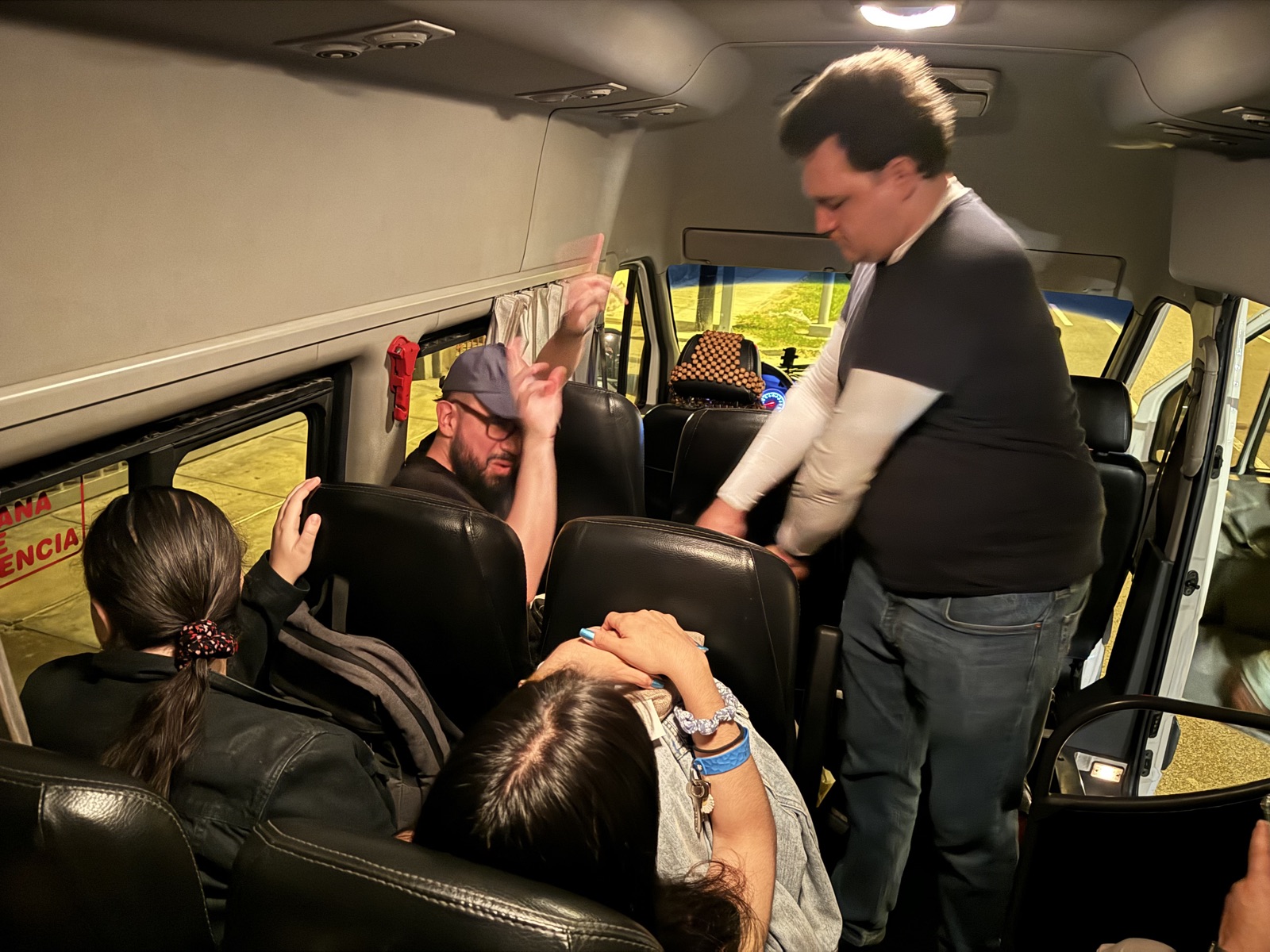
By hour four, the bus had developed its own social ecology. The woman next to me had woken up and was sharing chips with the teenager across the aisle. Two men in the back were having a debate about football that the entire bus could hear and most of the bus was enjoying. A child was running up and down the aisle, ignored by her mother and gently redirected by whoever happened to be in the row she was passing.
There was an ease to it that I recognized from other Latin American countries but that still surprised me. The bus wasn’t just transportation. It was a temporary community. People shared food. They watched each other’s bags. They moved their legs without being asked to let someone pass.
I thought about the last time I’d been on public transportation at home, a subway ride where everyone wore headphones and nobody made eye contact and the unspoken rule was: we are strangers who happen to share a metal tube, and we will acknowledge each other only if absolutely necessary.
Both systems work. But only one of them leaves you feeling like you’ve shared something with the people around you.
Jardin
We arrived in Jardin around 11 AM. The town was exactly what I’d been told it would be: small, colorful, centered on a plaza with a church that seemed disproportionately grand for the size of the population.
I got off the bus, stretched, and stood in the plaza for a few minutes, adjusting to the stillness after five hours of motion. The air smelled like coffee and rain and earth. An old man was sitting on a bench reading a newspaper. A dog was asleep in a patch of sunlight. Two women were talking in the doorway of a shop that sold hats.
Nothing was happening. That was the point.
The Case for Inefficiency
I could have gotten to Jardin faster. I could have hired a car and cut the time in half, with better seats and air conditioning that didn’t cycle between arctic and tropical. I could have optimized.
But optimization would have cost me the bus terminal at 5 AM. The bandeja paisa at the roadside restaurant. The clouds at road level. The coffee valley. The child running up the aisle. The nod from the bus driver over a shared plate.
We optimize because optimization is a virtue in the world we’ve built. Faster is better. More efficient is more productive. Time saved is time earned.
But the bus ride taught me, or re-taught me, because I keep forgetting, that some of the best experiences of my life have been the inefficient ones. The long meals. The wrong turns. The delays that became discoveries. The journeys that took twice as long as they should have because the road turned into a suggestion and the bus stopped for cheese.
There’s a version of my life where I fly everywhere, take the fastest route, minimize transit time, and arrive at destinations having experienced nothing between departure and arrival. That version is productive. That version gets more done.
This version, the bus version, gets more lived.
I think about that distinction more than I probably should. And every time I’m tempted to book the flight instead of the bus, I remember the valley. The green that seemed to vibrate. The clouds sitting on the road.
Some things you can only see at bus speed.