The village didn’t have WiFi. Not in the “it’s spotty” sense. In the “it doesn’t exist here” sense. No cell signal either. The nearest reliable connection was a two-hour drive back toward Marrakech, down a road that could generously be described as aggressive.
I lasted about four hours before the phantom vibrations started.
You know the feeling. Your pocket buzzes and you reach for your phone and it hasn’t actually buzzed. Your brain is manufacturing the stimulus because it’s addicted to the cycle. Check, scroll, dopamine, repeat. Take that away and the withdrawal is physical. I kept reaching for my pocket like a nervous tic.
By hour twelve, it stopped. By day three, I’d forgotten what day it was.
That’s when the trip actually started.
Getting There
I’d flown into Marrakech on a Wednesday. Spent one night in the medina, which deserves its own essay, then hired a driver the next morning. His name was Hassan, and he drove a 1990s Mercedes that had clearly lived several lives. The dashboard was cracked, the AC worked intermittently, and he navigated the mountain switchbacks with the casual confidence of someone who’d done this ten thousand times.
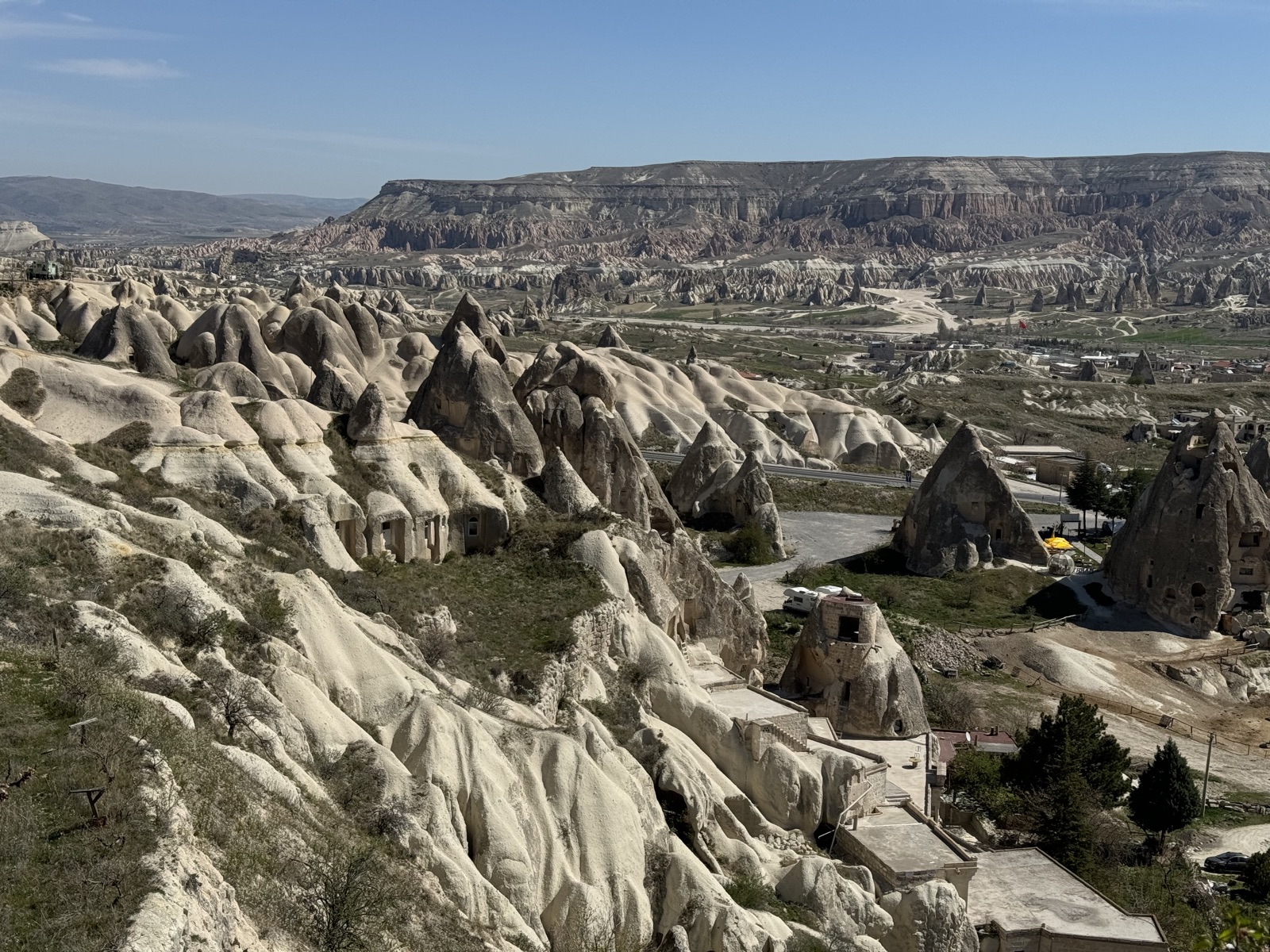
The drive from Marrakech into the High Atlas takes about three hours if you don’t stop. We stopped constantly. Hassan wanted to show me things. A valley where the river had carved red rock into shapes that looked deliberate. A village where women were drying saffron on rooftops. A roadside stand selling oranges that were, without exaggeration, the best oranges I’ve ever eaten.
The village where I’d be staying was called Imlil. It’s a popular starting point for trekking Toubkal, the highest peak in North Africa, but I wasn’t there for the summit. I was there for the quiet.
Berber Hospitality
My host was a man named Ibrahim. He ran a small guesthouse, five rooms, a shared terrace, meals included. The building was made of rammed earth and stone, the same color as the mountains around it. From a distance, it looked like it had grown out of the ground.
Ibrahim greeted me with mint tea. This is non-negotiable in Morocco. You do not enter someone’s home without drinking mint tea. It’s served sweet, almost shockingly sweet, in small glasses, poured from height to create a foam on top. Declining is not rude exactly, but it communicates something you don’t want to communicate.
Over the next seven days, I learned that Berber hospitality operates on a fundamentally different logic than what I’m used to. In American culture, hospitality is transactional even when we pretend it isn’t. We invite people over and mentally track whether they reciprocate. We offer things hoping they’ll be declined. “Can I get you anything?” is a social ritual, not a genuine question.
In Ibrahim’s house, hospitality was absolute. I was fed before he ate. Given the warmest blanket. Offered seconds and thirds without a trace of performance. When I tried to help clear plates, he looked at me like I’d insulted his family. You’re a guest. Guests don’t work.
It wasn’t performative generosity. It was structural. It was how the world was organized. The guest is sacred, not because of reciprocity, but because that’s the deal. You take care of the person under your roof. Full stop.
I’ve thought about that a lot since. How much of what I call generosity is actually negotiation. And what it might look like to just… give, without the ledger.
The Walks
Every morning I’d wake up around 6:30, eat breakfast, flatbread, olive oil, honey, more tea, and walk.
Not hike. Walk. There’s a difference. Hiking implies a destination, a trail map, a summit to bag. Walking is just moving through space with no particular agenda.
The paths around Imlil wind through walnut groves and terraced fields. In March, the almond trees were blooming. The irrigation channels, some of them centuries old, ran alongside the trails. Water sounds were constant, the background noise of a landscape that depends entirely on snowmelt from the peaks above.
I’d walk for two or three hours. Sometimes I’d encounter a shepherd moving goats through a narrow passage and have to press myself against the stone wall to let them pass. Sometimes I’d find a flat rock overlooking a valley and sit there for thirty minutes, doing nothing. Genuinely nothing. Not meditating, not thinking productively, not having insights. Just sitting.
This is harder than it sounds.
My brain is trained for productivity. Even when I’m ostensibly relaxing, there’s a background process running that evaluates whether this relaxation is efficient. Am I recharging effectively? Will this make me more productive tomorrow? It’s pathological, and I know it, and knowing it doesn’t make it stop.
But somewhere around day four, even that process went quiet. I was just a person on a rock, looking at a valley, breathing mountain air.
It was the most luxurious thing I’ve ever experienced. And it cost nothing.
The Stars
I need to talk about the stars.
I grew up in cities. I’ve lived in Singapore, Sydney, Austin. All places where light pollution renders the night sky into a vague, starless dome. I’d seen stars before, in New Zealand, in rural Japan, but the Atlas Mountains were different.
The first night I walked out onto the terrace after dinner and looked up, I actually made a sound. An involuntary exhale. The sky was absurd. The Milky Way wasn’t subtle. It was structural. A thick band of light arcing overhead like someone had painted it. Constellations I’d only seen in books were just… there, obvious, the way they must have looked to every human who ever lived before we decided to illuminate the darkness.
I stood outside for an hour. Ibrahim came out at some point and stood next to me. He didn’t say anything. He didn’t need to. We just looked up.
Later, lying in bed, I thought about how strange it is that most humans alive today have never really seen the sky. We’ve traded it for streetlights and phone screens and the ambient glow of a civilization that never turns off. I’m not romanticizing the past. I like antibiotics and indoor plumbing. But something has been lost, and standing in the Atlas Mountains is one of the few ways to measure what it was.
The Silence
Silence isn’t actually silent in the mountains. There’s wind. Birds. The distant sound of water. A donkey somewhere below. But it’s a silence of the kind that matters, an absence of human-generated noise. No engines, no notifications, no podcasts, no background TV.
I started noticing my own thoughts more clearly. Not in a mindfulness-app way. In a practical way. Problems I’d been circling for weeks at work suddenly had obvious solutions. Not because the mountains are magic, but because I’d finally given my brain room to process.
There’s a concept in productivity culture about “deep work”, uninterrupted blocks of focused time. But what I experienced in the Atlas Mountains was deeper than deep work. It was deep rest. The kind where your subconscious gets to run its background processes without interference, and when you come back to consciousness, things have been sorted.
I had three ideas during that week that I’d been stuck on for months. One was a client strategy problem. One was an internal process issue at PipelineRoad. One was personal, something I’d been avoiding thinking about. All three resolved themselves not through effort but through absence of distraction.
Coming Down
On the seventh morning, Hassan came back to collect me. I loaded my bag into the Mercedes, said goodbye to Ibrahim, drank one last glass of mint tea.
The drive back to Marrakech felt like re-entry. As we descended from the mountains, my phone began finding signal. The notifications arrived in a cascade, hundreds of them, stacked on top of each other, each one demanding attention. Emails, Slack messages, WhatsApp pings, news alerts.
I felt my chest tighten.
I put the phone in the glove compartment and asked Hassan to tell me about his family. He talked for the entire drive. He had three daughters, the oldest studying engineering in Rabat. He was proud of them in a way that transcended language. You could hear it in his voice even when I couldn’t follow every word.
By the time we reached Marrakech, the phone had cooled from urgent to merely present. I’d remember to check it eventually. But the mountains had recalibrated something in me. Not permanently. I’m not that enlightened. But enough.
The Lesson I Keep Forgetting
Here’s what I know and consistently fail to act on: the things I’m most anxious about rarely require my immediate attention. The urgency is manufactured, by technology, by habit, by a culture that conflates busy with important.
A week without screens didn’t cost me anything. No client emergency went unresolved. No deal fell apart. The world continued exactly as it would have with me refreshing my inbox every seven minutes.
I came back sharper, calmer, and with more clarity than three months of regular work had produced. The ROI, if you want to be crass about it, was extraordinary.
I tell myself I’ll do this more often. Go somewhere with no signal, no WiFi, no connection. Leave the laptop at home. Let the background processes run.
And then I don’t. Because there’s always a deadline, always a client meeting, always something that feels urgent.
But the mountains are still there. And the stars still look like that. And Ibrahim still makes tea for strangers.
Maybe next March.