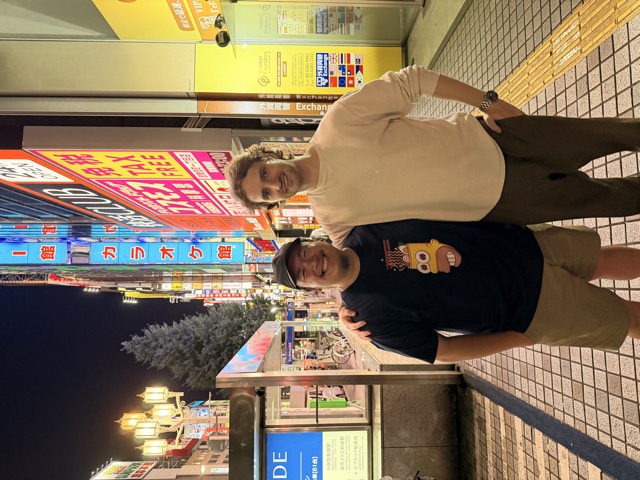
The first time I handed someone a business card in Tokyo, I did it wrong. I know I did it wrong because the man across from me, a senior executive at a logistics firm, paused for exactly one second, smiled politely, and then received the card with both hands while I stood there holding it out with one hand like I was passing a napkin at a barbecue.
Nobody said anything. The meeting continued. But I knew, in that particular way you know when you’ve committed a social error in a foreign country, that I’d just told this man something about myself that I didn’t intend to say.
That was seven years ago. I’ve since been in business meetings in more than a dozen countries, and the single most useful thing I’ve learned is this: the rituals that seem superficial are the ones that carry the most meaning.
The Meishi Exchange
In Japan, the business card, meishi, is not a piece of paper. It’s a proxy for you. Your company, your role, your standing. The exchange of meishi at the beginning of a meeting is a ritual with specific rules, and breaking those rules communicates carelessness.
You present the card with both hands, Japanese side facing the recipient, with a slight bow. You receive the other person’s card with both hands, study it for a moment, and place it carefully on the table in front of you for the duration of the meeting. You never write on it. You never put it in your back pocket. You never stack it casually with other cards.
On my second trip to Tokyo, I did all of this correctly. The difference was immediate and obvious. The conversation was warmer. The pace was more relaxed. I was taken more seriously, not because my card was better, but because I’d demonstrated that I understood the form.
What I took from this wasn’t just a Japanese business etiquette lesson. It was a broader realization: every culture has these forms. Ways of signaling respect, attention, and intention through behavior rather than words. The question is whether you notice them.
Abracos in Sao Paulo
Bruno is Brazilian, so I had some preparation before my first business trip to Sao Paulo. But knowing about Brazilian warmth intellectually and experiencing it physically are different things.
In Sao Paulo, business meetings begin with a hug. Not a corporate side-hug, a real embrace. The abraco. Even in formal settings, even with people you’ve just met, the physical warmth is immediate and genuine. Handshakes exist but they’re for strangers, and if you remain a stranger after the first meeting, something has gone wrong.
The first time a CEO I was meeting for the first time pulled me in for an abraco, I stiffened. Instinct. I’m not naturally a hugger in professional settings. By the third meeting that day, I’d relaxed into it. By the end of the week, it felt strange to start a business conversation without physical contact.
What the Brazilian approach teaches you is that trust is somatic, not just intellectual. When you start a meeting with a hug, you’ve already lowered the defensive barriers that usually take twenty minutes of small talk to penetrate. The conversation gets real faster. The relationship feels different from minute one.
I’ve noticed this carries over even after leaving Brazil. Business relationships that begin with warmth, genuine warmth, not performed warmth, tend to be more resilient. They weather disagreements better. They survive the inevitable friction of working together.
German Directness
Germany surprised me. Not because of the efficiency stereotype, I’ll get to that in another piece, but because of the directness.
In a meeting in Munich, I presented a marketing strategy to a potential client. In the US or UK, the response would have been something like: “This is interesting. Let me think about it.” In Munich, the response was: “Slide four is wrong. Your assumption about our buyer persona doesn’t match our data. Can you redo this section?”
No softening. No sandwich feedback. Just: this part doesn’t work, here’s why, fix it.
My first reaction was defensive. It felt blunt to the point of rudeness. But as the meeting continued, I realized something: every piece of feedback was specific, actionable, and given with the genuine intent of making the work better. There was no hidden agenda. No passive aggression. Just clarity.
I’ve come to appreciate the German approach more than almost any other business culture I’ve experienced. When you remove the social cushioning around feedback, you save enormous amounts of time. You also build trust faster, paradoxically, because everyone knows where they stand. There’s no decoding required.
The adjustment is learning that directness isn’t hostility. In Germany, telling you your work needs improvement is a form of respect. It means they think you can handle it and they think the work is worth improving.
The Indian Head Wobble
Doing business in India requires learning a new visual language, and the head wobble is the most important part of it.
It’s a lateral movement of the head, not a nod, not a shake, that can mean yes, or I understand, or I’m listening, or it’s possible, or maybe, depending entirely on context. Western business travelers frequently misread it as agreement when it’s actually acknowledgment.
In a meeting in Bangalore, I pitched a partnership to a technology firm. Throughout my presentation, the senior director wobbled his head steadily. I left feeling confident. “He was nodding the whole time,” I told my colleague. Two weeks later, we received a polite decline.
The wobble wasn’t agreement. It was engagement. He was telling me “I hear you”, not “I’m in.”
This taught me something I now apply everywhere: never confuse attention with alignment. In every culture, there are signals that look like agreement but actually mean something more nuanced. The head wobble is just the most visible version of something universal.
Why This Matters for Business
I’m not writing this as a travel etiquette guide. You can find those anywhere. I’m writing it because I’ve watched cultural misunderstanding torpedo business relationships that should have worked.
A client of mine, a SaaS company based in Austin, was trying to expand into the Japanese market. They sent their VP of Sales, a charismatic Texan who was excellent in American selling environments. He went to Tokyo and did everything the American way. Firm handshake. First-name basis. Quick pivot to business. Direct close.
He came back confused. “The meetings went great but nobody’s returning my emails.”
The meetings did not go great. He’d violated a dozen unwritten rules, each one small, each one consequential. The combined effect was that he’d been categorized as someone who didn’t understand, or didn’t care about, Japanese business culture. And once that categorization happens, it’s very hard to undo.
We brought in someone with Japan experience for the second attempt. The approach was slower, more formal, more attentive to hierarchy and process. The deals closed.
Same product. Same market. Same value proposition. Different cultural intelligence. Different outcome.
Cultural Intelligence as Competitive Advantage
There’s a business concept called CQ, cultural intelligence, that I think is wildly undervalued, especially in the tech world where people assume that a good product transcends cultural barriers.
It doesn’t. Products are sold by people, and people operate within cultural frameworks that shape how they evaluate trust, interpret communication, and make decisions.
High CQ isn’t about memorizing etiquette rules. It’s about developing a sensitivity to the fact that your way of doing business is not the default. It’s one option among many, shaped by your own cultural conditioning.
The most effective international business people I know share a quality: they enter every new culture with curiosity instead of assumption. They watch before they act. They ask questions about norms instead of projecting their own. They treat cultural differences not as obstacles to overcome but as information to absorb.
This isn’t soft stuff. It has hard consequences. The company that understands Brazilian relationship-building will close deals that the company treating it like a transactional market won’t. The firm that respects Japanese process will build partnerships that the firm pushing for quick closes will never access.
What I Carry Home
Every country I’ve done business in has taught me something I now apply everywhere.
From Japan: presentation matters. How you do something communicates as much as what you do.
From Brazil: warmth is a business strategy. Relationships built with genuine human connection are stronger than relationships built on pure value exchange.
From Germany: directness saves time and builds trust. Say what you mean. Assume others can handle it.
From India: listen for what’s actually being communicated, not just what you want to hear.
These aren’t foreign concepts. They’re universal human truths that different cultures have simply chosen to emphasize differently. The gift of doing business across cultures is that you get to collect these emphases and integrate them into your own operating system.
My business card technique in Tokyo is much better now. But more importantly, I walk into every meeting, in any country, asking myself: what does respect look like here? What does trust look like here?
The answers are always different. And they’re always worth learning.