The first time I ate alone in a foreign city, I hated it.
I was twenty-two, in Bangkok, sitting at a metal table on Charoen Krung Road with a plate of pad kra pao and a Singha beer, watching everyone around me eat in groups. Families, couples, friends, everyone had someone. I had my phone, and I was scrolling it like a life raft.
I couldn’t tell you what the food tasted like. I was too busy performing ease to actually experience anything. That’s the thing about eating alone when you haven’t learned how to do it: you’re not really there. You’re managing the perceived awkwardness of being a person without a companion.
Twelve years and forty-something countries later, eating alone is one of my favorite things in the world.
Tokyo, 11 PM
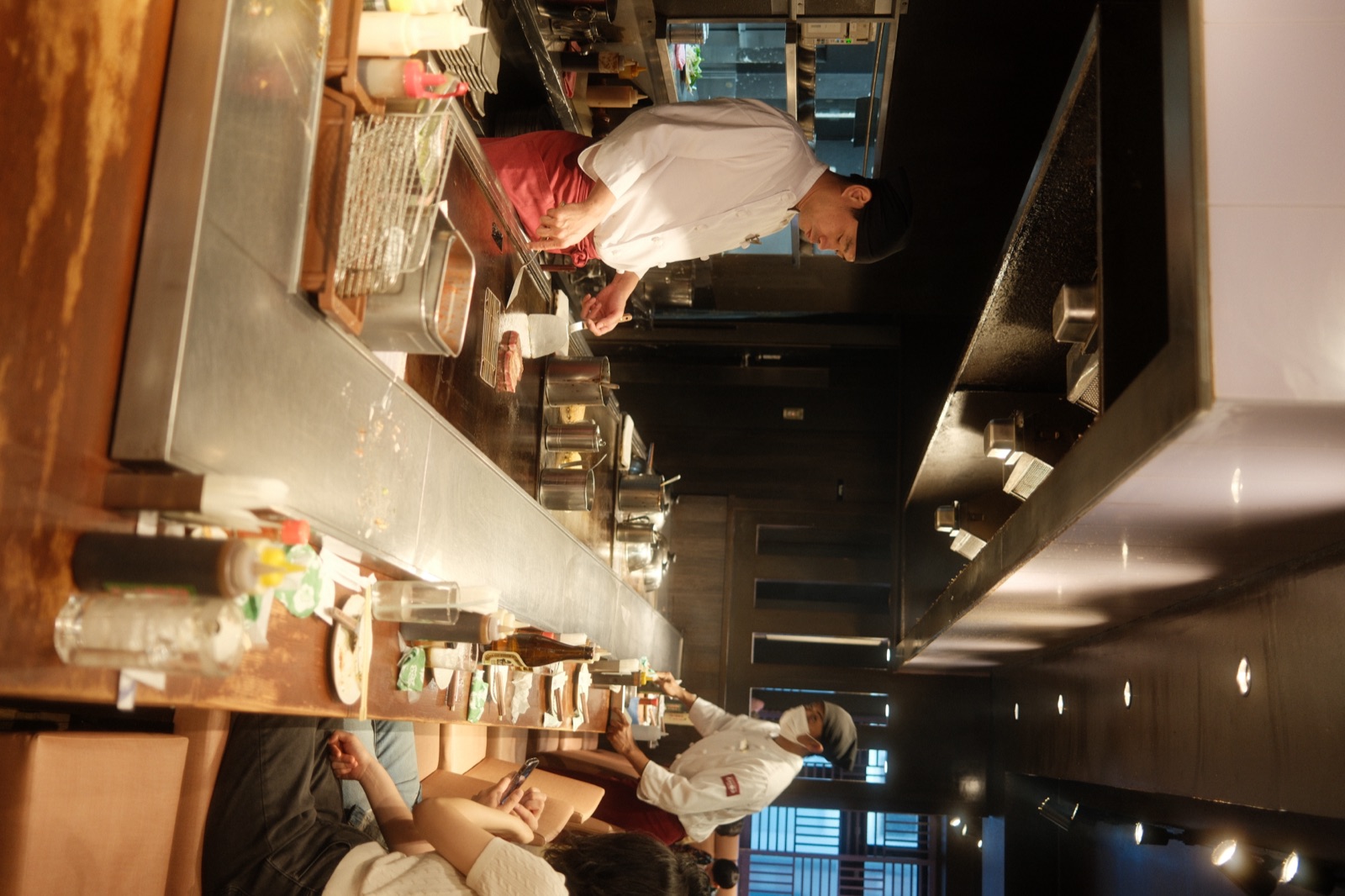
There’s a ramen counter in Shinjuku that seats eight people. No sign outside, just a noren curtain and a vending machine where you buy your ticket before you sit down. The chef is behind the counter. You hand him your ticket. He nods. That’s the entire interaction.
I ate there three times during a week in Tokyo. Each time, the same ritual. You sit. You wait. A bowl appears. The broth is so concentrated it leaves a film on your lips. The noodles are firm in a way that means someone checked them at exactly the right second. You eat in near silence. The only sounds are slurping, which is polite there, encouraged even, and the occasional clink of a ladle against the pot.
No one looks at you. No one cares that you’re alone. In Japan, solo dining isn’t a concession. It’s a category. They have entire restaurants designed for it. Ichiran, the famous chain, puts each diner in their own booth with a bamboo curtain. You never see your server’s face.
There’s a freedom in that. When no one is performing for anyone, you can actually taste things. You notice the texture of the egg, the heat of the chili oil, the way the scallions were cut. You eat with attention instead of conversation.
I’m not saying conversation is bad. I’m saying attention is underrated.
Buenos Aires, Midnight
Porteños eat late. Like, genuinely late, 10 PM is early for dinner. By midnight, the parrillas are still full, and the wine is still flowing.
I sat alone at a restaurant in San Telmo on a Saturday night. The waiter gave me a look, not judgmental, more curious. A solo diner on a Saturday in Buenos Aires is unusual. He brought me a half bottle of Malbec without me asking and said, “Para la espera”, for the wait.
There was no wait. He was just being kind. That small gesture, the assumption that I was there to enjoy myself, not to be pitied, changed the entire meal.
I ordered a bife de chorizo and ate it slowly, watching the room. An older couple arguing softly over the wine list. A group of friends who’d clearly been at the table for hours, their plates pushed aside, conversation louder than the tango playing from a speaker in the corner. A woman at the bar reading a book with a glass of something amber.
When you eat alone, you become a better observer. Not in a creepy way, in a human way. You notice body language, rhythms, the way a room breathes. You see the waiter who’s having a bad night. The couple that’s clearly on a first date. The table of old friends who don’t need to fill every silence.
This is a skill. And it transfers to every meeting, every sales call, every negotiation I’ve ever been in. The ability to read a room starts with the practice of watching one.
The Confidence Beneath It
Here’s what eating alone actually teaches you: how to be comfortable with yourself without external validation.
That sounds like a self-help platitude. It isn’t. Most people, including me, for years, use social activity as a buffer against self-awareness. When you’re with someone, your attention is shared. You’re processing the other person, performing for the other person, reacting to the other person. There’s no space for the quieter signals, what you actually want, how you actually feel, what you’re actually thinking.
Eating alone strips that away. It’s just you, the food, and whatever’s in your head. Sometimes what’s in your head is pleasant. Sometimes it isn’t. Both are useful.
I’ve had solo dinners where I solved business problems I’d been stuck on for weeks. The answer was always there. I just needed enough silence to hear it. And I’ve had solo dinners where I confronted things I’d been avoiding, a relationship I needed to end, a client I needed to fire, a fear I needed to name.
A restaurant is a surprisingly good place for these reckonings. The food gives you something to do with your hands. The ambient noise provides a soft boundary. You’re alone but not isolated. It’s privacy with a safety net.
Market Meals
Some of my best travel memories are market meals. Not restaurants, markets.
In Chiang Mai, the Sunday night market on Ratchadamnoen Road has a food section that would take you two hours to fully explore. Hundreds of vendors. Khao soi, mango sticky rice, sai oua, grilled meats on sticks, things I couldn’t name and ordered by pointing. I’d buy four or five small plates and find a plastic stool somewhere and eat everything with my hands.
In Mexico City, the Mercado de San Juan has a lunch counter where they serve whatever came in fresh that morning. I ate grasshoppers there, not because I’m adventurous but because the woman behind the counter handed them to me and I didn’t know how to refuse. They were good. Crunchy, lime-forward, weirdly addictive.
In Istanbul, a guy at a street cart near the Galata Bridge made me a balik ekmek, a grilled fish sandwich, while his son played on the sidewalk behind him. He spoke no English. I spoke no Turkish. We communicated entirely through gestures and the shared language of a man handing another man a sandwich.
Market meals are the purest form of solo eating. No menus. No pretense. No one wondering why you’re alone. Everyone is alone at a market, even the people who came with friends. You’re all just there for the food.
What You Notice
When you eat alone enough, you start noticing things about food cultures that you’d miss in conversation.
You notice that in Southeast Asia, food is communal, the table is the center, and dishes are shared. Eating alone there feels mildly transgressive, which is part of why it’s interesting.
You notice that in Europe, the solo diner is more accepted, Parisians eat alone at brasseries without a second thought, usually with a newspaper or a cigarette and a look of practiced indifference.
You notice that in Latin America, food is connection, eating alone is tolerated but eating with others is preferred, and strangers will sometimes invite you to join them, which is how I ended up at a family barbecue in Montevideo with people whose names I never learned.
These aren’t travel observations. They’re data about how different cultures think about community, independence, and belonging. And they’ve made me a better marketer, honestly. Understanding how people relate to shared experiences, what makes something communal versus individual, public versus private, is directly useful when you’re trying to build messaging that resonates across cultures.
The Practice
I eat alone at least once a week now, even when I’m home. Not because I don’t have people to eat with. Because I value what solo eating gives me.
It gives me attention. It gives me observation. It gives me thirty minutes where I’m not performing, not managing, not responding to anyone else’s needs or energy.
And it gives me better taste. I mean that literally. When you’re not talking, you taste more. The complexity of a good wine. The smoke in a mole. The difference between adequate bread and exceptional bread. These things reveal themselves to attention, and attention requires solitude.
If you’ve never done it, really done it, without the phone, without a book, just you and the food and the room, try it. Not once. A few times. The first time will feel awkward. The second time will feel deliberate. The third time will feel like something you chose.
That’s the moment. When eating alone stops being something that happened to you and becomes something you chose, you’ve learned something about yourself that no group dinner will ever teach you.