Flat cities lie to you about distance. You look at a map, see that your destination is two kilometers away, and assume you know what that means. And on flat ground, you do. Two kilometers is two kilometers. Twenty minutes on foot, give or take.
Now add a thousand meters of elevation and that same distance becomes an entirely different proposition. Two kilometers uphill in Bogotá, where the altitude thins the air, is not the same as two kilometers along the waterfront in Barcelona. The map doesn’t show this. Your lungs do.
The Vertical City
Some of the most interesting cities in the world are built vertically, and this topography shapes everything about how they function.
La Paz sits in a canyon at roughly 3,600 meters above sea level, with neighborhoods spilling up the walls on all sides. El Alto, the city above the city, perches at over 4,000 meters on the altiplano rim. The relationship between these two places, separated by a few hundred meters of elevation but connected by a cable car system, is one of the most striking examples of how altitude creates economic and social stratification.
Walking through La Paz is a cardiovascular event. The streets pitch at angles that would be considered unreasonable in most urban planning contexts. The sidewalks, where they exist, are often too narrow for two people to pass. You learn quickly to plan your route not by distance but by elevation change. Going downhill to the Mercado de las Brujas is easy. Coming back up requires stops, deep breaths, and a recalibration of your expectations about your own fitness.
Medellín has a similar vertical character, though at a more forgiving altitude. The comunas climb the hillsides in terraced layers, each level its own microworld. The metro cable, Medellín’s inspired solution to vertical transit, connects these levels in a way that changed the city’s social fabric. Before the cable cars, neighborhoods at different elevations were functionally separate cities. After, they became connected parts of one organism.
What Altitude Does to Community
In flat cities, your neighbors are the people laterally adjacent to you. The apartment next door, the house across the street, the shop on the corner. Community spreads horizontally, and the social radius is roughly circular.
In mountain cities, your neighbors are often the people directly above or below you. Community is vertical. The person who lives fifty meters higher up the hill might be in a completely different economic bracket, with different infrastructure, different water pressure, different access to transportation. In many Andean cities, altitude is a proxy for wealth, lower is richer, higher is poorer, and the social implications of this arrangement are profound.
Walking through hillside neighborhoods in places like Valparaíso or Guanajuato, you feel this verticality as a physical reality. The effort required to move between social strata is literal. You climb. It’s an embodied metaphor that flat cities can only gesture at.
The Mountain Mind
Spending time at elevation does something to the way you think. I don’t mean this mystically. I mean it practically.
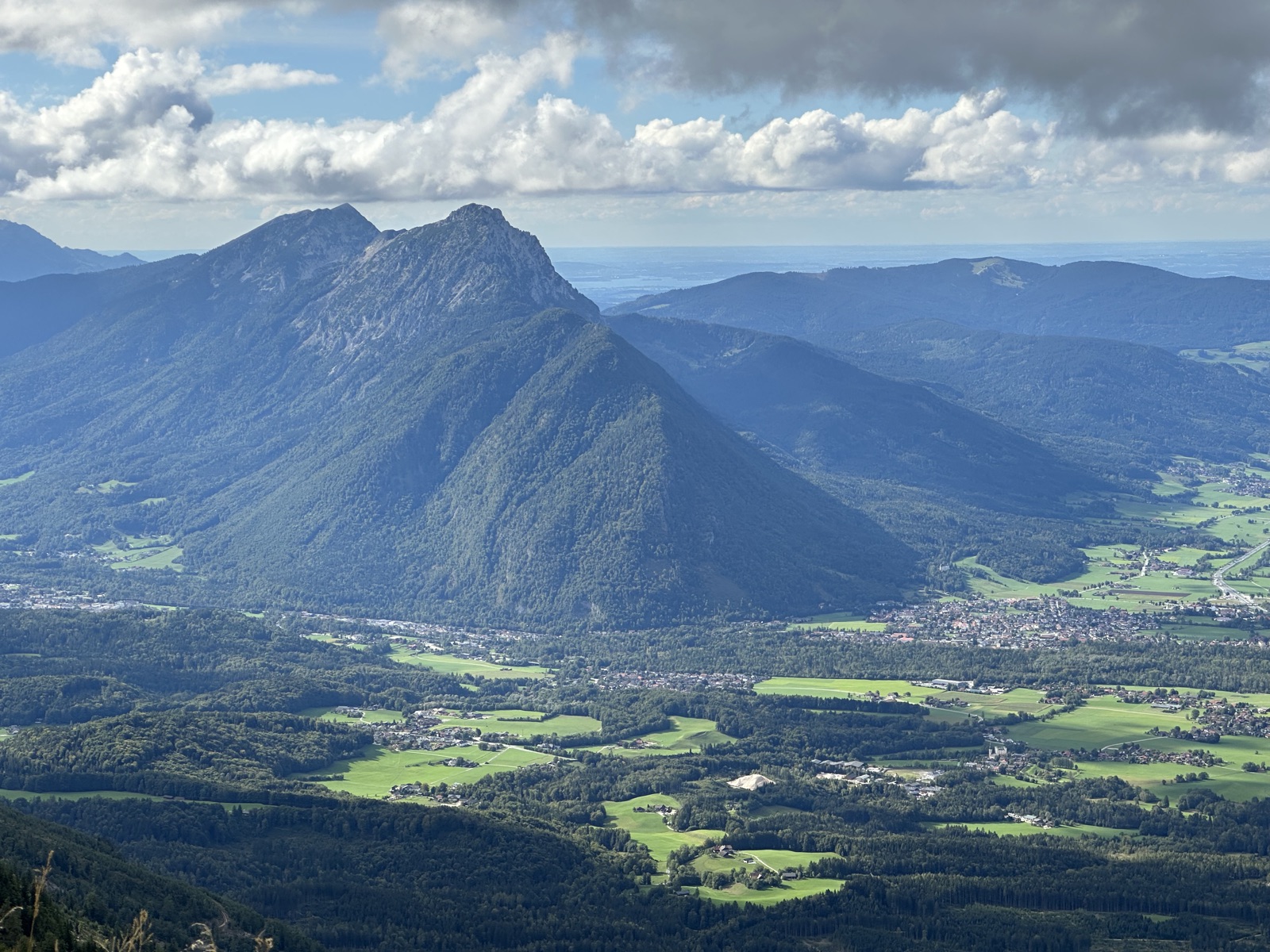
When you can see far, your time horizon extends. Standing on a mountain pass in the Atlas range or looking out across the valley from a viewpoint above Cusco, the sheer scale of the landscape dwarfs your immediate concerns. The email you were worried about, the client issue that felt urgent, the deadline that was consuming your attention, all of it recedes. Not because it doesn’t matter, but because the visual context reminds you that it matters less than you think.
I’ve had some of my clearest strategic thinking at elevation. Not during the climbing, during the climbing you’re mostly thinking about breathing, but during the sitting afterward. There’s something about the combination of physical effort, thin air, and expansive views that strips away the noise and leaves you with just the signal.
Effort and Proximity
Mountains teach you that proximity is not the same as accessibility. Two villages might be separated by a single ridge, close enough to see each other’s lights at night, but the journey between them might take hours because of the terrain. This is true in the Himalayas, in the Andes, in the Atlas, in the highlands of Ethiopia.
This disconnect between proximity and accessibility has shaped my thinking about markets. In B2B SaaS, two companies might look adjacent on a positioning map, similar product, similar price point, similar target customer, but the terrain between their actual market positions might be far more treacherous than it appears. The effort required to move from one market position to another is not always proportional to the apparent distance.
Descent
The other thing mountains teach you is that going down is not the opposite of going up. It’s its own challenge. The muscles are different. The risks are different. The psychology is completely different, ascent is aspirational, descent is technical.
I think about this when I think about the trajectory of a business. Growth gets all the glory. The ascent narrative is compelling: more clients, more revenue, more team members, more ambition. But the descents, scaling back a service line that isn’t working, reducing scope on a project that’s overcommitted, letting go of a client relationship that no longer serves either party, require their own kind of skill. Going down well is as important as going up, and it’s much less celebrated.
The mountains know this. Every peak requires a descent, and the quality of the descent determines whether you make it back to attempt the next one.