I arrived in Lisbon on a Tuesday in late October, already behind on three deliverables and carrying the particular anxiety of someone who treats every hour as a unit of production.
I had planned to stay two weeks. I stayed two months.
Not because anything dramatic happened. Nothing broke. Nobody called with an emergency or an epiphany. I stayed because Lisbon quietly dismantled my relationship with urgency, and I didn’t want to leave until I understood what was replacing it.
The First Week
I set up in a co-working space near Principe Real. Clean, well-lit, full of other remote workers doing exactly what I was doing, transposing a New York pace onto a European city and wondering why it felt wrong.
The first thing I noticed was lunch. Back home, lunch was something I ate over my keyboard. Maybe a salad in a plastic container. Maybe nothing. In Lisbon, lunch was an event. The co-working space emptied at 1 PM. People left for an hour, sometimes ninety minutes. They sat down. They ate actual food, grilled fish, rice, a glass of wine. Then they came back and worked until 7 or 8, calm and focused.
I tried to power through that first week. Kept my head down while everyone left for lunch. Responded to Slack messages in real time. Felt productive. Felt efficient.
Felt exhausted by Thursday.
Alfama
On my first Saturday, I walked through Alfama without a plan. No restaurant reservation, no itinerary, no podcast in my ears. Just walking.
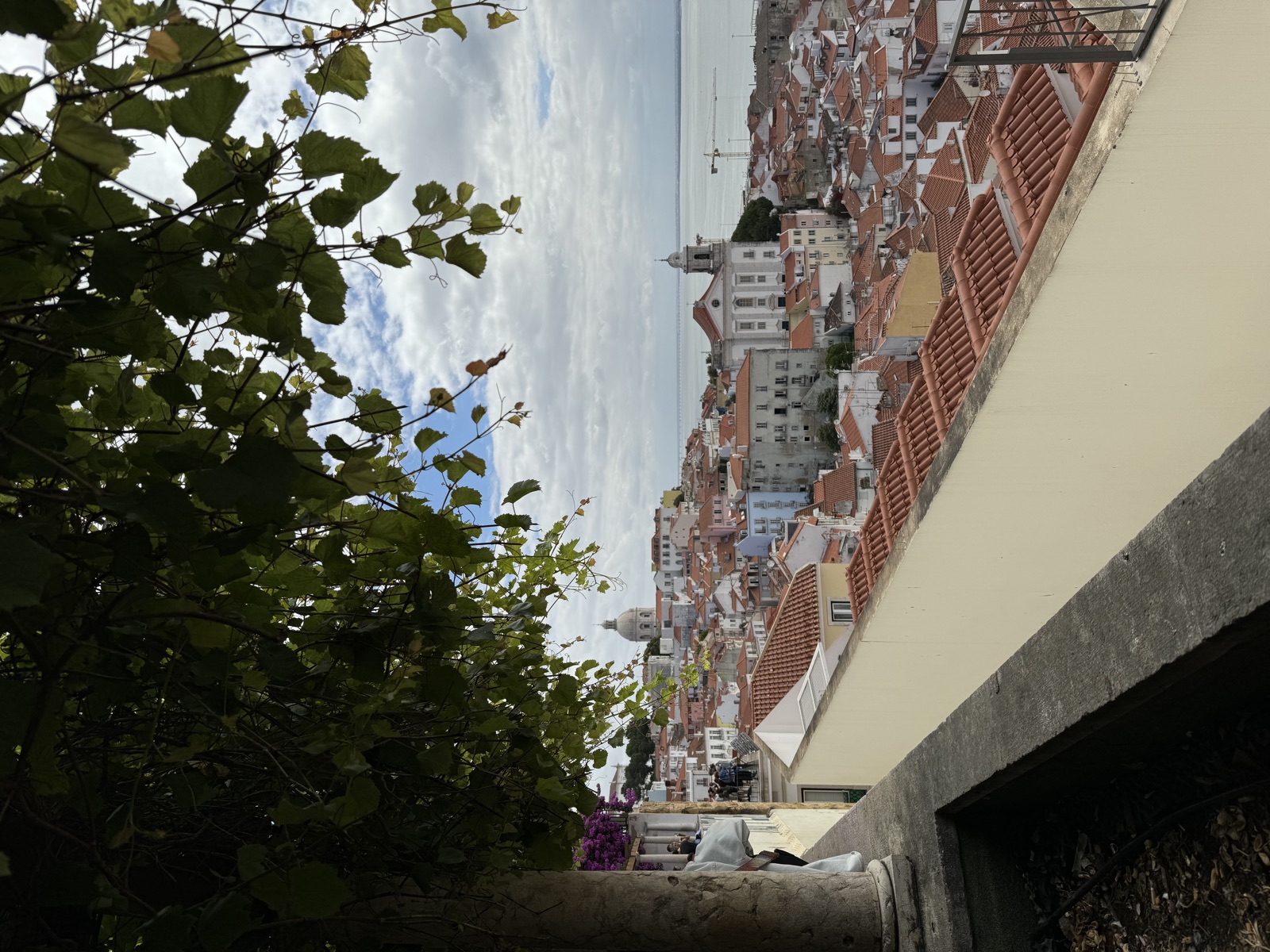
Alfama is the oldest neighborhood in Lisbon. The streets are so narrow that in some places you can touch both walls with outstretched arms. The buildings are covered in azulejos, hand-painted tiles in blue and white and yellow, and every corner turns into a view of the Tagus River that stops you mid-step.
I found a tiny place on a side street with four tables and a handwritten menu. The woman running it brought me sardines, bread, a small salad, and a glass of vinho verde without me ordering anything. The sardines were grilled whole, skin blistered, served on a plain white plate. They were, without exaggeration, the best thing I’d eaten in months.
I sat there for an hour and a half. Not because the service was slow. Because there was nothing pulling me away.
That was the first crack.
A Different Clock
Lisbon runs on a clock I didn’t recognize. Not lazy. That’s the wrong word, and it’s what impatient visitors usually reach for. The city is industrious. People work hard. Restaurants are impeccably run. The trams operate on schedule.
But there’s no worship of speed for its own sake. Nobody is performing busyness. Nobody brags about their 5 AM routine or their back-to-back calendar.
The Portuguese have a concept, not quite a word, more of a cultural posture, that the quality of what you do matters more than the speed at which you do it. A meal takes as long as a meal takes. A conversation doesn’t have a hard stop. An afternoon coffee is not a productivity hack; it’s just coffee, enjoyed slowly, with someone you like.
I started adjusting by the second week. Not because I decided to, because resistance felt ridiculous. You can only eat lunch at your desk in a city full of people savoring theirs for so long before you feel like the fool.
Working From Cafes
I moved out of the co-working space. Started working from cafes instead. Not the Instagram kind with latte art and laptop-friendly outlets. The kind with old men reading newspapers and a TV playing football in the corner.
My favorite was a place in Graça called A Cerca. Small, slightly worn, with a terrace overlooking the city that made every Zoom call feel like a lie. Someone would ask “where are you?” and I’d angle the camera toward the terrace and watch their expression change.
But it wasn’t the views that mattered. It was the pace.
Working in a Lisbon cafe forced me to work in focused bursts. The Wi-Fi was unreliable. The tables were small. You couldn’t spread out for an eight-hour marathon. So I’d work for two or three hours, deeply, without distraction, and then stop. Walk. Eat. Come back later and do another two hours.
I got more done in those four or five hours than I typically got done in nine or ten back home. And the work was better. Not because I was smarter in Lisbon. Because I was less scattered. Less reactive. Less addicted to the feeling of being busy.
The Light
People talk about the light in Lisbon, and I used to think that was the kind of thing travel writers say when they’ve run out of observations. But the light in Lisbon is genuinely different.
It’s softer than Mediterranean light. Less harsh than California. It comes in at an angle, especially in autumn, that makes everything look like a film shot on expensive stock. The white buildings turn gold in the late afternoon. The river goes from steel gray to copper in the space of an hour.
I started noticing light. That might sound small. But for someone who’d spent years looking at screens and dashboards and slide decks, the act of looking up and noticing how the sun hit a tiled wall at 4 PM was a kind of recalibration.
I started taking walks specifically to watch the light change. No phone. No destination. Just walking through Bairro Alto or along the waterfront in Belem, paying attention to something that had nothing to do with output.
What Changed
I brought three things back from Lisbon that I still practice.
Lunch is not optional. I eat a real lunch every day. Away from my desk. Sometimes alone, sometimes with someone. Thirty to forty-five minutes minimum. It’s not a break from work. It’s part of the work. The best ideas I’ve had in the last year have come during lunch, not during brainstorms.
Depth over duration. I no longer measure my day by hours worked. I measure it by sessions of genuine focus. Three deep sessions of ninety minutes each will outperform eight hours of half-attention every time. Lisbon taught me this not through a productivity book but through the physical constraint of a wobbly cafe table and intermittent Wi-Fi.
Urgency is mostly manufactured. This was the big one. Most things that feel urgent aren’t. The email that seems like it needs a response in ten minutes can wait two hours. The deliverable that feels like it’s due tonight is actually due Friday. I was manufacturing urgency because urgency felt like productivity. It wasn’t. It was just anxiety wearing a professional costume.
The Last Night
On my last night in Lisbon, I walked up to the Miradouro da Graca, one of the city’s hilltop viewpoints, and sat on the low stone wall. The sun was going down over the 25 de Abril Bridge. The river was doing that copper thing again. A guy next to me was playing guitar, not performing, just playing. Someone’s kid was chasing pigeons.
I’d come to Lisbon wound tight, treating my calendar like a scoreboard. I was leaving with something harder to name. Not relaxation exactly. More like… proportion. A sense that work is important but it’s not everything. That the quality of your hours matters more than the quantity. That a city built on hills and light and slow lunches isn’t behind the curve. It might be ahead of it.
I think about that evening a lot. Not because it was dramatic or transformative in some cinematic way. But because it was calm. And calm, I’ve learned, is deeply underrated.
Lisbon didn’t teach me to stop working. It taught me to stop confusing motion with progress. To sit with a plate of sardines and a glass of wine and not reach for my phone. To trust that the work will be there when I get back, and that I’ll do it better after a real break.
I’ve been back twice since. Each time, it takes about forty-eight hours for the lesson to sink back in. Which probably means I haven’t fully learned it yet.
But I’m getting closer.