The first thing you notice about Medellin isn’t the mountains. It’s the metro.
That sounds wrong, the city sits in a valley ringed by green peaks that would stop any architect mid-sentence. But the metro is what tells you the real story. It’s spotless. People stand to the right on escalators. Nobody litters. There are murals at every station. In a country where most cities have no rail system at all, Medellin built one that runs on civic pride.
This is a city that, thirty years ago, was synonymous with one man’s name and a murder rate that made international headlines. Today it hosts global innovation summits, has a tech startup ecosystem that rivals much of Latin America, and was named the world’s most innovative city in 2013 by the Urban Land Institute, beating out New York and Tel Aviv.
I spent three weeks there, and I left thinking about reinvention more seriously than I had in years.
Poblado and the Surface Story
Most visitors stay in El Poblado, and I did too, at first. It’s the neighborhood you’ve heard about, the one with the coffee shops that could be in Brooklyn, the coworking spaces full of digital nomads, the restaurants where the menu is in English before Spanish.
Poblado is fine. It’s pleasant. But it tells you very little about Medellin.
It tells you that the city has figured out how to attract foreign money. It tells you that someone built a good branding strategy. But the real story of Medellin’s reinvention is happening in places most visitors never go.
Ruta N and the Innovation District
North of the city center, there’s a complex called Ruta N. It’s Medellin’s innovation district, a deliberate, government-backed effort to transition the city’s economy from textiles and manufacturing to technology and knowledge work.
I got a tour from a guy named Carlos who works with one of the accelerators based there. He told me something that stuck: “We didn’t try to become Silicon Valley. We tried to become Medellin.”
That distinction matters. A lot of cities around the world have tried to replicate the Bay Area model, build a tech park, attract VCs, hope for network effects. Most of them fail because they’re copying a template without understanding the context.
Medellin did something different. They looked at what they already had, an educated workforce, a dense urban core, strong cultural identity, an entrepreneurial tradition rooted in the paisa culture, and asked how to amplify those things with technology.
The result isn’t a tech hub in the traditional sense. It’s a city that uses technology to solve distinctly local problems. Mobility. Urban agriculture. Water management. Fintech for the unbanked. The companies coming out of Ruta N aren’t building the next social media platform. They’re building things their neighbors actually need.
What Founders Get Wrong About Reinvention
I meet a lot of founders who want to “pivot.” They say it like it’s a clean break, a decision made in a board meeting, executed over a quarter, and then you’re something new.
Medellin’s reinvention took decades. It required massive public investment in education, infrastructure, and civic institutions. It required cultural change, not just economic change. And it required honesty about what had gone wrong.
The city didn’t pretend the Escobar era didn’t happen. They didn’t rebrand over it. They built the Museum of Memory in the same city where the bombs went off. They run tours of Comuna 13, once the most dangerous neighborhood in the country, led by people who grew up there during the worst years.
The lesson for founders isn’t subtle: you can’t reinvent yourself by pretending your past didn’t happen. You reinvent yourself by integrating it. By being honest about what failed, what you learned, and what you’re building next.
Every startup I’ve worked with that successfully pivoted did it by acknowledging what wasn’t working, to themselves, to their team, to their customers. The ones that failed tried to spin the pivot as planned all along. Markets aren’t stupid. People aren’t stupid. Honesty is faster than spin.
Laureles and the Quiet Economy
I moved to Laureles for my last two weeks. It’s a residential neighborhood west of Poblado, tree-lined streets, local bakeries, abuelas walking small dogs in the evening. Almost no tourists.
This is where I met the entrepreneurs who weren’t in the accelerators. A woman running a catering business out of her apartment who’d grown it to fifteen employees through WhatsApp referrals. A guy who’d built a small logistics company by solving last-mile delivery for rural areas outside the valley. A couple who ran a language school and were expanding to three cities.
None of these people would call themselves founders. None of them have pitch decks. But they’re building real businesses that solve real problems, and they’re doing it with a resourcefulness that would humble most of the startup world.
In Laureles, I was reminded that entrepreneurship doesn’t require venture capital or a TechCrunch feature. It requires seeing a gap and having the persistence to fill it. That’s universal, and Medellin has it in abundance.
The Metro Cable and Access as Innovation
The most profound piece of Medellin’s reinvention isn’t Ruta N or the tech sector. It’s the MetroCable, a gondola system that connects the hillside comunas to the metro system below.
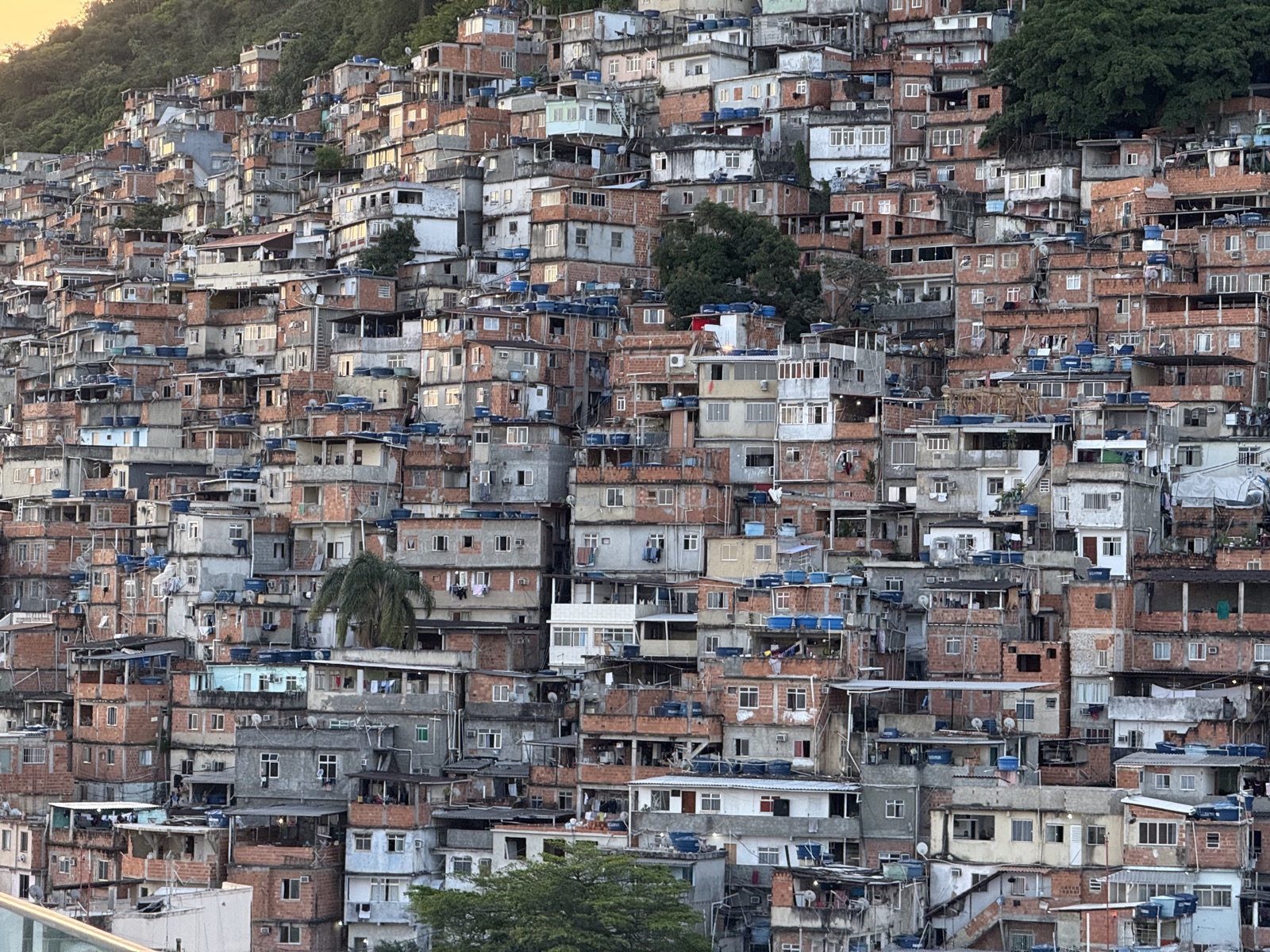
Before the MetroCable, people living in the comunas, the informal settlements climbing up the valley walls, were effectively cut off from the city’s economy. The commute down the hill could take hours. Jobs, hospitals, schools, all out of practical reach.
The MetroCable changed that in a way that’s hard to overstate. Suddenly, a kid living in Comuna 1 could get to a university campus in thirty minutes. A woman could reach a hospital without spending half a day on buses. The physical infrastructure created economic access.
I rode it on a Wednesday afternoon. The car was full, a grandmother with groceries, a teenager with a backpack, a man in a security guard uniform heading to a night shift. They were all just commuting. That’s the point. Transportation as equity. Infrastructure as opportunity.
For anyone building products, there’s a lesson here that goes deeper than UX or feature sets. The most impactful innovation isn’t always the most technically impressive. Sometimes it’s the one that removes a barrier so fundamental that people couldn’t even articulate it as a need. They just lived with it.
The Paisa Spirit
Paisas, people from the Antioquia region, of which Medellin is the capital, have a reputation in Colombia. Entrepreneurial. Proud. Stubborn. Warm in a way that’s aggressive about hospitality.
I experienced this firsthand at a neighborhood tienda, where the owner insisted I try his wife’s empanadas before I was allowed to buy anything else. He asked where I was from, what I did, how long I was staying. Within fifteen minutes, he’d introduced me to his cousin who “also did something with computers” and invited me to a family asado that weekend.
This isn’t an anomaly. It’s the culture. And I think it’s a meaningful part of why Medellin has reinvented itself so successfully. The paisa spirit is fundamentally about agency, the belief that you can build something, that your effort matters, that the world is something you shape rather than something that happens to you.
That mindset is the foundation of every successful company I’ve ever worked with. Not strategy. Not capital. Not talent. Belief that you can build something worth building.
The Long Game
Medellin isn’t finished. The city still has serious challenges, inequality, displacement, corruption, the gravitational pull of old money and old power. The reinvention isn’t a story with a clean ending. It’s ongoing.
That’s maybe the most important lesson. Reinvention isn’t a milestone. It’s a practice.
The companies I admire most aren’t the ones that had a dramatic pivot story. They’re the ones that reinvent themselves continuously, updating their positioning as the market shifts, rebuilding their team as they scale, rethinking their product as customer needs evolve. Not because something broke, but because they understand that stasis is the real risk.
Medellin understood that. The city didn’t wait for things to get better. It invested, in education, in infrastructure, in culture, in its own identity, and then it kept investing, year after year, administration after administration.
On my last night, I sat at a rooftop bar in Laureles watching the city lights fill the valley. Medellin isn’t trying to be anywhere else. It’s not copying a template. It took everything it had, the good and the terrible, and built something new from it.
That’s not a pivot. That’s reinvention. And the difference matters more than most founders realize.