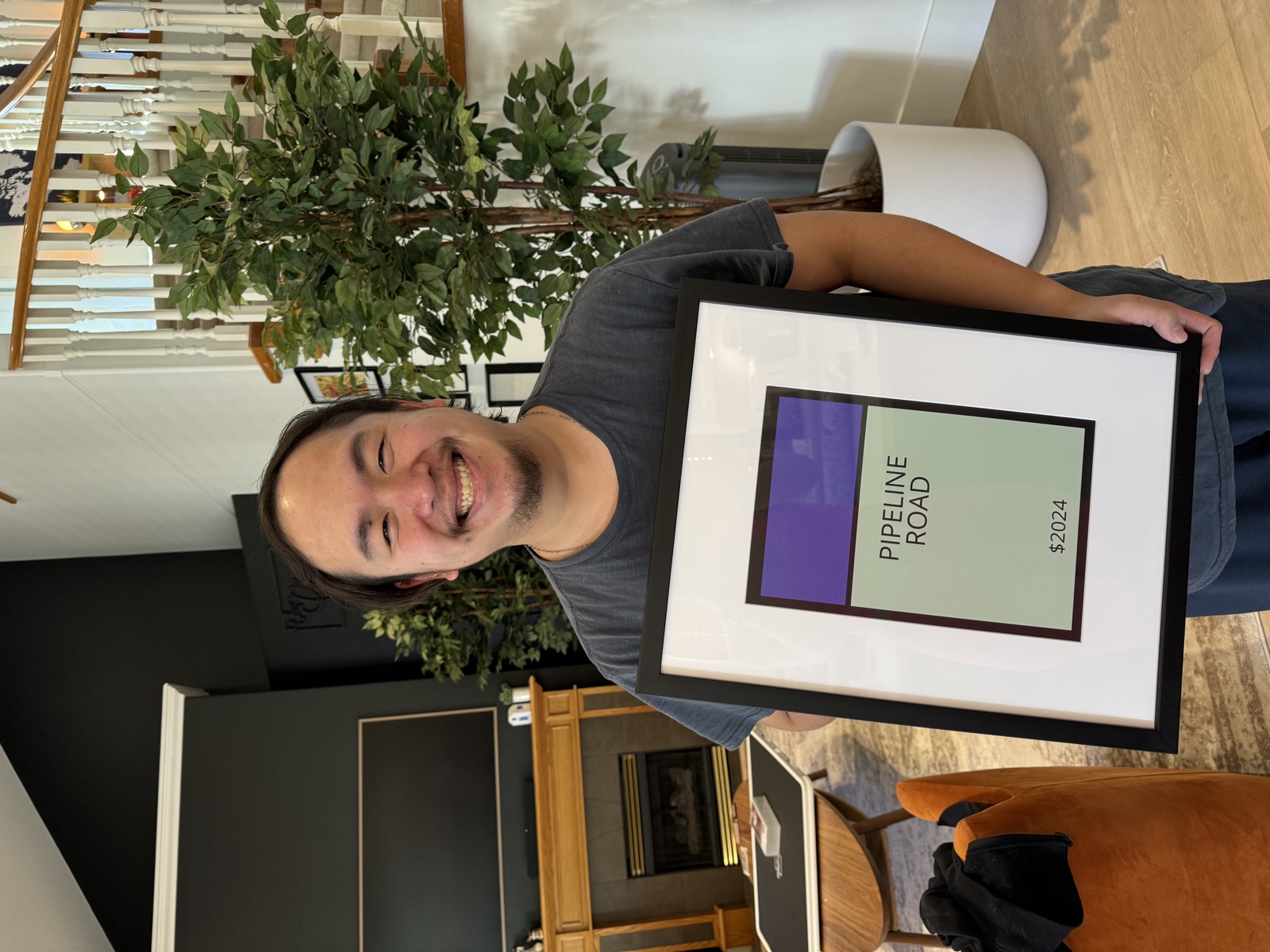
In 2024, Bruno and I had a decision to make.
PipelineRoad the agency was working. We had clients, revenue, a small team, and a growing reputation in B2B SaaS marketing. We also had an idea for a software product, a platform that would eventually become PipelineRoad.com, our AI capital raising tool for fund managers.
The conventional startup path was obvious: raise money. Write a pitch deck. Do the Sand Hill Road circuit. Convince a few VCs that we were worth a bet, take their money, hire a team, build the product, figure out revenue later.
We didn’t do that.
Instead, we used agency revenue to fund the product development. No investors. No dilution. No board meetings. No one to ask permission from.
It was slower. It was harder. And it was the best decision we’ve made.
The Case for Revenue-First
The argument for raising venture capital is well-rehearsed. Speed. Scale. Competitive advantage. “You can’t build a category-defining company on a bootstrap budget.” I’ve heard it a hundred times, from people I respect, and in many cases they’re right.
But “many cases” is doing a lot of work in that sentence.
The reality is that most software products don’t need to be category-defining to be valuable businesses. They need to solve a real problem for a specific audience, charge a fair price, and grow sustainably. That’s not a VC-scale outcome, and that’s fine, because VC-scale outcomes are rare by design. The math of venture capital requires that most investments fail so a few can return the fund. If you’re a founder, that means the default outcome, the most likely outcome, is that you spend years building something that gets shut down because it didn’t hit a return threshold that had nothing to do with whether the product was good.
Revenue-first entrepreneurship flips the equation. The product doesn’t need to 10x a fund’s investment. It needs to be profitable. It needs to serve its customers well. It needs to grow. Those are lower bars in some ways and higher bars in others, higher because there’s no grace period. Revenue has to appear early, or the business doesn’t survive.
For us, the agency was the grace period. The agency revenue covered our costs. It meant that every dollar we put into the software product was funded by real revenue from real clients, not by someone else’s money and someone else’s timeline.
The Patience Tax
I won’t pretend this was easy. Building a product while running an agency requires a particular kind of patience that I sometimes found excruciating.
When you raise money, you can hire a team of engineers and build the product full-time. Six months to an MVP. Twelve months to launch. Eighteen months to Series A.
When you’re self-funding from agency revenue, the timeline stretches. We couldn’t hire a full engineering team. We built incrementally, in the margins. Nights, weekends, and whatever hours we could carve from the agency work without compromising client quality.
The first version of PipelineRoad.com took about eight months longer to build than it would have with a funded team. Eight months is a long time in tech. Competitors can emerge. Markets can shift. The urgency is real.
But here’s what I learned about urgency: most of it is manufactured.
The urgency to launch fast, to grab market share, to be “first”. It’s based on a model of competition that assumes the market is a land grab. Get there first, plant your flag, defend the territory. And in some markets, that’s accurate. Social networks. Marketplaces. Anything with strong network effects.
But in B2B SaaS for fund managers? The market isn’t a land grab. It’s a trust-building exercise. Fund managers don’t switch platforms because someone was first. They switch because someone is best, most reliable, most attuned to their specific needs. That kind of trust isn’t built by launching fast. It’s built by launching right.
Our eight-month delay probably cost us some early adopters. It definitely gained us a better product. The extra time meant more research, more conversations with potential users, more refinement of the features that actually mattered. When we did launch, the product was tighter, more focused, and more aligned with what the market wanted than it would have been eight months earlier.
The Freedom of Not Asking
The most underrated benefit of bootstrapping is the freedom.
Not financial freedom. We were far from wealthy during the building phase. Freedom of decision-making. Freedom to build the product we believed in instead of the product that looked best in a pitch deck.
When you have investors, you have a board. The board has opinions. The opinions are shaped by their portfolio needs, their fund timeline, and their model of what a successful company looks like. None of this is malicious. Most investors are smart, well-intentioned people. But their incentives aren’t perfectly aligned with yours, and the gap between your incentives and theirs is where compromise lives.
I’ve watched founder friends compromise on product decisions to satisfy board expectations. Build features that investors wanted showcased instead of features that users wanted. Hire a VP of Sales at series A because that’s what the playbook says, even though the product wasn’t ready for a sales-led motion. Pivot from a niche they understood deeply to a broader market they didn’t understand at all, because “the TAM needs to be bigger.”
We made every product decision based on two inputs: what our users needed and what we could build well. That’s it. No pitch deck. No board approval. No navigating someone else’s model of what our company should be.
When we decided to focus exclusively on fund managers instead of going broader, there was no investor saying “but the addressable market is too small.” We knew the market. We’d talked to the users. The niche was right.
When we decided to invest heavily in AI-powered deal sourcing instead of the reporting features that would have looked better in a demo, there was no board meeting to justify the bet. We made the call, built it, tested it with users, and iterated.
The speed of decision-making in a bootstrapped company is a genuine competitive advantage that doesn’t get enough attention. When every product decision is a conversation between two co-founders instead of a presentation to five board members, you move faster on the things that matter, even if you move slower on the things that require capital.
What Agency Revenue Teaches You
Running an agency before building a product teaches you things that raising money doesn’t.
You learn to sell before you learn to build. Agency revenue requires selling a service to someone who has alternatives. You learn what matters to buyers, not theoretically, in a business school framework, but practically, in a “this person will sign a contract or they won’t” framework. By the time we started building PipelineRoad.com, we’d sold hundreds of thousands of dollars of services. We understood sales cycles, objections, pricing psychology, and contract negotiation at a visceral level.
You learn to deliver. A product company can have a terrible onboarding experience and still grow on the strength of the product. An agency that delivers badly loses the client. There’s no “the product sells itself” safety net. You have to deliver. Every month. For every client. This discipline, the habit of consistent delivery, transferred directly to how we build and support the software product.
You learn what users actually need. Our agency clients are B2B SaaS companies. We’re deeply embedded in their operations. Their marketing, their positioning, their go-to-market strategy. We see the problems they face not from survey data or user interviews, but from working alongside them daily. That proximity is invaluable for product development. We didn’t have to guess what fund managers needed from a capital raising platform. We’d been adjacent to the problem for years.
You learn to be profitable. This sounds obvious, but it isn’t. Many VC-backed founders have never run a profitable operation. They’ve grown revenue, yes, but with the luxury of burning investor capital to cover the gap. When your only capital is your own revenue, you learn unit economics on day one. You learn that hiring someone costs more than their salary. You learn that every tool subscription, every software license, every contractor engagement has to justify its existence against the revenue it helps produce.
Why Investors Respect It
Here’s an unexpected observation: when we eventually talk to investors, and we may, at some point, if the product reaches a stage where outside capital genuinely accelerates growth, the bootstrapping is an asset, not a liability.
Investors see hundreds of pitches from founders who have an idea and a deck. Founders who have revenue, a product, paying users, and a proven ability to build without external capital are in a fundamentally different category.
The conversation shifts. It’s no longer “will this work?” It’s “how fast can this grow?” That’s a much better negotiating position. You’re not asking for permission to exist. You’re offering an opportunity to accelerate something that’s already working.
Several investor friends have told me the same thing: the founders they respect most are the ones who didn’t need their money. Not because the founders are wealthy, but because they proved they could build something real with constraints. Constraints are evidence of resourcefulness, and resourcefulness is one of the best predictors of founder success.
The Tradeoffs
I should be honest about what bootstrapping costs, because it’s not free.
Speed. We were slower to market. In a market with strong first-mover advantages, this could have been fatal. In our market, it wasn’t, but we didn’t know that at the time. We were making a bet.
Scope. We couldn’t build everything at once. Features that would have been included in a funded V1 had to wait for V2 or V3. Some users churned because a feature they needed wasn’t ready yet.
Personal cost. Running an agency and building a product simultaneously is exhausting. There were months, I’ll be specific, there were about four months in mid-2025, where I was working seventy-hour weeks and questioning the entire approach. The patience tax isn’t just temporal. It’s emotional.
Opportunity cost. Every hour I spent on agency work was an hour I didn’t spend on the product. The agency subsidized the product, but it also competed with it for my attention and energy.
These are real costs. I don’t minimize them. For some founders, in some markets, raising capital is unequivocally the right call. If you’re building something with massive upfront infrastructure costs, strong network effects, or genuine first-mover dynamics, bootstrapping might not work.
But for a B2B SaaS product serving a specific professional audience? Revenue-first was the right bet.
The Principle Under the Practice
The deeper principle isn’t about bootstrapping vs. fundraising. It’s about building from a position of strength instead of a position of need.
When you raise money before you have revenue, you need the money. Your decisions are shaped by that need. Your product decisions, your hiring decisions, your go-to-market decisions, all filtered through the requirement to justify someone else’s investment.
When you build revenue first, you want growth capital but you don’t need it. Your decisions are shaped by what the product and market actually require, not by what a cap table demands.
Need creates urgency. Urgency creates shortcuts. Shortcuts create debt, technical debt, organizational debt, strategic debt. And debt, eventually, comes due.
Strength creates patience. Patience creates quality. Quality creates compounding returns.
PipelineRoad the agency funded PipelineRoad the product. The product will eventually dwarf the agency in revenue. But the agency gave us something no investor could: the time and freedom to build the product right, on our terms, answerable to no one but our users and ourselves.
Revenue before funding. Strength before speed. Patience before permission.
It’s not the fast path. But it’s the one where you own what you build.
And ownership, in the end, is what entrepreneurship is actually about.