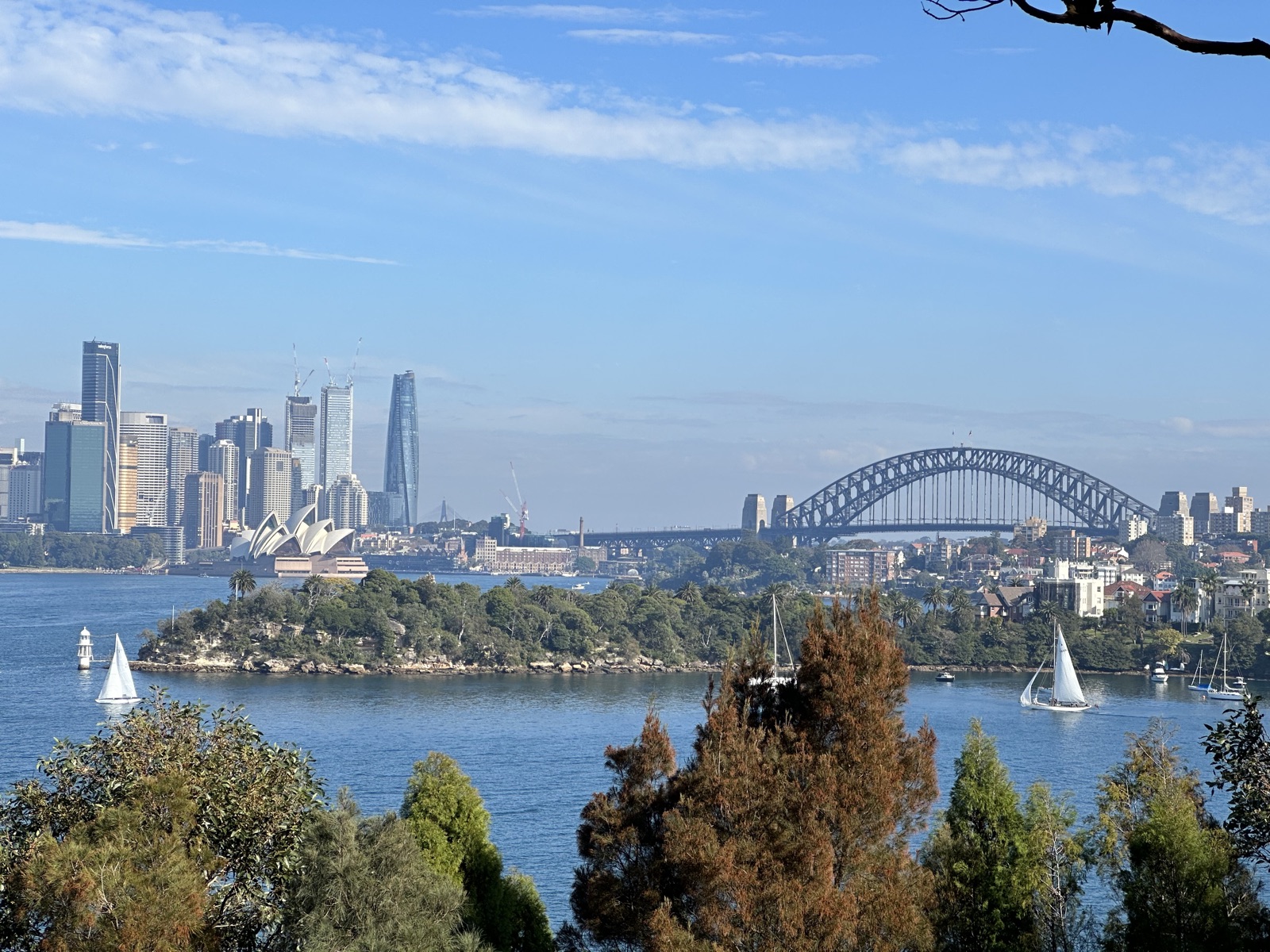
The first thing you notice about Singapore isn’t the skyline or the heat. It’s the quiet.
Not silence. There are eight million people packed onto an island smaller than New York City. But a particular kind of municipal quiet. The trains run on time and in near-perfect silence. The streets are spotless, and I mean genuinely spotless, like someone pressure-washed every sidewalk at four in the morning. The temperature inside every building is exactly 22 degrees Celsius. Nothing is broken. Nothing is out of place.
I’ve been to Singapore five times now, across different phases of my life, and each time I have the same reaction. First: this is incredible. Then, after about four days: something is missing. Then, after a week: I need to leave.
This isn’t a criticism. It’s a meditation on what happens when you optimize everything.
The Case for Perfection
Let me give Singapore its due, because it deserves more than most people give it.
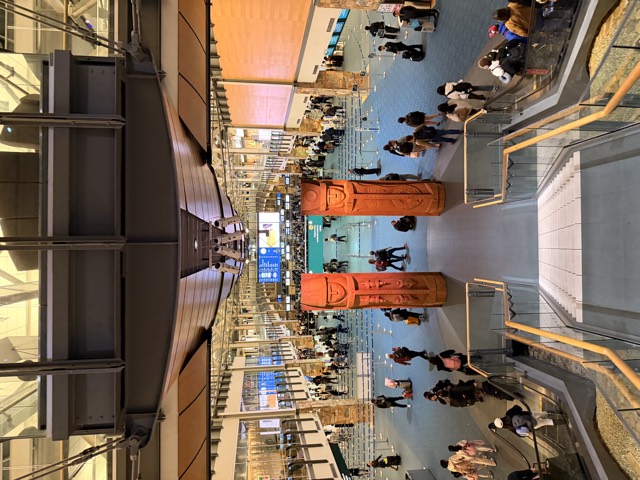
Changi Airport is the finest airport on Earth. I’ll die on this hill. Not because of the butterfly garden or the waterfall, though those are absurd and wonderful, but because of the flow. The movement of people through that space is engineered with the precision of a Swiss watch. I once cleared immigration, collected my bag, and was in a taxi within eleven minutes of landing. Eleven minutes. At JFK, that wouldn’t get you through the jet bridge.
The hawker centers are a masterpiece of urban food policy. Government-subsidized food courts where you can eat chicken rice that would put most restaurants to shame for three Singapore dollars. There are Michelin-starred stalls. Think about that. A Michelin star, at a folding table, under fluorescent lights, while an elderly uncle next to you slurps laksa with the confidence of a man who has been eating at this exact stall for forty years.
Maxwell Food Centre. Lau Pa Sat. Tiong Bahru Market. I’ve eaten at all of them, and the quality-to-price ratio is unlike anything else in the developed world. It’s not just good food. It’s a statement about what a government can accomplish when it decides that affordable, excellent food is a public good.
The public housing is another revelation. Eighty percent of Singaporeans live in HDB flats, government-built apartments that, in most countries, would be called “projects” with all the negative connotations that word carries. In Singapore, they’re well-maintained, well-designed, and integrated with transit, parks, schools, and those hawker centers. It’s public housing that actually works.
Gardens by the Bay is genuinely stunning. Not in the Disney way, but in the “someone spent billions of dollars making a botanical argument for human ingenuity” way. The Cloud Forest dome, a indoor mountain wrapped in mist and ferns, made me feel something close to awe. Real awe. Not Instagram awe.
The Sterility Problem
So what’s missing?
I noticed it first at night. In most cities I love, Bangkok, Mexico City, Istanbul, Lisbon, the night has a certain unpredictability. You turn a corner and find a street musician, a food cart that wasn’t there yesterday, a group of strangers arguing about football with enough passion to power a small generator. The night has edges.
In Singapore, the night is managed. The bars close when they’re supposed to close. The music stays below the permitted decibel level. The nightlife district, Clarke Quay, feels like a nightlife district designed by someone who studied nightlife districts but has never actually stayed out until sunrise on a whim.
There’s a word Singaporeans use: “kiasu.” It roughly translates to “fear of losing out.” It drives the culture of achievement that makes Singapore work, the obsessive studying, the career optimization, the relentless self-improvement. But it also creates a kind of collective anxiety that you can feel if you sit still long enough.
At a coffee shop in Tiong Bahru, one of the “creative” neighborhoods, with its boutique shops and pour-over coffee. I watched two young professionals eating lunch. They were both on their phones, scrolling what appeared to be work emails, eating efficiently, not talking. They left exactly on time. The whole interaction had the warmth of a software update.
Compare that to a lunch I had in Naples. Two hours. Four courses. A waiter who told me, unsolicited, about his daughter’s wedding and then disappeared for twenty minutes because he was in the kitchen arguing with the chef about something unrelated to food. It was chaotic and inefficient and deeply, wonderfully human.
The Messiness Spectrum
I think about cities on a spectrum from messy to optimized, and I think most great cities live somewhere in the middle.
Marrakech is far toward the messy end. Beautiful, overwhelming, occasionally exhausting. Nothing works the way you expect it to. The charm is inseparable from the chaos.
Singapore is the farthest toward optimized I’ve ever experienced. Tokyo comes close, but Tokyo has a layer of eccentricity, the tiny jazz bars in Golden Gai, the cosplay kids in Harajuku, the general weirdness of Japanese popular culture. That gives it texture Singapore lacks.
Copenhagen is interesting because it’s highly organized but still has warmth. The Danish concept of “hygge”, coziness, intentional comfort, softens the efficiency. You can ride a perfect bike lane to a perfect park and then sit there for three hours doing nothing, and nobody thinks you’re wasting time. In Singapore, doing nothing for three hours would feel like a bug in the system.
Lisbon works because it’s beautiful and slightly broken. The trams are unreliable. The sidewalks are uneven. Half the restaurants don’t have websites. But the light at golden hour, the sound of fado drifting from a door you didn’t notice, the elderly woman hanging laundry from a fourth-floor window like a flag of daily life. That’s the kind of beauty that can’t be engineered.
What Optimization Costs
Singapore optimized for outcomes. Safety, cleanliness, economic growth, housing, food, transit. On every measurable metric, it performs extraordinarily well. If you’re grading cities on a rubric, Singapore gets the highest score.
But the things I remember most from my travels aren’t on any rubric.
The night in Buenos Aires when a taxi driver drove me twenty minutes out of the way to show me his favorite hidden parrilla, then refused to charge me for the detour. The morning in Hanoi when I got lost in the Old Quarter and ended up at a street-side barber who gave me a haircut and an unsolicited head massage while his wife made me Vietnamese coffee. The afternoon in Medellín when it started raining so hard that an entire block of strangers crowded under one awning and, with nothing else to do, started a conversation that lasted an hour.
These moments require inefficiency. They require gaps in the schedule, ambiguity in the plan, spaces that haven’t been curated. They require the kind of human messiness that Singapore has spent sixty years systematically removing.
I’m not romanticizing poverty or dysfunction. The reason Singapore is clean is because they invested in sanitation. The reason it’s safe is because they invested in policing. These are good things. Many of the cities I love for their “messiness” have genuine problems, inequality, crime, corruption, that their residents would happily trade for some Singaporean efficiency.
But there’s a difference between solving problems and sterilizing culture. And Singapore, in its pursuit of the former, sometimes tips into the latter.
The Hawker Center Exception
The one place where Singapore’s human messiness survives is the hawker center.
It’s the last truly democratic space on the island. CEOs eating next to construction workers. A table of teenagers sharing a plate of carrot cake next to a grandmother who’s been coming to this stall since before they were born. The noise, the heat, the aggressive auntie who yells your order number like it’s an insult. It’s the most alive I ever feel in Singapore.
I think the hawker centers work precisely because they resist the optimization that defines the rest of the city. The stalls are small and crowded. The seating is communal and uncomfortable. The ordering system is chaotic. And the food is extraordinary because it’s made by people who have spent thirty years perfecting a single dish, not because an algorithm determined the optimal recipe.
There’s a lesson in that, and it extends well beyond city planning.
The Optimization Trap
I think about Singapore when I’m building systems at PipelineRoad. Because the temptation to optimize everything is real, and I’ve felt it.
More templates. More automation. More process. Squeeze every inefficiency out of the workflow. Make everything predictable and measurable and clean.
But the best work we’ve ever done for clients came from the unstructured spaces. The tangent in a meeting that led to a completely different strategy. The “wasted” afternoon spent reading industry forums that surfaced an insight no keyword tool would have found. The long conversation with a client that went forty minutes past the agenda but built the trust that kept them with us for two years.
Efficiency is a tool, not a destination. Singapore taught me that by being the most impressive city I’ve ever visited and one of the few I have no desire to live in.
The Return
I’ll go back. I always go back.
For the chicken rice at Tian Tian. For the walk through the Botanic Gardens at dawn, before the heat becomes a physical presence. For Changi Airport, which honestly makes me happy in a way that no airport should.
But I’ll go back the way I always do, for four days, with a ticket to somewhere messier already booked.
Because the most efficient city in the world is a remarkable achievement. And a four-day city.
Some places are better visited than inhabited. Singapore is the most beautiful proof of that I know.