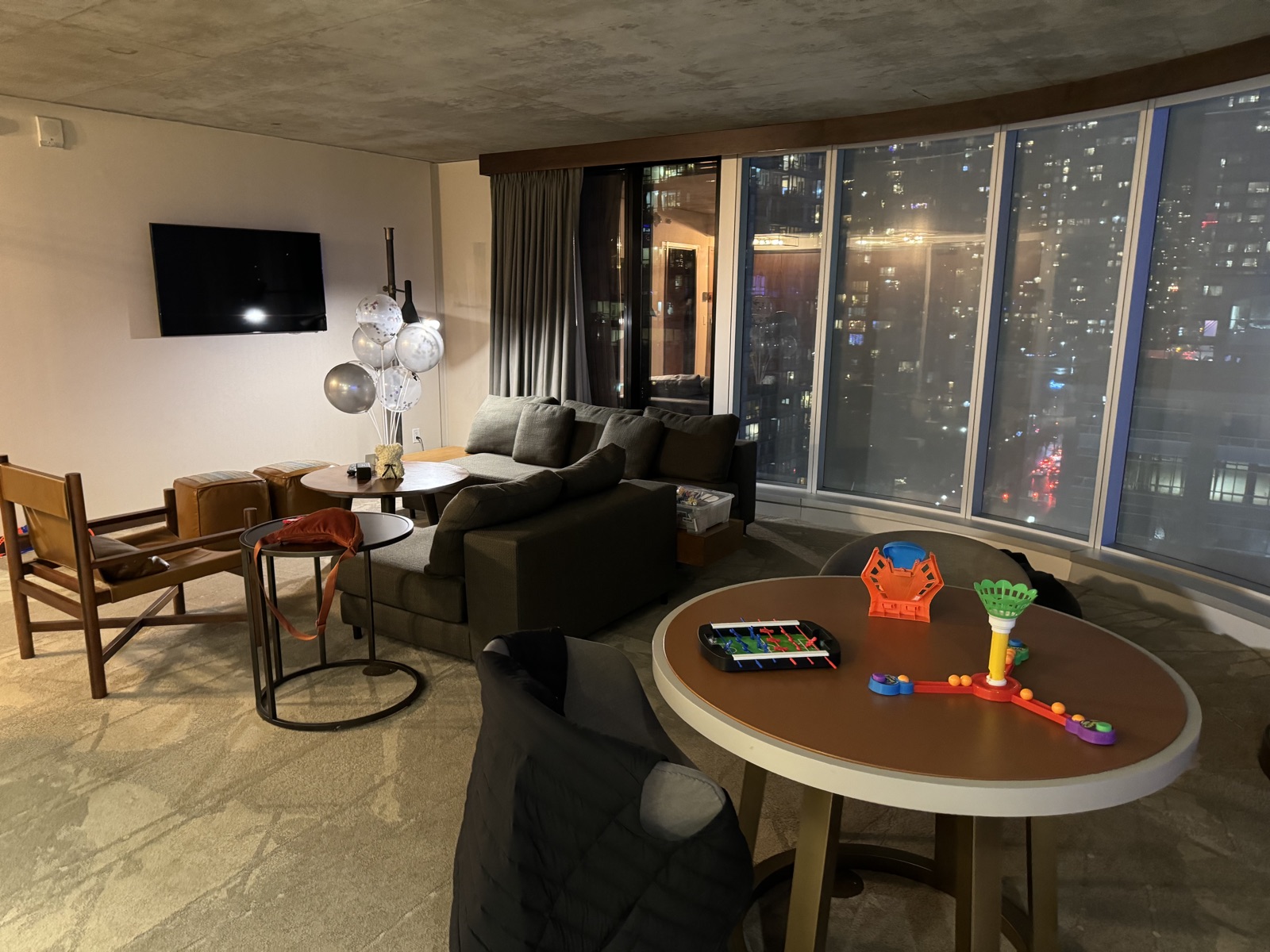
There’s a Marriott in every major city on earth, and in every single one of them, the shower works exactly the same way. The towels are the same weight. The breakfast buffet has the same scrambled eggs, the same sad croissants, the same orange juice that tastes like it was designed by committee. This is the pitch: wherever you go, you know what you’re getting.
I understand the appeal. After forty-something countries, I understand it more than most people. When you’ve been on three flights in two days and your next meeting starts in nine hours, the promise of a predictable room with a functioning air conditioner and fast Wi-Fi isn’t trivial. It’s a relief.
But I stopped choosing that relief years ago, and I haven’t gone back.
The Logic of Chains
Hotel chains sell standardization. Every Hilton, every Hyatt, every InterContinental is engineered to feel like a controlled environment. The brand promise is that geography doesn’t matter. You could be in Bangkok or Berlin and the room service menu would read the same. The loyalty programs reinforce this, stay enough nights and every hotel becomes an extension of home.
For corporate travelers on expense accounts, this makes perfect sense. The hotel is a utility. You need it to function. You don’t need it to be interesting.
But for anyone traveling with even a shred of curiosity, standardization is the enemy. The whole point of being somewhere else is that it’s different. A hotel that works hard to eliminate all local character is a hotel that’s working against the reason you left home.
What Small Hotels Do
The best small hotels I’ve stayed in share a quality that no chain can replicate: they belong to their city. A converted townhouse in Lisbon with azulejo tiles in the stairwell and a breakfast of pastéis de nata and strong coffee served on a terrace overlooking the Tagus. A riad in Marrakech where the courtyard has a fountain and the owner’s mother makes the evening meal. A ryokan in Kyoto where the tatami floors creak in a way that’s meant to be heard, because the house was designed to announce your presence.
These places don’t just reflect their location. They teach it. Staying in them, you absorb things about the culture that no guidebook conveys. The rhythm of breakfast. The way light moves through the architecture. The sounds that the building lets in. A good small hotel is a primer on the sensory vocabulary of a place.
The Owner Effect
There’s another dimension that matters, especially if you’re someone who builds businesses. Small hotels are usually run by people who chose this life. They’re not regional managers executing a brand playbook. They’re individuals, often families, who decided that this particular building, in this particular neighborhood, should become a place where strangers are welcomed.
The conversations you have with these owners are categorically different from anything you’d get at a front desk staffed by someone following a script. I’ve learned about local politics in Colombia from a guesthouse owner in Cartagena. I’ve gotten restaurant recommendations in Tokyo from a woman who ran a six-room inn above a noodle shop and knew every chef in the neighborhood personally. I’ve heard the economic history of Porto from a man who converted his grandmother’s house into a hotel because the neighborhood was dying and he wanted to give people a reason to visit.
These interactions aren’t amenities. They’re the point.
The Tradeoffs Are Real
I’m not romantic about this. Small hotels come with genuine inconveniences. The Wi-Fi is sometimes unreliable. The rooms are sometimes small. There’s no gym, no business center, no concierge desk staffed around the clock. The hot water might take a minute. The walls might be thin.
When I’m traveling for work and need to be sharp for a client call at 7 AM, I weigh these tradeoffs carefully. Sometimes the chain wins. I’m not above a well-located Novotel when the situation demands it.
But when the situation doesn’t demand it, which is most of the time, the small hotel is a better investment. Not because it’s cheaper, though it often is. Because it’s richer. Because you remember it. Because it becomes part of the story of the trip rather than a forgettable parenthetical.
The Memory Test
Here is the simplest way I evaluate where to stay: will I remember this place in five years?
I cannot tell you a single specific thing about any Hilton I’ve ever slept in. They blur into one long beige hallway. But I can describe, in precise detail, the sound of rain on the tin roof of a guesthouse in Chiang Mai, the smell of cedar in a mountain lodge in the Atlas range, the view from a converted lighthouse on the Portuguese coast where the owner served port wine at sunset because he felt like it.
Travel is an investment of time and money, and like any investment, the returns should compound. The places you stay either add to the story or they don’t. Chain hotels are designed to be invisible. Small hotels are designed to be remembered.
I’ll take the memory every time.