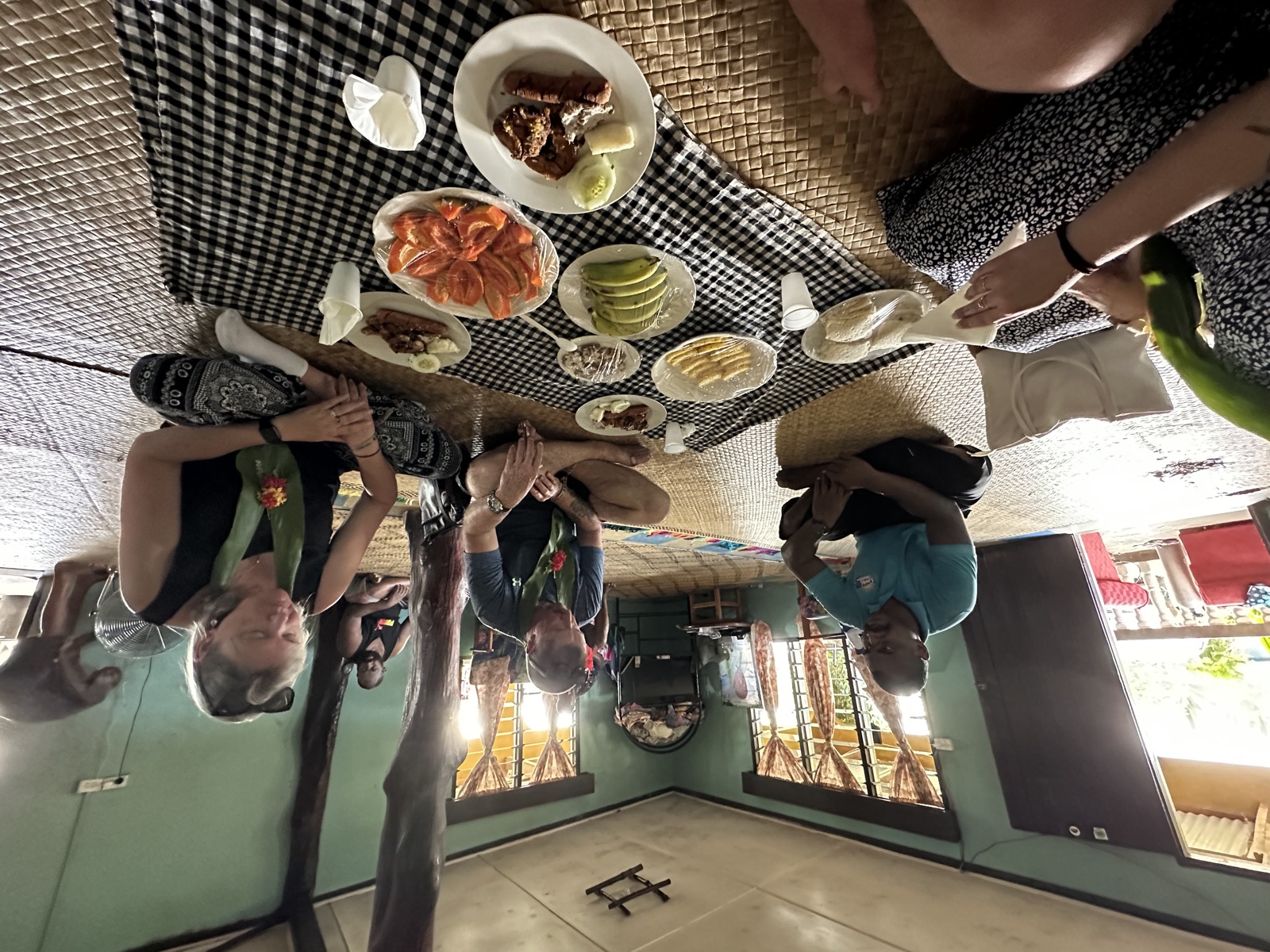
Sitting in a family home in rural Turkey, I watched a neighbor arrive with a tray of food. Not because anyone was sick. Not because there was a celebration. Just because she’d cooked more than her family needed, and bringing the surplus next door was as natural as breathing. No debt was created. No thank-you note was expected. The food appeared, was received with warmth, and the transaction, if you could even call it that, was complete.
Over the following days, I saw this pattern repeat in a dozen variations. A farmer dropping off vegetables. A cousin fixing a leaky pipe without being asked. A woman watching three children who weren’t hers while their mother ran errands. None of it was organized. None of it was tracked. And none of it required reciprocity in the direct, ledger-balanced way that Western economics assumes.
This is the gift economy, and encountering it in its living form changes how you think about exchange, obligation, and what holds communities together.
Beyond Transaction
Modern economies run on transaction. I give you something, you give me something of equivalent value, we’re even. The logic is clean, measurable, and scalable. It built the world we live in. But it also flattened something, a dimension of human exchange that older systems understood and that market logic has trouble accounting for.
In a gift economy, the giving isn’t separate from the social fabric. It is the social fabric. When the neighbor brings food, she’s not performing charity. She’s maintaining a relationship, reinforcing a network, participating in a system where today’s giver is tomorrow’s receiver and the roles are fluid. The gift isn’t a transaction. It’s a thread in a web that holds everyone up.
Marcel Mauss wrote about this in The Gift nearly a century ago, and his core observation still holds: in gift economies, the object given carries something of the giver with it. The food isn’t just calories. It’s a relationship made tangible. Receiving it means something. Refusing it means something else entirely.
Where I’ve Seen It
The gift economy isn’t confined to any single culture, but it’s most visible in places where formal institutions are weak and communities have to build their own infrastructure.
In parts of Southeast Asia, the tradition of communal labor, where a village comes together to build a house or harvest a field, knowing that the same labor will flow back when it’s needed, functions as a kind of insurance policy that no actuary designed. In Latin America, the extended family network operates similarly: resources, childcare, housing, and emotional support circulate through kinship lines with an efficiency that formal social services rarely match.
In East Africa, there’s a tradition of rotating savings groups, chamas in Kenya, stokvels in South Africa, where members pool money and take turns receiving the pot. It’s a financial instrument built entirely on trust and social obligation. No contracts. No interest rates. No enforcement mechanism beyond the understanding that if you take and don’t give, you’re not just breaking a rule. You’re breaking a relationship.
What these systems share is a fundamental insight: generosity, when it’s structural rather than episodic, creates a kind of resilience that money alone can’t buy. The community that gives freely is the community that can absorb shocks, illness, crop failure, economic downturns, because the safety net isn’t institutional. It’s relational.
The Business Parallel
I think about this a lot in the context of how businesses build relationships. The dominant model in B2B is transactional: I give you leads, you give me money. The value exchange is explicit, measured, and terminates when the contract does. There’s nothing wrong with this. It works.
But the companies I’ve seen build the deepest moats, the ones with customer loyalty that borders on irrational, operate with a gift-economy sensibility layered on top of their transactions. They give things that aren’t in the contract. They share insights they could charge for. They make introductions that don’t benefit them directly. They invest in the relationship beyond the scope of the engagement.
At PipelineRoad, some of the strongest client relationships Bruno and I have built started with us giving something away, a strategy insight, an introduction, a piece of work that went beyond the brief. Not as a loss leader or a calculated move, but because we genuinely thought it would help. The return on those gifts has been enormous, but it wasn’t predictable at the time. That’s the nature of gift-economy logic: the return is real, but it’s not linear, and trying to calculate it in advance destroys the thing that makes it work.
What Gets Lost
The gift economy is fragile. It requires proximity, trust, and a shared sense of obligation, all things that modern life systematically erodes. When people move to cities, when communities disperse, when interactions become digital and anonymous, the conditions for gift exchange dissolve. You can’t bring soup to a neighbor you’ve never met.
This is the trade-off of modernity. We gained efficiency, mobility, individual freedom. We lost some of the connective tissue that held communities together without anyone having to design it. The market is an extraordinary coordination mechanism, but it coordinates strangers. The gift economy coordinates people who know each other, and that knowledge, of needs, of capacities, of character, is information that no market price can encode.
I don’t romanticize this. Gift economies can be coercive. The obligation to give can become a burden. The social pressure to reciprocate can trap people in relationships they’d rather leave. Every system has its shadow.
But sitting in that Turkish home, watching generosity flow as naturally as conversation, I felt something that I rarely feel in the transactional world: the sense that abundance isn’t something you hoard. It’s something you circulate. And the more freely it moves, the more there is to go around.