I’ve onboarded enough B2B SaaS clients to know that the first ninety days determine everything.
Not in a dramatic way, nobody’s company lives or dies based on one quarter of marketing work. But the patterns you set in the first ninety days, the trust you build, the systems you establish, the wins you generate, either compound or they don’t. And by the time you realize they’re not compounding, you’ve already lost the client’s confidence.
So we’ve built a playbook. Not a rigid one, every client is different, and the best playbook is one that adapts. But a reliable structure that ensures we don’t skip the foundational work in our rush to show results.
Here’s what it actually looks like, week by week.
Weeks 1-2: The Deep Dive
We don’t touch any tactics in the first two weeks. This is the part that makes new clients nervous. They came to us because they need marketing, and for two weeks we’re doing research and asking questions.
But this is the highest-leverage time in the entire engagement. Everything we build rests on what we learn here.
The Brand Audit. We read everything the company has ever published. Website, blog, social media, sales decks, pitch recordings, investor materials, product documentation. We’re looking for two things: what story are they telling, and is it consistent? Almost always, the answer to the second question is no. The website says one thing, the sales team says another, and the founder says something different on podcasts. That’s normal, and it’s fixable, but we need to see it clearly before we can fix it.
Customer Interviews. This is non-negotiable. We talk to three to five of the client’s actual customers, not prospects, not churned users, current happy customers. We ask open-ended questions: What problem were you trying to solve? What were you using before? How would you explain this product to a colleague? What almost stopped you from buying?
The answers to these questions are almost always different from what the client thinks their customers would say. That gap is where the best messaging lives.
Competitive Landscape Mapping. We identify every alternative the ideal buyer has, direct competitors, adjacent solutions, manual workarounds, and the status quo. For each, we analyze their positioning, their messaging, their content strategy, and their apparent weaknesses. We’re not looking for competitors to attack. We’re looking for white space to own.
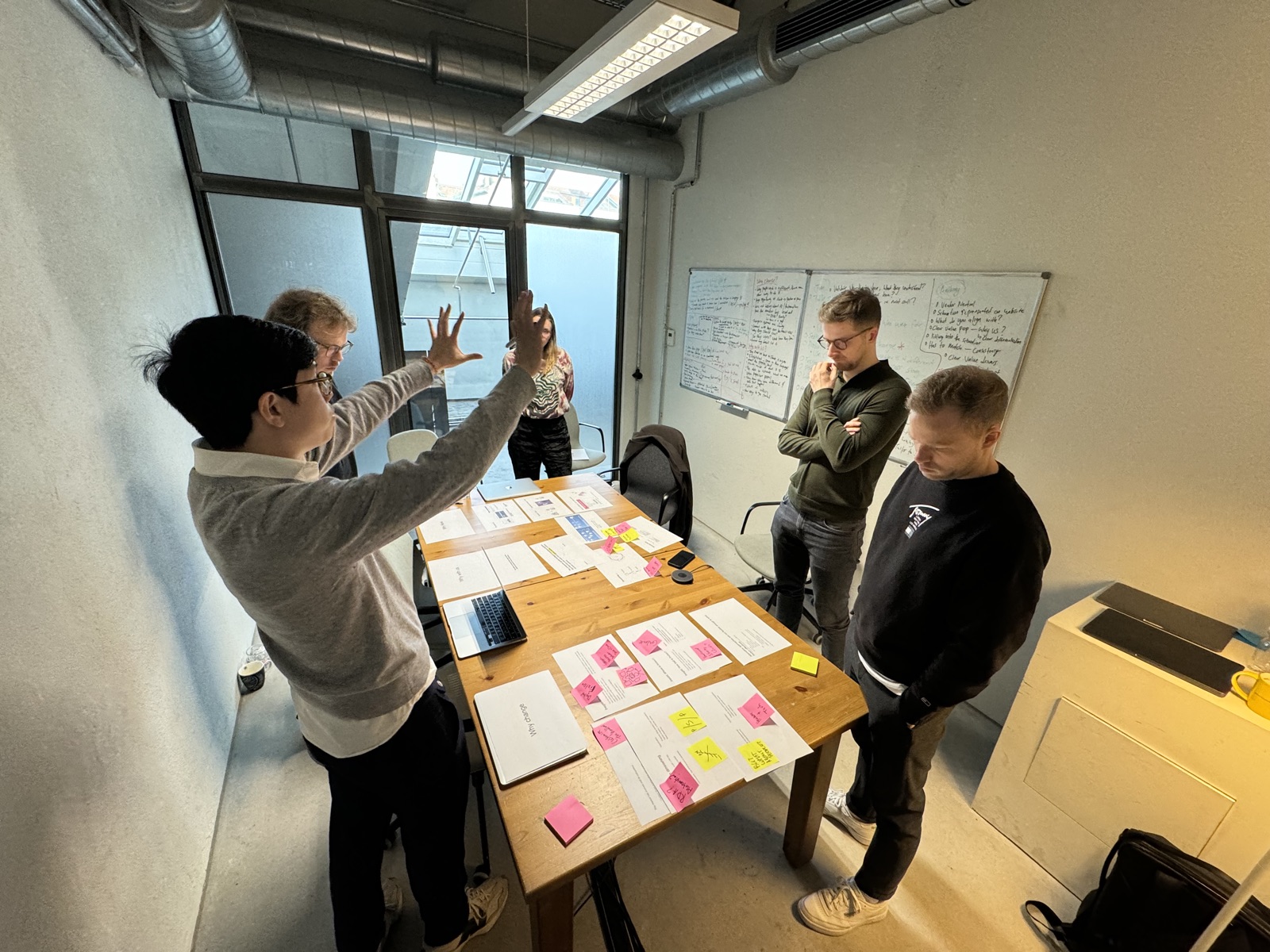
ICP Workshop. By the end of week two, we run a half-day workshop with the client’s leadership team. The goal is to walk out with a one-page ICP document that everyone agrees on. Not a vague persona with a stock photo and a fake name. A specific description of the company size, industry, role, pain points, buying triggers, and decision-making process of the person most likely to buy.
This document becomes the filter for everything. Every piece of content, every ad, every email gets evaluated against it. Does this serve the ICP? If not, we don’t do it.
Weeks 3-4: Positioning and Messaging
With the research done, we can now do the most important strategic work of the engagement: positioning.
Positioning Statement. We draft a positioning statement that answers four questions: Who is this for? What category is it in? What’s the key differentiator? What’s the proof?
This isn’t a tagline. It’s a strategic document. It lives in a shared doc and gets referenced in every creative brief, every content outline, every campaign plan. When someone on our team or the client’s team asks “what are we saying and why,” this document is the answer.
Messaging Framework. From the positioning, we build a messaging framework: the core narrative, the key value propositions (usually three), the supporting proof points for each, and the language patterns we’ll use. We also document what we won’t say, the jargon to avoid, the claims that aren’t credible, the competitive angles that are unproductive.
Homepage Audit and Recommendation. The client’s homepage is usually the first thing we want to improve. Not a full redesign, just the messaging. We rewrite the hero section, the value props, and the CTA based on the new positioning. This gives the client a tangible, visible change early in the engagement, which builds confidence. It also ensures that when we start driving traffic, the page actually converts.
This phase takes longer than clients expect. They want to see campaigns. We’re still writing documents. I’ve learned to be upfront about this: “The next two weeks are going to feel slow. They’re the most important two weeks of the engagement.”
Some clients push back. The good ones trust the process after seeing the output. The impatient ones sometimes leave. That’s okay, if a client doesn’t value foundational work, we’re probably not the right fit.
Weeks 5-8: Channel Selection and First Campaigns
Now we start building.
Channel Strategy. Not every channel works for every company. A pre-revenue startup with no brand recognition shouldn’t be running paid LinkedIn ads at $15 per click. A Series B company with strong intent data should be running paid search and retargeting. We evaluate the client’s stage, budget, and ICP to recommend two to three channels for the first ninety days.
Our default stack for most B2B SaaS clients is:
-
Content/SEO, Long-term investment. We start publishing immediately because content takes time to compound. The first articles are bottom-of-funnel: comparison pages, use case pages, problem-specific content that targets buyers who are already looking.
-
Email sequences, If the client has an existing list or a sales team doing outbound, we build sequences immediately. Cold outbound sequences, nurture sequences, post-demo follow-ups. These generate the fastest results because they’re going to people who’ve already interacted with the company.
-
One paid channel, Usually LinkedIn or Google Search, depending on where the ICP is searching. We start with a small budget, test messaging variants, and scale what works. The positioning work from weeks 3-4 makes this dramatically more efficient because we know what to say before we start spending.
Content Calendar. We build a twelve-week content calendar that balances three types of content: bottom-of-funnel (comparison, use case, product), middle-of-funnel (educational, how-to, framework), and top-of-funnel (thought leadership, industry analysis). The ratio shifts based on the client’s maturity, newer companies lean bottom-of-funnel because they need conversions. Established companies lean top-of-funnel because they need awareness.
First Campaign Launch. By week six, we have at least one campaign live. This might be a small paid campaign, a set of outbound sequences, or the first batch of content published. The goal isn’t to hit a home run. It’s to generate data. What messaging resonates? What CTAs convert? What objections come up in the funnel?
Weeks 9-12: Optimization and Scaling
The last month of the first ninety days is about reading the data and adjusting.
Performance Review. We look at everything: ad click-through rates, email open and reply rates, content engagement, lead quality, pipeline generated. We’re not expecting massive results at this stage, ninety days isn’t enough time for most B2B marketing to fully mature. But we should see signals: which messages are resonating, which channels are performing, where the funnel is leaking.
Messaging Refinement. Based on the data, we update the messaging framework. The first version is always a hypothesis. By week twelve, it’s a tested hypothesis. Some value props land. Some don’t. Some competitive angles resonate. Some fall flat. We adjust.
Channel Doubling Down. If one channel is clearly outperforming, we shift budget and effort there. If a channel isn’t working, we either diagnose why or kill it. This is where the discipline matters. It’s tempting to keep running an underperforming channel because you’ve already invested in it. Sunk cost thinking kills marketing budgets.
Reporting and Alignment. We build a reporting dashboard that tracks the metrics the client actually cares about. Not vanity metrics, not impressions, not follower counts. Pipeline metrics: MQLs, SQLs, pipeline dollar value, conversion rates at each stage. And we meet weekly to review these numbers together, so the client always knows where we stand.
What Takes Longer Than Expected
I want to be honest about the timeline, because this is where most agencies overpromise.
Content takes six months to compound. The articles we publish in month one won’t generate significant organic traffic until month four or five. That’s the nature of SEO. We set this expectation early and track leading indicators, rankings improvements, impressions growth, to show progress before the traffic arrives.
Outbound takes iteration. The first email sequence almost never crushes it. Reply rates on cold email are low across the board, and finding the right message-market fit takes multiple rounds of testing. We plan for three to four sequence iterations in the first ninety days.
Internal alignment takes time. Our work is only as good as the client’s ability to act on it. If we generate leads and the sales team doesn’t follow up, the marketing doesn’t work. Getting sales and marketing aligned, on definitions, on handoffs, on follow-up cadences, is a process, not an event.
Brand perception is slow to change. If a company has been poorly positioned for years, the market has a mental model of them that doesn’t shift overnight. Even with great new messaging, it takes repeated exposure for the market to update its understanding. We plan for this and set realistic expectations about how long it takes for positioning changes to show up in pipeline numbers.
The 90-Day Checkpoint
At the end of ninety days, we do a formal review with the client. We present what we’ve learned, what we’ve built, what’s working, and what we’re adjusting. We also present the plan for months four through six, which is usually more aggressive because the foundation is in place.
This checkpoint is also when we have an honest conversation about fit. Is this working? Are we the right partner? Is the pace right? Some of the best client relationships I have started with a ninety-day checkpoint where we both acknowledged what wasn’t working and committed to fixing it.
The worst thing that can happen is a client that’s silently unhappy. The ninety-day review prevents that by creating a structured moment for honest feedback.
Why Transparency Matters
I’m sharing this playbook publicly because I don’t think it’s a competitive secret. The steps are not complicated. Any competent marketing team could follow them.
The hard part isn’t knowing what to do. It’s doing it consistently, doing it thoroughly, and doing it even when the client is pressing you to skip ahead. The hard part is the discipline to do the foundational work when everyone wants to see results.
That discipline is what we sell. Not tactics. Not channels. Not clever campaigns. The discipline to do the work in the right order, every time, for every client.
If you’re evaluating agencies, ask them what their first ninety days look like. If the answer is “we’ll start running campaigns in week one,” run. Not because campaigns are bad, but because campaigns without positioning are expensive experiments in guessing.
And if you’re building your own go-to-market motion, use this framework. Adapt it to your context. Skip the parts that don’t apply. But don’t skip the positioning work. Don’t skip the customer interviews. Don’t skip the ICP definition.
Everything else is downstream.