The road up took longer than expected. It always does with mountain towns. What looks like a short distance on a map becomes an hour of switchbacks, each turn revealing a steeper grade and a thinner margin between asphalt and a very long fall. By the time you arrive, you understand something essential about the place before you’ve spoken to anyone: getting here is work. Staying here is a choice.
Mountain towns are shaped by this fundamental fact. The geography that makes them beautiful also makes them isolated, and isolation does particular things to a community. It breeds self-reliance. It preserves traditions. It creates a relationship with the outside world that is, by necessity, deliberate rather than casual.
I’ve visited mountain towns on several continents, and despite the differences in language, climate, and culture, they share a remarkable set of characteristics. As if altitude itself were a variable that exerts consistent pressure on human settlement, producing similar adaptations everywhere.
The Architecture of Necessity
Mountain towns build differently. Not as an aesthetic choice, but because the terrain demands it. Structures are compact, heavy, anchored against wind and snow and the gradient of the land itself. Building materials are local, stone, timber, whatever the mountain provides, because hauling materials up from the valley is expensive and unreliable.
The result is an architecture that feels organic in a way that planned cities never do. Buildings follow the contour of the slope. Streets switchback like the road that brought you here. There’s no grid because a grid is a flatland invention. Everything is adapted to the angle.
Walking through these towns, I’m always struck by how the built environment communicates. The thick walls say: winter is serious here. The small windows say: we conserve heat. The clustered layout says: we need each other close. The architecture is a conversation between human ambition and geographic constraint, and the geography always gets the last word.
Self-Reliance as Culture
Isolation produces a particular kind of community. When the nearest city is hours away, and in winter, sometimes unreachable, a town must be able to sustain itself. This means local food production, local craft traditions, local solutions to local problems.
In one mountain town I visited in South America, there was a single road in and out, and it washed out during the rainy season. For months at a time, the town was effectively an island. The residents didn’t describe this as hardship. They described it as normal. They grew their own food, maintained their own infrastructure, educated their own children, and settled their own disputes. Not because they rejected the outside world, but because the outside world was often unavailable.
This self-reliance produces a mentality that’s distinct from what you find in connected, urban environments. There’s a directness to mountain people. A pragmatism stripped of abstraction. Problems are physical and immediate, a broken bridge, a failing crop, a sick animal, and solutions are evaluated by whether they work, not by whether they conform to theory.
I find this refreshing after spending time in cities where entire industries exist to discuss problems at a level of abstraction that would be incomprehensible in a mountain town.
The Preservation Effect
Mountains preserve things. Languages, recipes, customs, crafts, traditions that have been abandoned in the valleys and cities below often survive in mountain communities, maintained not by museums but by daily practice.
This happens because isolation slows the rate of cultural change. New ideas travel uphill slowly. Trends that sweep through connected populations take years to reach remote settlements, if they arrive at all. The result is communities that feel temporally displaced, not frozen in time, exactly, but operating on a longer timeline than the rest of the world.
Spending time in these places recalibrates something in your sense of what’s permanent and what’s passing. The thing you thought was universal turns out to be recent. The tradition you assumed was quaint turns out to be deeply functional, a solution refined over centuries for a problem that hasn’t changed.
The View
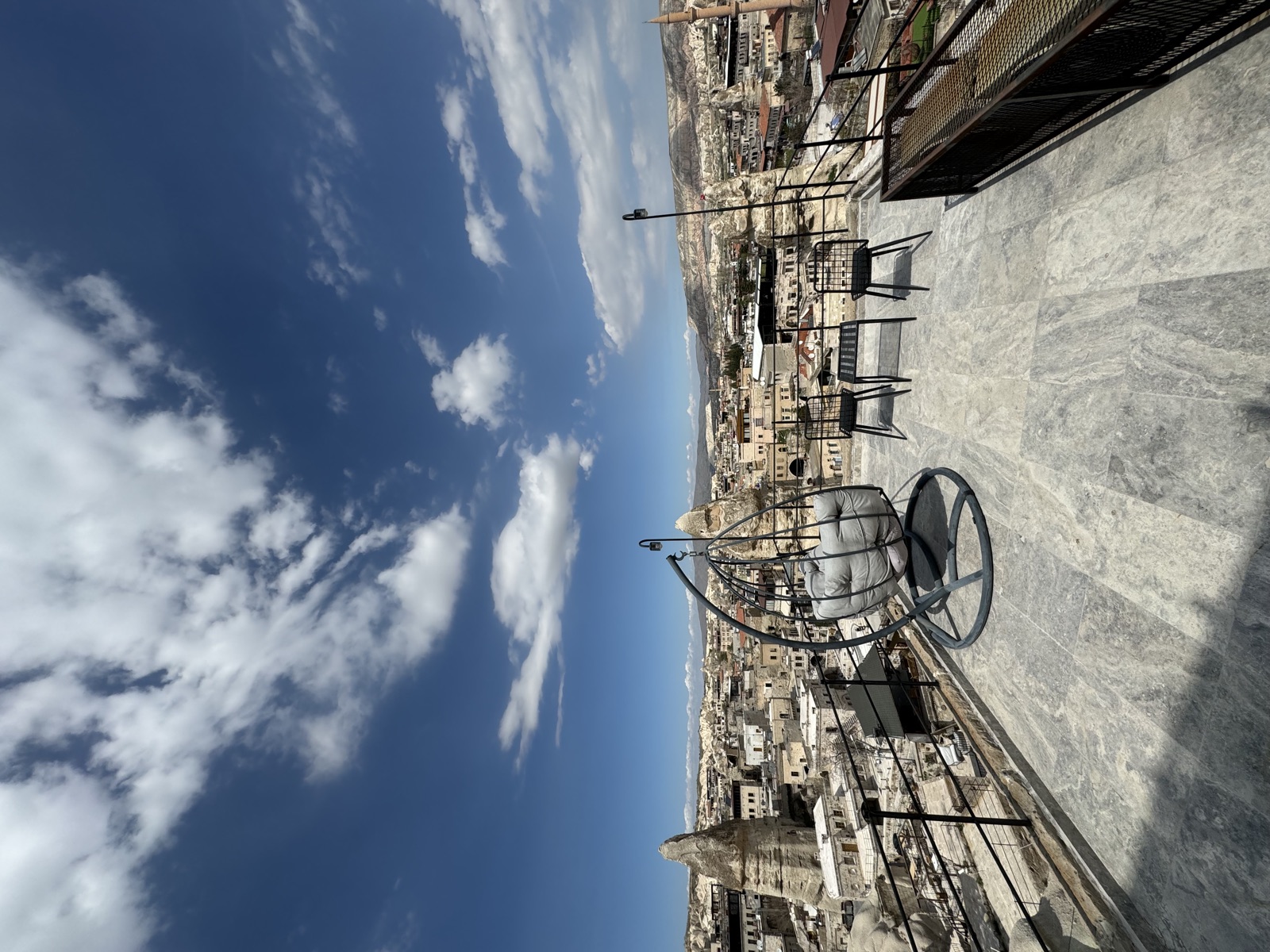
There’s something else mountain towns give you that I haven’t found elsewhere: perspective. Literal, physical perspective. You can stand at the edge of a mountain town and see fifty miles in every direction. The valley below, the peaks above, the weather approaching from the west. The world is laid out for you in a way that flatland never allows.
I think this affects the people who live there. Not in any mystical way, but practically. When you can see the whole valley, you develop a different relationship with distance and scale. You see where things come from and where they go. You see the storm before it arrives. You develop patience, because from up here, you can tell that the thing rushing toward you still has a long way to travel.
The founders I’ve met who grew up in rural or mountain environments tend to have this quality, a long view, an ability to see the whole board rather than just the piece in front of them. It’s not always an advantage. Sometimes the urgency of the valley is what’s needed. But it’s a perspective I’ve learned to value.
Why Mountain Towns Matter
We live in an era that celebrates connectivity. Everything should be accessible, integrated, on the network. Mountain towns are the opposite, places defined by their distance from the network, by what it costs to reach them, by what that cost preserves.
I don’t romanticize isolation. It has real costs, limited healthcare, limited opportunity, the particular loneliness of a place where everyone knows everyone and there’s nowhere to hide. But I do think mountain towns represent something we’re losing in the rush to connect everything: the value of friction. The insight that difficulty produces. The culture that only forms when a community is forced to rely on itself.
The road down is always faster than the road up. But something stays with you from the altitude, a clarity you didn’t have before, a reminder that not everything worth building needs to be easy to reach.