The sociologist Ray Oldenburg coined the term “third place” in 1989 to describe the spaces that sit between home and work, the cafés, barbershops, pubs, parks, and plazas where people gather not because they have to, but because something in the space invites them to stay. His argument was straightforward: first and second places (home and office) are necessary but insufficient for a functioning society. Without third places, communities atomize. People become efficient but lonely.
I think about Oldenburg constantly, mostly because I’ve spent years moving between cities and the quality of the third places is the single best predictor of whether I’ll want to come back.
The Café as Civic Infrastructure
In Vienna, the coffeehouse is not a business. It is an institution. You order a melange, and you’re given a glass of water and a small silver tray and the implicit permission to stay as long as you want. Nobody asks if you’d like anything else. Nobody hints that the table is needed. The understanding is that you are not a customer occupying a seat. You are a citizen using a public resource that happens to serve coffee.
This is categorically different from the modern café experience in most American cities, where the pressure to order, consume, and vacate is encoded into everything from the hard chairs to the timed Wi-Fi to the signs asking you to limit your stay to forty-five minutes. The American café is optimized for throughput. The Viennese café is optimized for presence.
The difference matters more than it seems. When a space tells you to stay, you behave differently. You read. You think. You have the conversation that requires a second hour. You run into someone you know and sit with them because there’s no friction in doing so. The space creates the conditions for the interactions that make a city feel like a community.
Plazas, Squares, and the Art of Doing Nothing
In southern Europe and Latin America, the third place is often outdoors. The Italian piazza, the Spanish plaza, the Brazilian praça, these are spaces designed for the specific activity of being present without a purpose.
Walking through a plaza in a Spanish town on any evening, you’ll find it full. Not with tourists, though they’re often there too. Full with locals, elderly couples on benches, teenagers on steps, families with strollers making slow circuits of the perimeter. Nobody is going anywhere. The plaza is the destination.
This concept barely exists in most of North America. American urban planning optimized for cars, parking, and commercial frontage. The spaces between buildings are meant to be traversed, not inhabited. You move through them on your way to somewhere else. The idea that you might go to a public space and simply exist there, without buying anything, without an appointment, without a purpose, feels almost transgressive.
And yet, spending time in cities that have these spaces, you notice what they produce. Neighbors who recognize each other. Children who know the geography of their block by heart. Old men who’ve been meeting at the same bench for decades. The social fabric that everyone agrees is fraying in modern life is often held together by nothing more complicated than a well-placed bench in a well-designed square.
The Pub, the Izakaya, the Hawker Centre
Every culture has its version of the third place, and the specific form tells you something essential about the culture itself.
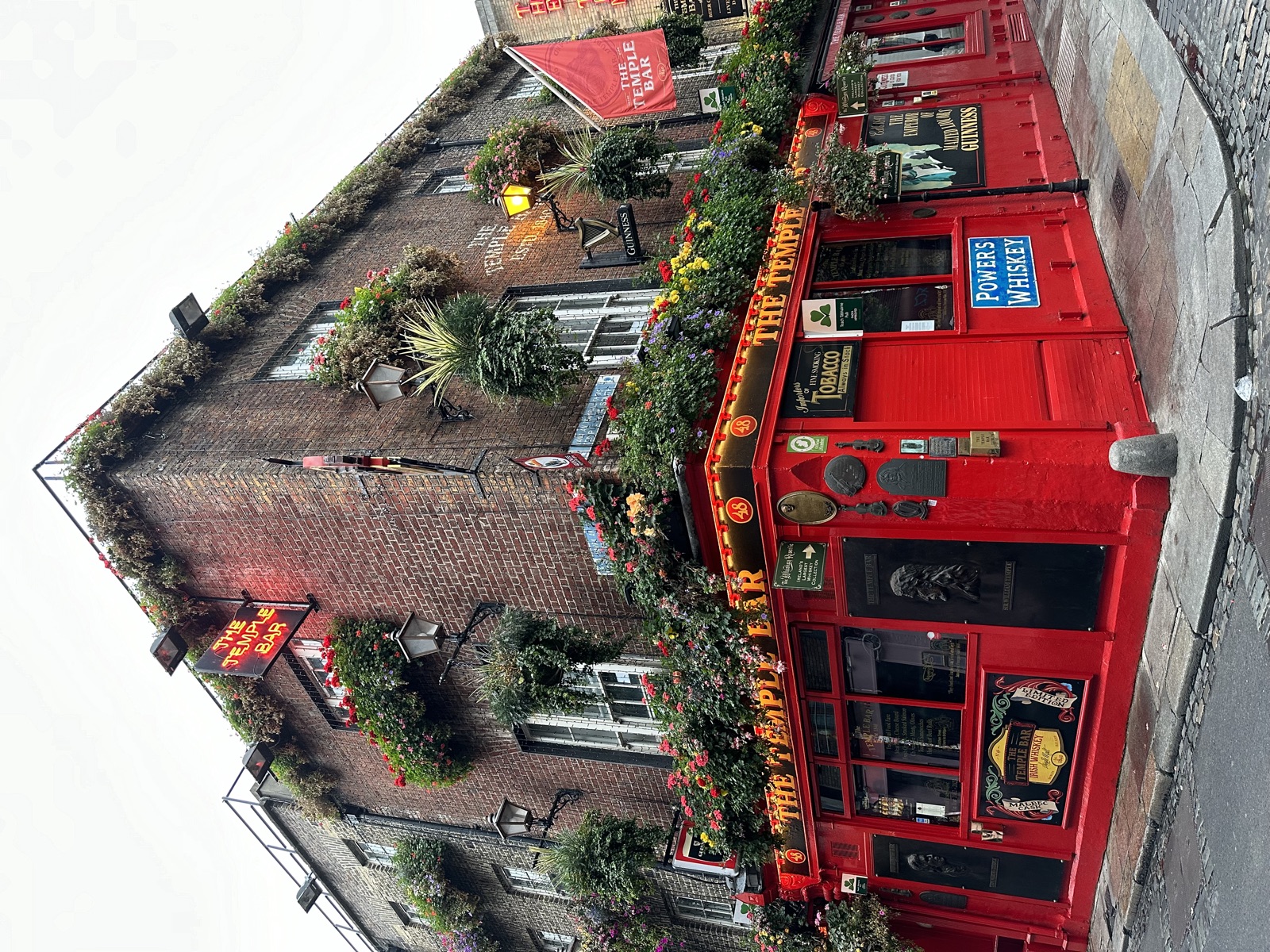
The British pub, the real one, not the gastro-pub with small plates and craft cocktails, is built around the principle of the local. You go to the same one. The bartender knows your name. The conversation at the bar is communal property. You can join it or listen to it, and both are acceptable.
The Japanese izakaya serves a similar function through different mechanics. Small dishes, flowing sake, close quarters. The format encourages sharing, of food, of space, of conversation. The intimacy is architectural. You’re simply too close to each other to remain strangers.
The Singaporean hawker centre is perhaps my favorite example. A covered open-air food court where a dozen stalls serve different cuisines at shared tables. You sit where there’s space, which often means sitting with strangers. The meal costs almost nothing. The experience is irreplaceable. It is simultaneously public dining, community gathering, and cultural preservation, because the hawker stalls often represent recipes that are generations old, kept alive by the daily demand of regulars.
What We Lost, What We’re Losing
The erosion of third places is one of the quiet tragedies of modern life. It happened gradually, through suburbanization, through the rise of remote work, through the platformization of social life. Why go to the café when you can video-call? Why go to the plaza when you can scroll? Why go to the pub when you can order delivery and watch something?
The answer is that screens don’t produce the same thing. They produce connection, sometimes. They produce entertainment, often. But they don’t produce the ambient sociality that third places generate, the sense of being part of a place, of sharing it with others, of belonging to a community you didn’t have to opt into.
Working remotely across multiple countries, I’ve become acutely sensitive to this. The cities I return to are invariably the ones with strong third places. The ones I leave quickly are the ones where public life happens indoors, behind screens, alone.
A city without third places is just a collection of buildings. With them, it becomes somewhere worth living.