I’ve been keeping a journal since I started traveling seriously. Not a diary, more like a collection of observations. Things I noticed that I didn’t want to forget. Patterns that only became visible by contrast. Moments where something small revealed something large.
This is an attempt to distill thirty of those countries into thirty lessons. One each. Not comprehensive, no country can be captured in a paragraph, but honest. These are the things that stuck.
1. Japan
Precision is a form of respect. The way a Tokyo barista handles your cup, the way a train conductor bows to an empty car, the way a bento box is arranged. It’s all the same impulse. Doing something carefully is how the Japanese say “this matters.” After two weeks there, my own sloppiness became unbearable.
2. Colombia
Relationships aren’t a means to an end. They are the end. In Bogota, I watched a business meeting dissolve into a two-hour lunch where nobody discussed business, and the deal closed the following week because everyone at that table now trusted each other. The relationship was the negotiation.
3. Portugal
Slowness isn’t laziness. It’s a different theory of time. The Portuguese move at a pace that American visitors often mistake for inefficiency, but their quality of life metrics tell a different story. They’ve figured out something about the relationship between speed and satisfaction that the rest of the West is still catching up to.
4. Germany
Systems work when people believe in systems. German infrastructure isn’t magical. It’s the product of a culture that genuinely trusts collective institutions. Trains run on time because everyone expects trains to run on time. That expectation is itself the mechanism.
5. Morocco
Hospitality can be radical. A family in Fez invited me, a complete stranger, into their home for dinner. Three courses. Two hours. They refused any payment. This wasn’t unusual. This was Tuesday. American hospitality is friendly. Moroccan hospitality is fierce.
6. Thailand
Kindness doesn’t require a reason. The Thai concept of being jai dee, good-hearted, isn’t transactional. People are kind because kindness is the default setting, not because they expect something in return. After a month in Thailand, the baseline cynicism I carried from New York felt like a disease.
7. Argentina
Passion and discipline aren’t opposites. Buenos Aires is a city that stays up until 4 AM and then shows up for work at 9. The tango, the football, the heated debates at dinner. It’s not chaos. It’s intensity applied to everything, including the things that matter.
8. South Korea
The future is already here. It’s just not evenly distributed. Seoul felt like living five years ahead, the technology, the infrastructure, the speed of daily transactions. It recalibrated my sense of what’s possible and made me impatient with American tech that suddenly felt quaint.
9. Italy
The best things resist optimization. Italian food is perfect because nobody is trying to make it efficient. The ingredients are simple. The techniques are old. The meals take too long. And none of it can be improved by making it faster or cheaper. Some things are already right.
10. Mexico
Complexity is a feature, not a bug. Mexico is a country of contradictions that don’t resolve, ancient and modern, tender and violent, deeply traditional and wildly creative. My American instinct to simplify, to put things in clean categories, broke completely there. Mexico taught me to hold multiple truths at once.
11. Denmark
Trust is infrastructure. Copenhagen works because Danes trust each other at a level that Americans would find naive. Bikes are left unlocked. Strollers sit outside restaurants with babies sleeping inside them. The social contract is strong enough to lean on, and leaning on it makes it stronger.
12. Turkey
History isn’t the past. In Istanbul, you drink tea in a building older than your country. You walk streets where empires rose and fell. History is physically present in a way that makes the American sense of timelessness, the feeling that right now is all there is, seem shallow. Everything you’re stressed about has happened before.
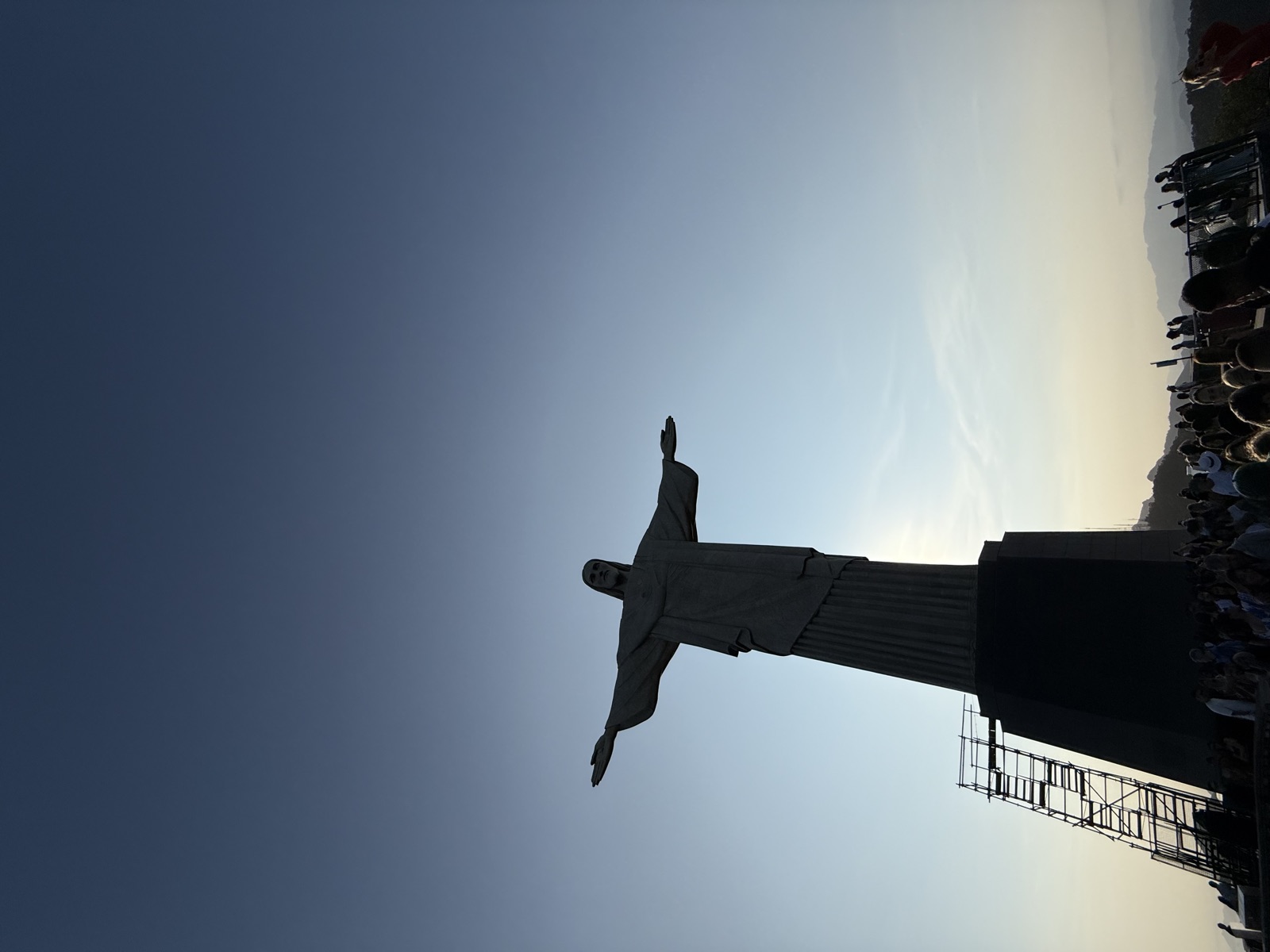
13. Brazil
Joy is a discipline. Brazilians don’t stumble into warmth and celebration. They cultivate it. Through music, through dance, through an insistence on human connection even in difficult circumstances. Carnival isn’t an escape from reality. It’s a technology for surviving reality.
14. Peru
Altitude changes your perspective. Literally. Standing at 12,000 feet in the Sacred Valley, breathing thin air, looking at mountains that ancient civilizations built cities on. Your problems shrink. Not metaphorically. Physiologically. Something about altitude makes grandiosity impossible.
15. Vietnam
Resilience doesn’t look the way you expect. Ho Chi Minh City is one of the most energetic places I’ve ever been. The traffic alone is a masterclass in adaptive behavior, millions of motorbikes moving in apparent chaos that somehow works. The country’s history is brutal. Its present is electric. The relationship between those two things isn’t simple, and I won’t pretend to understand it fully, but the vitality is undeniable.
16. Greece
Beauty doesn’t require maintenance. Santorini is crumbling and gorgeous. Athens is chaotic and magnificent. Greece doesn’t polish itself for visitors. It just exists, layers of civilization stacked on top of each other, and if you’re paying attention, the imperfection is the point.
17. Singapore
Multiculturalism is a practice, not a slogan. In one square mile of Singapore, you can eat Indian, Malay, Chinese, and Western food, all prepared authentically, all coexisting without friction. America talks about the melting pot. Singapore actually built one. The difference is visible in every hawker center.
18. Czech Republic
Absurdity is a survival strategy. Prague’s history, decades of occupation, authoritarian control, Kafka-esque bureaucracy, produced a culture with a bone-deep appreciation for dark humor and the absurd. The beer is cheap because Czechs understand that sometimes laughing at the void is the most rational response.
19. Indonesia
Scale humbles you. Seventeen thousand islands. Three hundred ethnic groups. Hundreds of languages. Indonesia makes you realize how small your frame of reference is. Any sentence that starts with “people are…” is immediately complicated by a country this large and this diverse.
20. Spain
Time is elastic. In Spain, dinner at 10 PM isn’t late, it’s normal. A two-hour lunch isn’t indulgent, it’s essential. The Spanish relationship with time isn’t loose or lazy. It’s just calibrated to different priorities: conversation, food, pleasure, rest. They’re not behind schedule. They’re on a different schedule.
21. India
The margin for error is thin and the capacity for beauty is infinite. India overwhelmed me in every direction simultaneously. The poverty is real and confronting. The creativity, the color, the spiritual depth, the food, the sheer scale of human endeavor, also real. I left more confused and more grateful than when I arrived.
22. Chile
Geography shapes character. Chile is a country squeezed between the Andes and the Pacific, impossibly long and impossibly narrow. That geography produces a particular kind of person, resourceful, independent, slightly isolated, deeply proud. The landscape isn’t a backdrop. It’s a personality.
23. Netherlands
Design is a worldview. The Dutch design everything. Their cities, their bikes, their water management, their social systems. Everything is considered. Everything is intentional. It’s not aesthetic fussiness. It’s a deep belief that the built environment shapes human behavior, and therefore deserves serious thought.
24. Cambodia
Healing isn’t linear. Phnom Penh carries the weight of the Khmer Rouge in ways that are visible and invisible. The Tuol Sleng museum left me unable to speak for an hour. But the city is also alive, young, entrepreneurial, forward-looking. Healing happens alongside remembering. They’re not sequential.
25. New Zealand
Smallness is a superpower. New Zealand has fewer people than most American cities, and that smallness produces remarkable things: a sense of community, an accessibility to leadership, a willingness to experiment. The country moves fast because everyone is three degrees of separation from everyone else.
26. Ecuador
The equator is a metaphor. Standing on the equatorial line in Quito, I realized how arbitrary most boundaries are. North and south. Developed and developing. First world and third world. These are lines we drew on a map. The people on either side of them are more similar than the categories suggest.
27. Austria
Rigor and beauty coexist. Vienna is a city that takes both music and engineering seriously. The opera houses and the infrastructure are built with the same attention to detail. The Austrian lesson is that precision doesn’t have to be cold. It can be applied to beautiful things.
28. Costa Rica
“Pura vida” isn’t just a phrase. It’s a framework for decision-making. When something goes wrong, a missed bus, a cancelled plan, a rainy day, the Costa Rican default is acceptance and adaptation. Not passive acceptance. Active acceptance. The thing happened. Now what? It’s a remarkably healthy way to move through the world.
29. Egypt
Permanence is humbling. Standing in front of the pyramids, I had the same thought that everyone has: humans built this. Four thousand years ago. With basic tools and extraordinary will. Every startup I’ve ever stressed about, every quarterly goal I’ve ever lost sleep over, the pyramids make all of it feel appropriately small.
30. Philippines
Warmth is not a soft skill. Filipinos are the warmest people I’ve encountered anywhere on earth. Not performatively warm. Genuinely, structurally warm in a way that permeates everything, business interactions, street conversations, family dynamics. In the Philippines, I learned that warmth is not the absence of seriousness. It’s the foundation of it. The most productive working relationships I’ve had have been the warmest ones. That’s not a coincidence.
The Pattern
If there’s a thread connecting all thirty, it’s this: every country I’ve visited has figured out something that my home country hasn’t. Not everything. Something. And the willingness to notice those somethings, to really see them, not just photograph them, has been the most valuable education of my life.
No curriculum could have taught me what these thirty countries taught me. No book, no podcast, no conference.
You have to go. You have to stay long enough for the novelty to wear off and the lessons to sink in. You have to be willing to be wrong about things you thought were universal.
Thirty countries in. Forty-plus now. And the main thing I’ve learned is how much I still don’t know.
That feels about right.