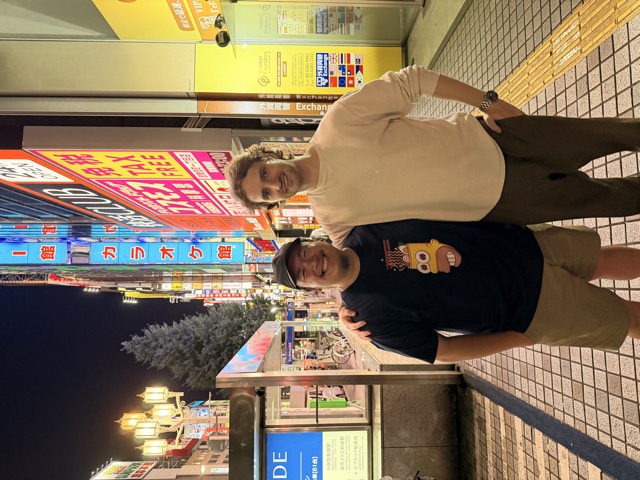
I was sitting in a small restaurant in Chiang Mai, three hours into what was supposed to be a thirty-minute lunch meeting. The man across from me, a Thai entrepreneur who ran a chain of co-working spaces, had not once mentioned the potential partnership we were there to discuss. Instead, he’d told me about his daughter’s university applications, asked about my family, recommended a temple I should visit before I left town, and ordered us a second round of mango sticky rice.
I was twenty-six at the time, still operating with a very Western sense of efficiency. Part of me was mentally calculating the time I was “losing.” The other part, the part that had been traveling long enough to know better, understood that this lunch was the meeting. The partnership conversation would come later, if it came at all. And whether it came depended entirely on what happened over sticky rice.
That lunch taught me something I’ve carried into every business relationship since: trust isn’t a precondition for doing business. In much of Southeast Asia, trust is the business.
The Relationship-First Framework
In the U.S. and most of Western Europe, the typical business sequence is: identify opportunity, negotiate terms, sign contract, then build a relationship over time. The relationship is a byproduct of the transaction.
In Southeast Asia, and I’m drawing here from extensive time in Thailand, Vietnam, Indonesia, and the Philippines, the sequence is reversed. You build the relationship first. The transaction, if it happens, is a byproduct of the trust.
This isn’t a quaint cultural artifact. It’s a deeply practical system that evolved in markets where legal enforcement is unpredictable, contracts are expensive to litigate, and reputation within a community is the most reliable form of currency.
When a Vietnamese supplier agrees to give you favorable terms, they’re not doing it because of what’s in the contract. They’re doing it because they’ve assessed you as a person. Your character, your reliability, your willingness to reciprocate. The contract is a formality. The real agreement is relational.
I watched this play out dozens of times across the region. And once I understood it, I stopped being impatient during three-hour lunches.
Bangkok: The Art of the Slow Build
My first extended stay in Bangkok was in 2019. I was exploring the digital nomad scene, doing some freelance marketing work, and trying to understand the Thai startup ecosystem.
A mutual friend introduced me to a founder who was building a logistics platform for Southeast Asian e-commerce. We met at a rooftop bar in Sukhumvit. He was friendly, curious, and completely uninterested in talking about his company for the first hour.
We talked about food. He was passionate about regional Thai cuisine and wanted to know if I’d tried the boat noodles in Victory Monument. We talked about Muay Thai. He asked where I’d traveled before Bangkok and lit up when I mentioned Luang Prabang.
Only after I’d been there for nearly two hours did he casually mention that he was looking for help with his go-to-market messaging. By that point, we weren’t having a business conversation. We were two people who’d established a rapport, and the business part felt natural, almost inevitable.
He became a client for eight months. And the whole thing started because I stayed for one more drink instead of pushing for a pitch.
The lesson in Thailand, specifically, is that patience isn’t just polite. It’s strategic. Thai business culture operates on a concept called kreng jai, roughly translated as a deep consideration for others’ feelings and a reluctance to impose. Pushing too hard, too fast, is the fastest way to disqualify yourself. Not because you’ll offend someone, but because you’ll signal that you don’t understand how things work here.
Ho Chi Minh City: Trust Through Transparency
Vietnam was different. The energy in Ho Chi Minh City is electric, motorcycles, construction, ambition everywhere. The business culture moves faster than in Thailand, but the trust dynamics are just as real.
I spent time with several Vietnamese entrepreneurs who were scaling SaaS and e-commerce businesses. What struck me was how directly they communicated once the trust was established. There was very little of the diplomatic ambiguity I encountered in Thailand. If a Vietnamese business partner thought your idea was bad, they’d tell you, but only after they’d decided you could handle it. The directness was a sign of closeness, not rudeness.
Building that initial trust in Vietnam often came down to transparency about intentions. I had a coffee meeting in District 1 with a woman who ran a digital marketing agency. Within ten minutes, she asked me point-blank: “What do you actually want from this conversation?” Not aggressive, just direct. She wanted to know if I was wasting her time.
I told her the truth: I was trying to understand the Vietnamese market, I had no immediate business proposition, and I was genuinely curious about her company. She smiled, ordered us another round of ca phe sua da, and we talked for two hours. She later introduced me to three other founders in her network. Those introductions, given freely, based on a single honest conversation, were worth more than any cold outreach campaign I could have run.
In Vietnam, I learned that trust is built through transparency about your intentions. Don’t pretend you’re there to “explore synergies” when you’re really there to sell. Just say what you want. The honesty is the foundation.
Bali and Jakarta: The Power of Community
Indonesia taught me about the communal dimension of trust. In Jakarta especially, business relationships are embedded in networks, family, university alumni groups, industry associations, religious communities. You don’t just earn someone’s individual trust. You earn entry into their network, and with it, a web of obligations and reciprocities.
A contact in Jakarta once told me something I’ve never forgotten: “In Indonesia, your reputation arrives before you do.” He meant it literally. Before our first meeting, he’d already asked three mutual contacts about me. By the time we sat down, he’d formed a preliminary judgment based on what others said. My job in the meeting wasn’t to sell myself. It was to confirm what he’d already heard.
This is why referrals are the primary currency in Indonesian business. A warm introduction from someone trusted is worth a hundred cold emails. And burning a referral, by being unreliable or dishonest, doesn’t just damage that one relationship. It damages your standing in the entire network.
In Bali, I saw a more relaxed version of this same dynamic play out in the expat entrepreneur community. People did business with people they surfed with, ate with, co-worked alongside. The Canggu startup scene, for all its trendy coffee shops and coworking spaces, operated on a surprisingly old-fashioned trust model: I know you, I’ve seen how you operate, therefore I’ll do business with you.
What Western Business Gets Wrong
I don’t want to romanticize Southeast Asian business culture or flatten it into a monolith. These are diverse countries with distinct norms, and there’s plenty of cutthroat business behavior in the region, just like everywhere else.
But there’s something the West consistently gets wrong, and my time in Southeast Asia clarified it for me: we over-index on process and under-index on relationship.
We believe that a good contract can substitute for trust. It can’t. A contract is a worst-case safety net. If you’re relying on the contract to make the relationship work, the relationship is already broken.
We believe that efficiency means getting to the point quickly. Sometimes it does. But in many contexts, including many Western ones, if we’re honest, the “inefficient” relationship-building time is the most productive time of all. It’s where you learn what someone actually values, how they handle ambiguity, whether they’ll be reliable when things get hard.
We believe that professionalism means keeping personal and business separate. In Southeast Asia, this distinction barely exists. The personal is the professional. Your character isn’t separate from your business capability. It’s the primary evidence of it.
How This Changed My Agency
Running PipelineRoad, I’ve tried to carry these lessons forward. Not in some performative, “I-traveled-so-I’m-enlightened” way. In practical ways.
I don’t rush discovery calls. I let the conversation breathe. If a prospect wants to talk about their weekend before we talk about their marketing, that’s not wasted time. That’s relationship infrastructure.
I’m honest about what we can and can’t do. The transparency lesson from Vietnam applies everywhere: people can sense when you’re performing, and they trust you less for it.
I invest in referral relationships. Most of our best clients came through warm introductions, not cold outreach. That’s not an accident. It’s a deliberate choice to build the kind of trust network that my Indonesian contacts would recognize.
And I remember that three-hour lunch in Chiang Mai whenever I’m tempted to rush a relationship for the sake of a deal. The deal will come, or it won’t. But the relationship, built slowly, honestly, over good food, is the thing that lasts.
Some of the best business lessons I’ve learned didn’t come from books or conferences. They came from sitting across the table from someone in a country far from home, eating something I couldn’t pronounce, and having the good sense to stay for one more round.