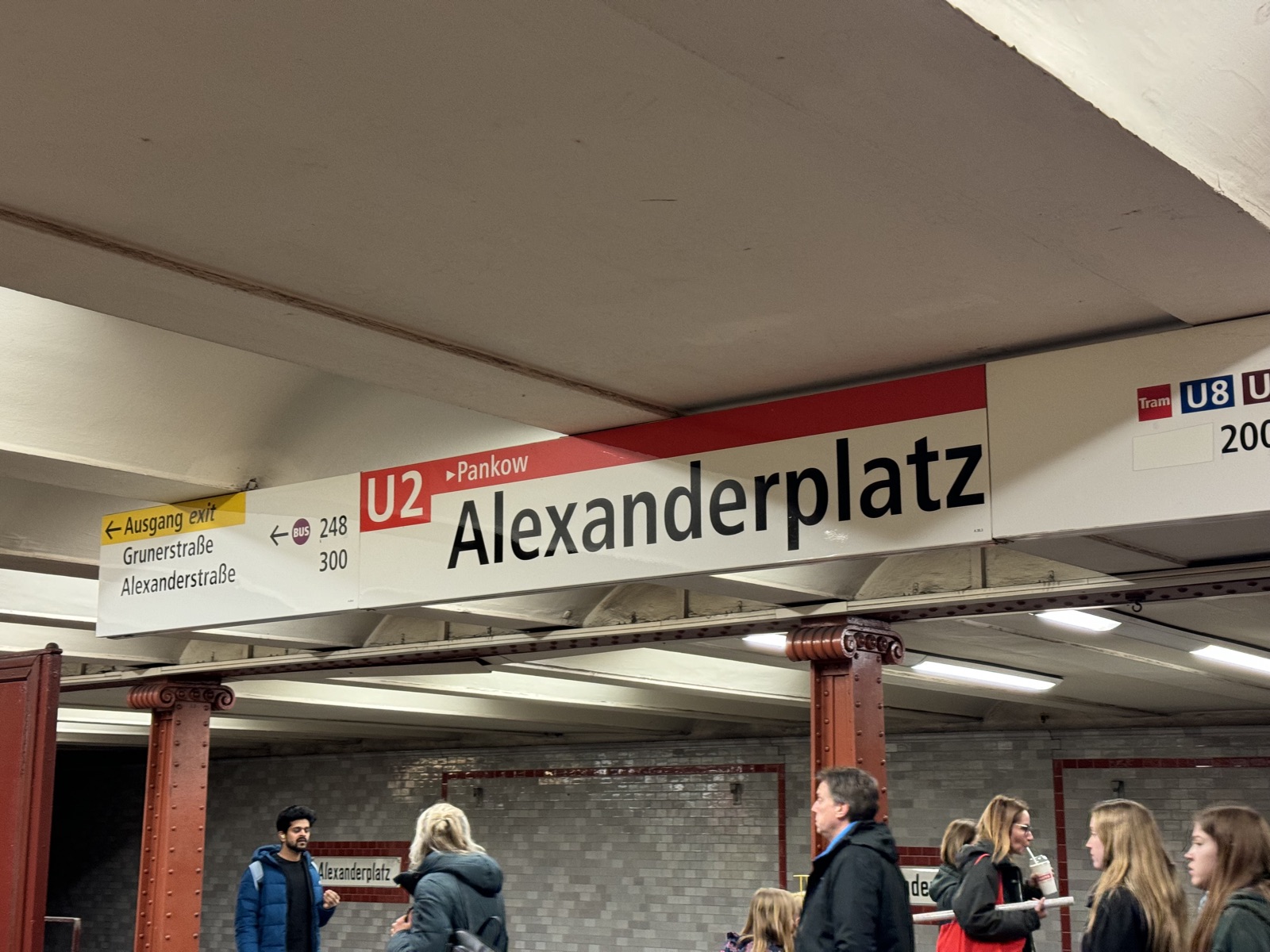
The fastest way to understand a city is to ride its public transit during rush hour. Not a taxi, not an Uber, not a rental car. The bus, the metro, the tram, whatever system the majority of residents actually use to get from home to work and back again. In that commute, compressed into thirty or forty minutes, you’ll learn more about a society’s values than a week of sightseeing could teach you.
I’ve been doing this for years now, across dozens of cities, and I’m convinced it’s the most reliable diagnostic tool a traveler has.
Infrastructure as Values Statement
Tokyo’s rail system runs with a precision that borders on the philosophical. Trains arrive within seconds of their scheduled time. Delays of more than a minute trigger formal apologies. The platforms are marked with exact positions where doors will open, and passengers line up there, not because someone is enforcing it, but because the system works and everyone has agreed to maintain it.
What does this tell you about Japan? That collective reliability is a deep cultural value. That the individual’s convenience is calibrated against the group’s efficiency. That precision is not a fetish. It’s an expression of respect for other people’s time.
Contrast this with a system I encountered in a Latin American capital where buses had no fixed schedule, no route map at the stop, and no guarantee they’d stop where you expected them to. To ride the bus, you needed local knowledge, which bus number, which intersection to stand at, which hand signal to use. The system worked, but only for insiders.
This isn’t inferior. It’s different. It tells you that this is a society built on relationships and local knowledge rather than abstracted systems. If you know someone, you know how things work. If you don’t, you’re lost. That same dynamic plays out in business, in government, in everything.
The Class Question
Public transit is also one of the most honest expressions of how a society handles class. In cities where the metro is used by everyone, executives, students, laborers, retirees, there’s typically a stronger sense of shared civic identity. The wealthy and the working class occupy the same space, subject to the same delays, breathing the same air. It’s a daily exercise in equality, even if imperfect.
In cities where public transit is effectively a system for the poor, where anyone with means drives or takes a car service, the transit infrastructure reflects that abandonment. Stations are neglected. Routes serve low-income neighborhoods but skip the affluent ones. Service frequency drops. The message is clear: this is not for people who matter.
I’ve seen this most starkly in certain American cities, where the bus system functions as a last resort rather than a first choice. The contrast with, say, Zurich or Singapore or Seoul, where public transit is gleaming, fast, and used by everyone, is not primarily about money. It’s about priorities.
What Riders Do
Beyond the infrastructure itself, watch the riders. What people do on public transit is a behavioral portrait of a culture.
In some cities, the train is silent. Headphones in, eyes down, a kind of negotiated privacy in a public space. In others, it’s a social event, conversations across aisles, vendors moving through cars selling snacks or newspapers, music playing from someone’s phone.
I’ve seen commuters in Northern European cities reading physical books in quantities that would make a publisher weep with joy. I’ve seen commuters in Southeast Asian cities eating full meals balanced on their laps with a grace that suggests long practice. I’ve watched elderly passengers in East Asian cities get seats offered to them instantly, reflexively, without the awkward hesitation you see elsewhere.
Each of these tells a story. The silent train says: I respect your space and expect you to respect mine. The noisy train says: we’re all in this together, why pretend otherwise? Neither is wrong. Both reveal something true about how people relate to strangers.
The Maintenance Signal
Pay attention to maintenance. A transit system’s state of repair is one of the most honest signals a government sends about its priorities.
Clean stations, working escalators, clear signage, functional ticket machines, these don’t happen by accident. They require sustained investment and institutional competence. When they’re present, they suggest a society that takes collective infrastructure seriously. When they’re absent, broken turnstiles, graffiti-covered cars, stations that smell of neglect, it suggests that public goods have been deprioritized in favor of private ones.
I’ve noticed a correlation, entirely anecdotal but consistent, between the quality of a city’s public transit and the quality of its public schools, its public parks, its public hospitals. Societies that invest in shared infrastructure tend to invest across the board. Those that don’t, don’t.
The Business Parallel
Running a B2B agency has made me think about this differently. Every company has its own version of public transit, the internal systems that move information, decisions, and people from point A to point B. Slack channels, meeting cadences, project management tools, onboarding processes.
When those systems are well-designed and maintained, everyone benefits. When they’re neglected, only the insiders, the people with tribal knowledge, the ones who know the workarounds, can navigate effectively. New hires get lost. Information pools in silos. The company works, but only for those who’ve learned to work around its failures.
The lesson from public transit is that shared systems are worth investing in. Not because they’re glamorous, but because they reveal what you actually value. And what you actually value, eventually, is what you actually get.