I’ve been to Southeast Asia six times now. Each trip, I tell myself I’m going for a specific reason, a conference in Bangkok, a friend’s wedding in Bali, a need to get somewhere warm in February. And each time, the specific reason dissolves within a day or two, replaced by the real reason, which I’ve never been able to fully articulate but which has something to do with the way the region makes me feel simultaneously more alive and more calm.
That sounds like something you’d read on a wellness blog. I know. Bear with me.
Thailand First
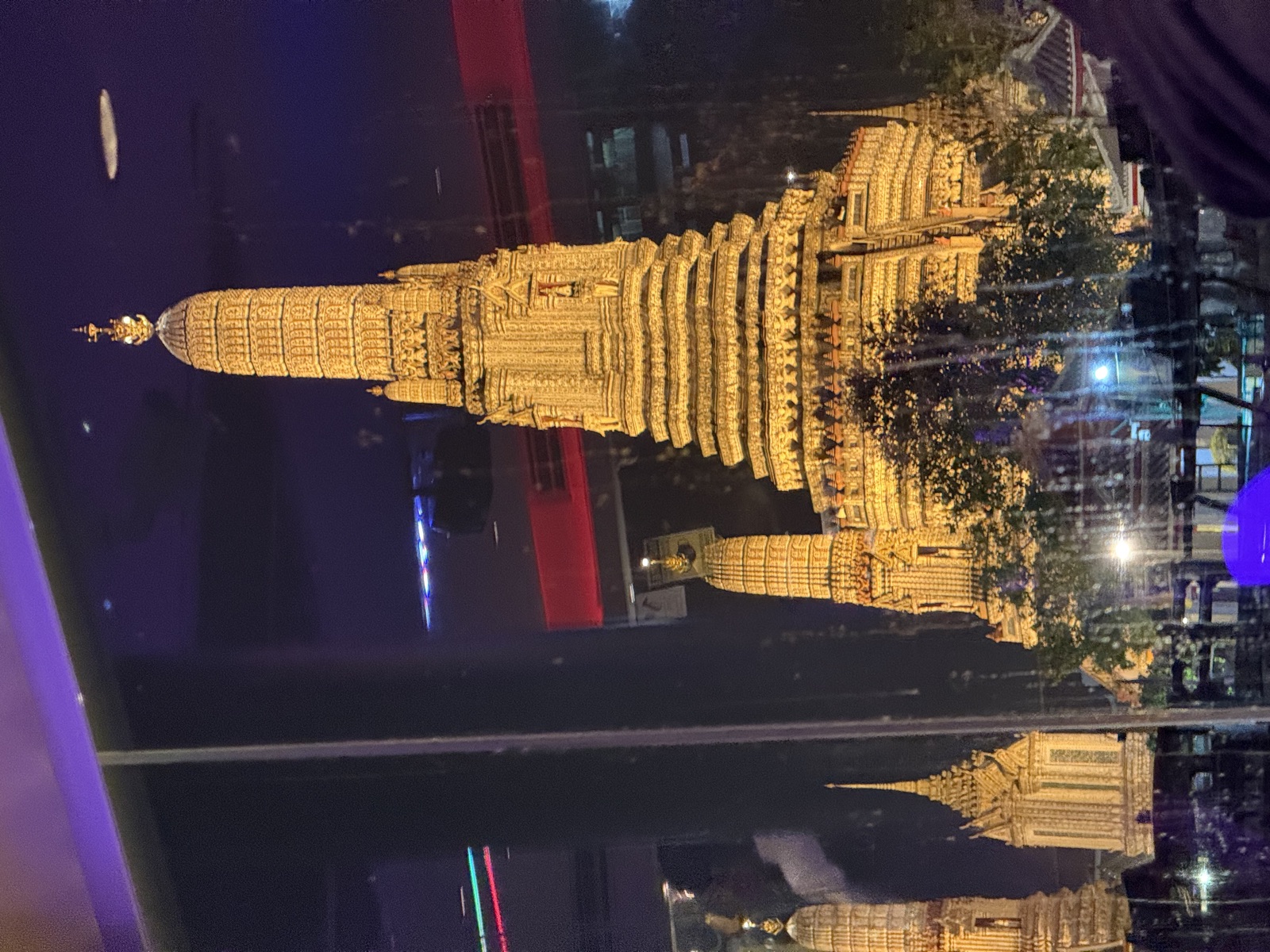
My first trip to Southeast Asia was Thailand, which is apparently everyone’s first trip to Southeast Asia. I flew into Bangkok and spent three days in a state of sensory overwhelm that I’ve never quite experienced anywhere else.
Bangkok doesn’t ease you in. You walk out of the airport into a wall of heat, get into a taxi that merges onto a highway with the casual aggression of someone who has fully accepted the possibility of death, and within twenty minutes you’re in the middle of a city that seems to operate on a frequency your nervous system wasn’t built to process.
The noise. The smells, grilled meat and jasmine and exhaust and something sweet I later learned was pandan. The colors. The sheer density of life on every block. Street vendors selling pad thai next to a 7-Eleven next to a temple next to a tailor shop next to a bar. No zoning laws that I could discern. No buffer between sacred and commercial, residential and industrial, tourist and local.
I loved it immediately. Not in the “this is so charming” way. In the “this is real” way. Bangkok doesn’t perform for visitors. It’s too busy being itself to care whether you’re keeping up.
I spent two weeks in Thailand that first trip, Bangkok, then Chiang Mai, then a few days on the islands. By the time I left, I had the feeling that I’d only scratched something. That there was a depth to the place I’d need years to access. That feeling has kept me coming back.
Vietnam: The Hustle
If Thailand was the sensory education, Vietnam was the business education.
I spent three weeks in Ho Chi Minh City, and what struck me most was the energy. Not the expat-cafe, laptop-lifestyle energy. The actual economic energy. The city feels like it’s in the middle of building itself. Construction everywhere. New restaurants opening weekly. Young people starting businesses with an ambition and resourcefulness that reminded me of the best startup cultures, except without the entitlement.
One morning I was sitting at a cafe on Bui Vien Street, yes, the backpacker street, I’m not proud, and I watched a woman set up a banh mi cart in about four minutes. Folding table, cooler, ingredients, hand-painted sign. She was serving customers by 7:15 AM. By noon, she’d sold out and was gone. No app. No brand identity. No Instagram presence. Just a product, a location, and a work ethic that would put most Silicon Valley founders to shame.
I went back to the same spot the next day. Different cart, different woman, same efficiency. The informal economy in Vietnam taught me more about product-market fit than any case study I’ve read. These vendors iterate in real time. If the banh mi isn’t selling, they change the filling. If the location is wrong, they move. No pivot decks. No board meetings. Just immediate, unsentimental adaptation.
The food in Vietnam also ruined me. Pho in Saigon, the real kind, from a place with plastic stools and no English menu, is an entirely different substance from pho anywhere else. The broth has been simmering since before dawn. The herbs are from this morning. The noodles are made down the street. Everything is connected to everything, and you can taste the proximity.
Bali: The Complicated One
I have complicated feelings about Bali.
On one hand, it’s one of the most beautiful places I’ve ever been. The rice terraces in Ubud are the kind of landscape that makes you understand why people believe in God. The temples are extraordinary, not as museum pieces but as living, active sites where offerings are placed every morning and incense burns all day. The Balinese commitment to ceremony and beauty is relentless and genuine.
On the other hand, Bali has become a case study in what happens when a place becomes too popular with a certain kind of visitor. The Canggu area, which used to be rice paddies, is now a corridor of smoothie bowls and co-working spaces and influencers posing in front of infinity pools. There’s a version of Bali that’s been constructed entirely for Instagram consumption, and it can be hard to see past it.
But if you do see past it, if you get on a scooter and drive north, past the tourist belt, into the villages where the ceremonies happen without an audience and the warungs serve nasi campur for a dollar. You find something extraordinary. A culture that has figured out how to integrate spirituality, art, community, and daily life in a way that most of the world has lost.
I keep going back to Bali not for the co-working spaces. I go back for the early morning drives through the rice terraces when the mist is still low. For the temple ceremonies that I don’t understand but find moving anyway. For the Balinese people themselves, who have maintained a warmth and grace under the weight of mass tourism that I find genuinely inspiring.
Cambodia: The Quiet Depth
Cambodia doesn’t get the attention that Thailand and Vietnam get. It’s smaller, quieter, and carries a history that makes casual tourism feel complicated.
I spent a week in Siem Reap and Phnom Penh. Angkor Wat at sunrise is, of course, the thing everyone does, and it’s the thing everyone does because it’s legitimate wonder-of-the-world territory. No photo captures it. The scale, the detail, the fact that this was built in the 12th century. It resists comprehension.
But what stayed with me more was Phnom Penh. Specifically, the Tuol Sleng Genocide Museum and the Killing Fields. I won’t describe them in detail because that’s been done better than I could do it. What I will say is that visiting them changed my posture toward Cambodia. You can’t treat a country as a vacation destination in the same way after confronting the reality of what happened there within living memory.
What I found in Cambodia after that visit was a gentleness that felt earned. The people I met, tuk-tuk drivers, restaurant owners, a guide at a temple who talked to me for an hour about his family, had a patience and a kindness that didn’t feel performed. It felt like something that had survived something. That distinction matters.
What Keeps Pulling Me Back
There’s a practical answer and a real answer.
The practical answer is that Southeast Asia is easy. It’s affordable. The food is extraordinary. The weather is warm. The infrastructure for remote work has improved dramatically. You can live well for a fraction of what it costs in any Western city, and the quality of daily life, the meals, the massages, the natural beauty, is higher.
The real answer is harder to pin down.
I think Southeast Asia keeps pulling me back because it operates on values that I’ve lost touch with in Western professional culture. Warmth over efficiency. Presence over productivity. Community over individualism. Joy as a daily practice rather than a weekend reward.
In Bangkok, I watched a street vendor spend five minutes arranging a plate of mango sticky rice as if it were the most important thing in the world. And in that moment, it was. There was no rush. No next customer demanding attention. Just the rice, the mango, the coconut cream, placed with a care that had nothing to do with price and everything to do with pride.
In Vietnam, I watched families eat dinner together at plastic tables on the sidewalk every night at the same time, in the same spot, as if this were the most natural thing in the world. Because for them, it is.
In Bali, I watched a woman place a canang sari, one of those small woven offering baskets, on the sidewalk outside her shop at 6 AM, the same way she’d done every morning for decades. It wasn’t ritual in the empty, habitual sense. It was ritual in the meaningful sense. A daily act of attention.
These moments don’t translate well to business lessons or productivity frameworks. They’re not monetizable. They resist the urge to extract a takeaway.
But they’ve changed me anyway. They’ve made me slower in ways that are useful and more present in ways that are measurable, if only by the quality of my attention when I’m back at my desk.
The Return
The hardest part of every Southeast Asia trip is the return. Not the jet lag. That passes. The recalibration. Going from a place where lunch is a forty-minute affair to a place where lunch is a protein bar. From a place where strangers smile at you to a place where strangers avoid eye contact. From a place where time bends around life to a place where life bends around time.
Each time, I try to bring a little of it back. The slower lunches. The willingness to talk to the person next to me. The attention to the small, daily pleasures that Southeast Asia refuses to treat as small.
It fades, of course. Within a few weeks, the old rhythms reassert themselves. The inbox reclaims its territory. The urgency returns.
But the memory of the mango sticky rice stays. And the next trip is already half-planned.