The short version
- Sustained output at high quality is an operations problem wearing a creative costume.
- The visible performer is the smallest replaceable part of most systems that reliably deliver.
- Repeatability comes from the load-in and the load-out, which is to say from the parts nobody wants to own.
- When quality drops, look at the system that produces it before you look at the person delivering it.
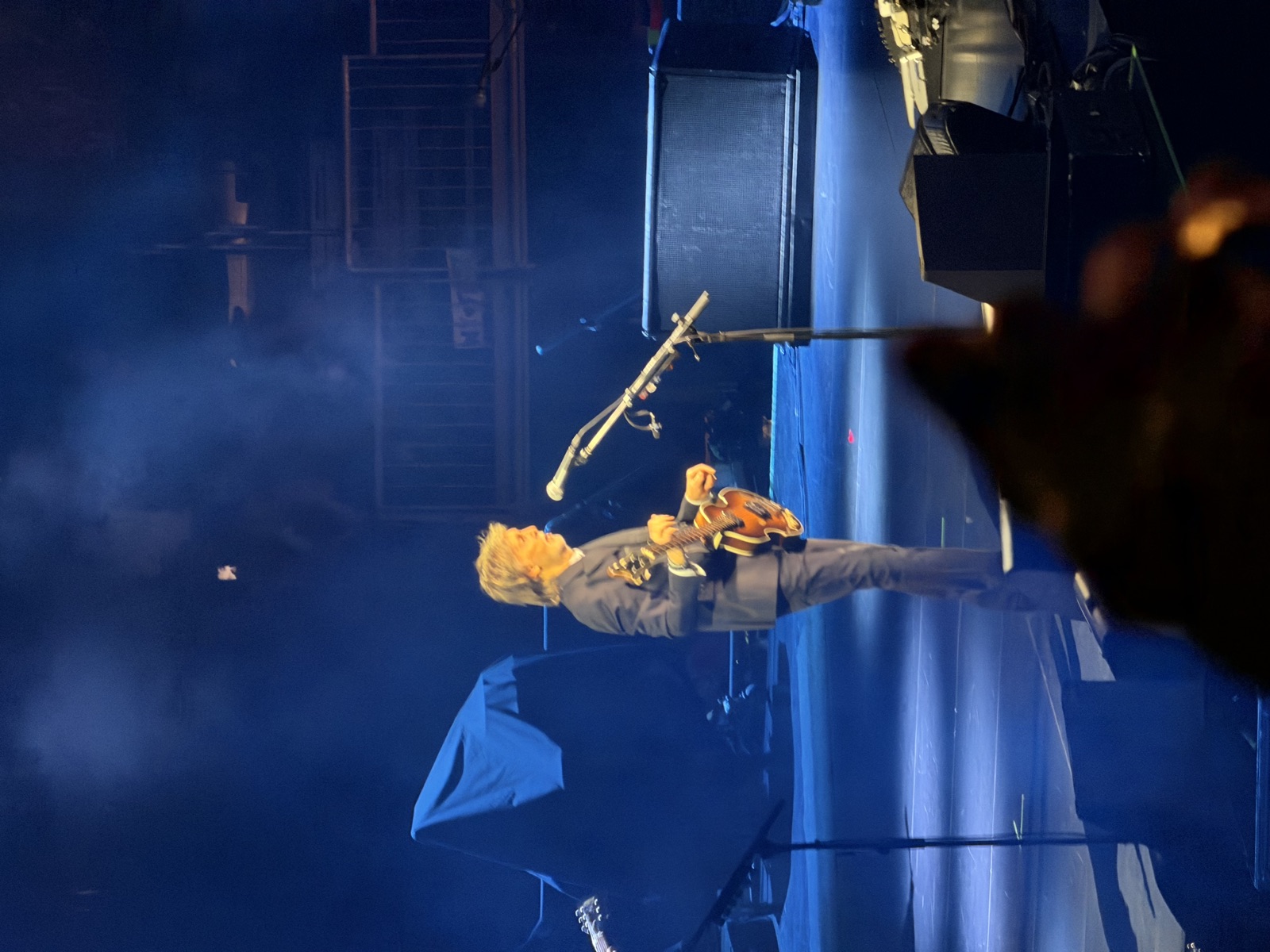
A stadium show in November, a very long set, and one person visible at the front of it. Everyone in that room, including me, was watching the musician. What was actually holding the evening up was a stage full of equipment, a crew of people working in the dark, and a touring system built to do the same thing again in another city later that week. The performance is the visible fraction of an operations achievement, and businesses make the same mistake about their own output constantly.
What is actually holding a three-hour show together?
A repeatable process. The set list is fixed enough to rehearse and loose enough to adapt. The equipment is duplicated so a failure is a swap rather than a stop. The crew knows its part of the load-in without being told, because a tour runs the same sequence in city after city until nobody has to think about it.
None of that is visible from the seats, which is the point. The audience experiences a person and a song. What they are actually buying is the reliability that the person and the song will happen, at the advertised time, at the advertised quality, in a building that was empty yesterday.
Where delivery failures actually originate.
| Stage | Touring equivalent | What goes wrong | Cost when it does |
|---|---|---|---|
| Brief | Load-in | Wrong target, missing constraint | Highest, everything downstream is wasted |
| Production | The show | Quality of the work itself | Visible and usually recoverable |
| Review | Sound check | No interrupter, no real test | Moderate |
| Publish path | Load-out | Wrong environment, lost access | Severe and occasionally irreversible |
| Repeatability | Next city | One person holds it all | Delayed, then total |
Why do companies misattribute their own output?
Because the visible part is a person, and people are easier to think about than systems. When a project goes well the account lead gets the credit. When one goes badly the account lead gets the blame. In both cases the process that made the outcome likely or unlikely goes unexamined, because it has no name and does not attend the review.
This produces a specific and expensive error: hiring to fix a systems problem. A team that misses deadlines because there is no defined handoff will miss them with better people too, slightly later, at higher cost.
Where does repeatability actually come from?
The unglamorous ends. The load-in and the load-out, which in our world are the brief and the publish path. Almost every delivery failure I have seen traces back to one of those two rather than to the work in the middle, because the middle is where the attention naturally goes.
On one engagement the production site ran on one stack while the staging URL everyone referenced was an entirely different application. That is a load-in failure. On another, publishing ran through a git push and a direct deploy command would have overwritten production, which is a load-out failure waiting to happen. Both cost more than any amount of poor work in the middle would have.
The fix in both cases is documentation of the path rather than improvement of the craft. Learn how a client publishes before you have write access, not after.
How do you build a system that survives a bad night?
Duplicate the things that stop everything. In a touring context that means spare instruments and redundant desks. In ours it means that no single person is the only route to a client’s publishing, no credential lives in one head, and every recurring deliverable has a written path that somebody else could follow.
Then rehearse the failure rather than the success. The useful question is not whether the work is good, it is what happens when the person who normally does it is unavailable on the day it is due. Most teams have never asked it and discover the answer during a genuine emergency.
A team that misses deadlines because there is no defined handoff will miss them with better people too, slightly later, at higher cost.
What does this change about how you evaluate work?
It moves the first question from who to what. When quality drops, look at the load-in and the load-out before looking at the performer. Was the brief complete, was the path clear, was the deadline real, did anything change halfway through. Most of the time the answer is there and it is structural.
It also changes what deserves investment. The instinct is to spend on the visible part, because that is what the audience experiences. The return is usually higher on the invisible part, because that is what determines whether the visible part happens again next week.
Related: rehearsal as the actual job, careers measured in duration and gating the publish path.
Frequently asked questions
Why is consistent creative output an operations problem?
Because reliability at quality comes from repeatable process rather than from inspiration. The visible performance is the smallest part of what makes it happen on schedule in a venue that was empty the day before.
Where do most delivery failures come from?
The brief and the publish path rather than the work in the middle. Attention naturally concentrates on production, so the two ends stay undefined, and those are the failures that cost the most.
What is an example of a publish path failure?
Discovering that the staging URL everyone referenced was a completely different application from the live site, or that publishing runs through a git push where a direct deploy would overwrite production. Both are cheap to prevent and expensive to encounter.
Should you hire your way out of missed deadlines?
Usually not. If the cause is an undefined handoff, better people will miss the same deadlines slightly later and at higher cost. Fix the handoff first and then decide whether you still have a hiring problem.
How do you make a team resilient to absence?
Duplicate anything that stops everything. No single route to a client's publishing, no credential held in one head, and a written path for every recurring deliverable that somebody else could follow without a conversation.
What should you examine first when quality drops?
The system before the person. Whether the brief was complete, the path was clear, the deadline was real and the requirements held steady. Most of the time the explanation is structural and the person is the last place it shows up.
Sources
- Chua Network delivery data across 8 client accounts (internal fact bank)
- Chua Network engagement records, anonymized (internal experience bank)