The short version
- The performance is short. The preparation is the job. Reversing that ratio is the most common cause of a bad client presentation.
- Rehearsal is not reviewing the deck. It is saying the words out loud, in order, at speed, to someone who will interrupt.
- Repetition is not a beginner activity. Professionals repeat basics more, not less, and they repeat them in public.
- The cheapest quality intervention available to most teams is one full run-through the day before, which almost nobody does.
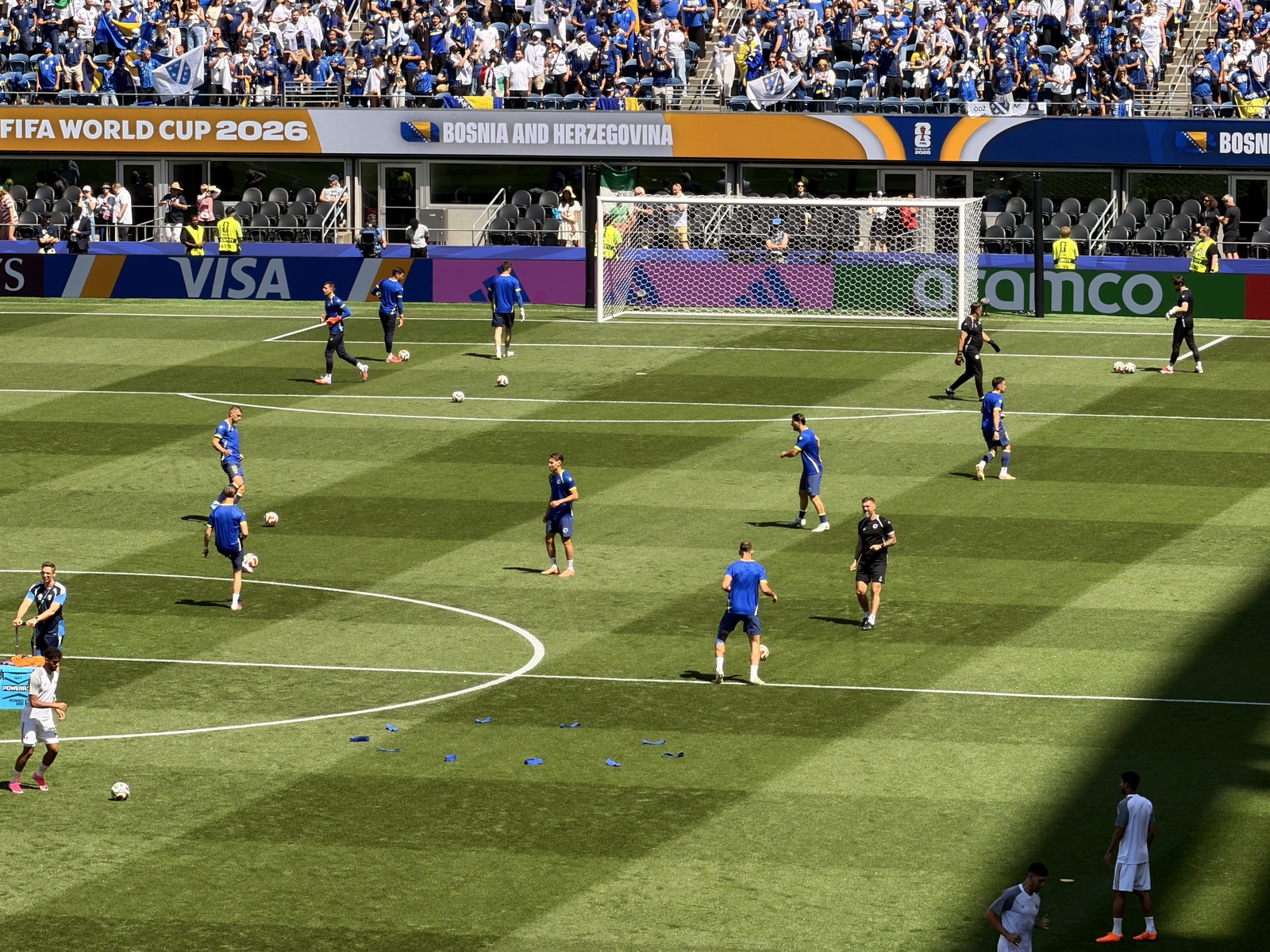
This is not the match. This is forty minutes before the match, and the stand is already full, watching people jog and pass and stretch. What struck me is that thousands of paying spectators were watching rehearsal, and the players were doing the same drills they have done since they were children, at full attention, in front of an audience, on the day it matters. Almost every senior team I have worked with treats rehearsal as the thing you skip when the week gets tight.
Why is rehearsal the first thing cut?
Because it produces nothing you can show. A rehearsal leaves no artefact. The deck exists either way, the document exists either way, so the hour spent running through it feels like the hour with the least output. Under deadline pressure, the activity with no visible product is the one that dies.
That reasoning is exactly backwards. The deck is not the deliverable, the meeting is. Optimising the artefact while skipping the performance is optimising the props and skipping the play.
What each kind of preparation actually catches.
| Activity | Catches | Misses |
|---|---|---|
| Reading the deck silently | Typos, broken links | Timing, sequencing, credibility |
| Talking it through informally | Rough sequencing | Length, hostile questions |
| Full run at real speed, alone | Length, transitions | Weak arguments |
| Full run with an interrupter | Weak arguments, unclear ownership | Almost nothing |
| Elaborate dry run with observers | Everything | Happens too rarely to matter |
What does real rehearsal involve?
Saying it out loud, in order, at the speed you will actually say it, to at least one person who is allowed to interrupt. Reading the slides silently is not rehearsal, it is proofreading. The failures you are hunting are sequencing failures and transition failures, and both are inaudible on the page.
Two specific things surface almost every time. First, a section that made sense in writing takes three minutes to say and cannot survive that length. Second, the person presenting discovers they do not actually know why slide six comes after slide five, which the audience will detect immediately even if they cannot name it.
The interrupter matters. A silent run-through catches the timing problems and none of the credibility problems. Someone asking the hostile question mid-flow is the only way to find out whether the argument survives contact.
Why do professionals repeat the basics more, not less?
Because at a high level the basics are what fail under pressure. The complicated move is executed with full attention. The simple one is executed on autopilot, and autopilot is exactly what degrades when the stakes rise. That is why the warm-up drills in this photograph are the same drills a twelve-year-old does.
The equivalent in our work is the opening two minutes of a client meeting and the summary at the end. Those are the parts everyone assumes will take care of themselves, and they are the parts that decide how the middle is heard.
What does a warm-up look like for a team?
Something short and habitual before the thing that matters, rather than a special event before a big thing. Ten minutes before a client call to agree who is leading which section and what the one outcome is. It sounds procedural. It removes the most common failure in client meetings, which is two people on our side answering the same question differently.
We run weekly delivery cadence across every account, and the value of a fixed rhythm is partly that it makes preparation habitual rather than heroic. Anything that only happens when someone decides it is important enough will not happen in the week it is most needed.
The deck is not the deliverable. The meeting is. Polishing the artefact and skipping the run-through is optimising the props and skipping the play.
How do you make rehearsal stick when nobody wants to do it?
Schedule it as part of the work rather than as an addition to it. If the presentation is due Thursday, the internal run-through is Wednesday and it is in the plan from the start. A rehearsal that has to be requested is a rehearsal that will be skipped, because requesting it implies someone is not ready.
Then keep it cheap. One run, one interrupter, thirty minutes, no audience beyond the people who need to be there. The version that fails is the elaborate dry run with eight observers, which is expensive enough that it only happens for the biggest moments and therefore never becomes a habit.
Related: performing before you are ready, the system behind the performance and what live events manufacture.
Frequently asked questions
Why do teams skip rehearsal before important meetings?
Because rehearsal produces no artefact. Under deadline pressure the activity with nothing to show for it is the first to be cut, even though the meeting rather than the document is the actual deliverable.
What counts as a real rehearsal?
Saying the material out loud, in order, at presentation speed, to someone allowed to interrupt. Silent reading is proofreading. It catches typos and misses every sequencing and credibility problem.
How long should a run-through take?
About as long as the presentation, plus a short debrief. Keeping it cheap is what makes it habitual. Elaborate dry runs with large observer groups only happen for the biggest moments and therefore never become routine.
Why does the interrupter matter?
Because a silent run catches timing problems and no credibility problems. The only way to find out whether an argument survives contact is to have somebody ask the hostile question while you are mid-flow.
What is the most common failure in client meetings?
Two people from the same side answering the same question differently. Ten minutes beforehand agreeing who leads which section and what the single outcome is removes almost all of it.
Do experienced presenters still need to rehearse?
More, not less. Under pressure it is the automatic parts that degrade, which is why professionals in every field repeat the basics publicly and often. The opening and the summary fail first, and they decide how the middle is heard.
Sources
- Chua Network delivery data across 8 client accounts (internal fact bank)
- Chua Network engagement records, anonymized (internal experience bank)