The short version
- A recital is a forcing function with a small audience. Both halves matter, and companies usually keep neither.
- Waiting for readiness means the work is graded by the person who made it, which is the least reliable grader available.
- Small, frequent, low-stakes exposure produces faster improvement than rare high-stakes exposure, and it is far less frightening.
- The best version inside a company is a short internal showing on a fixed date that nobody is allowed to postpone.
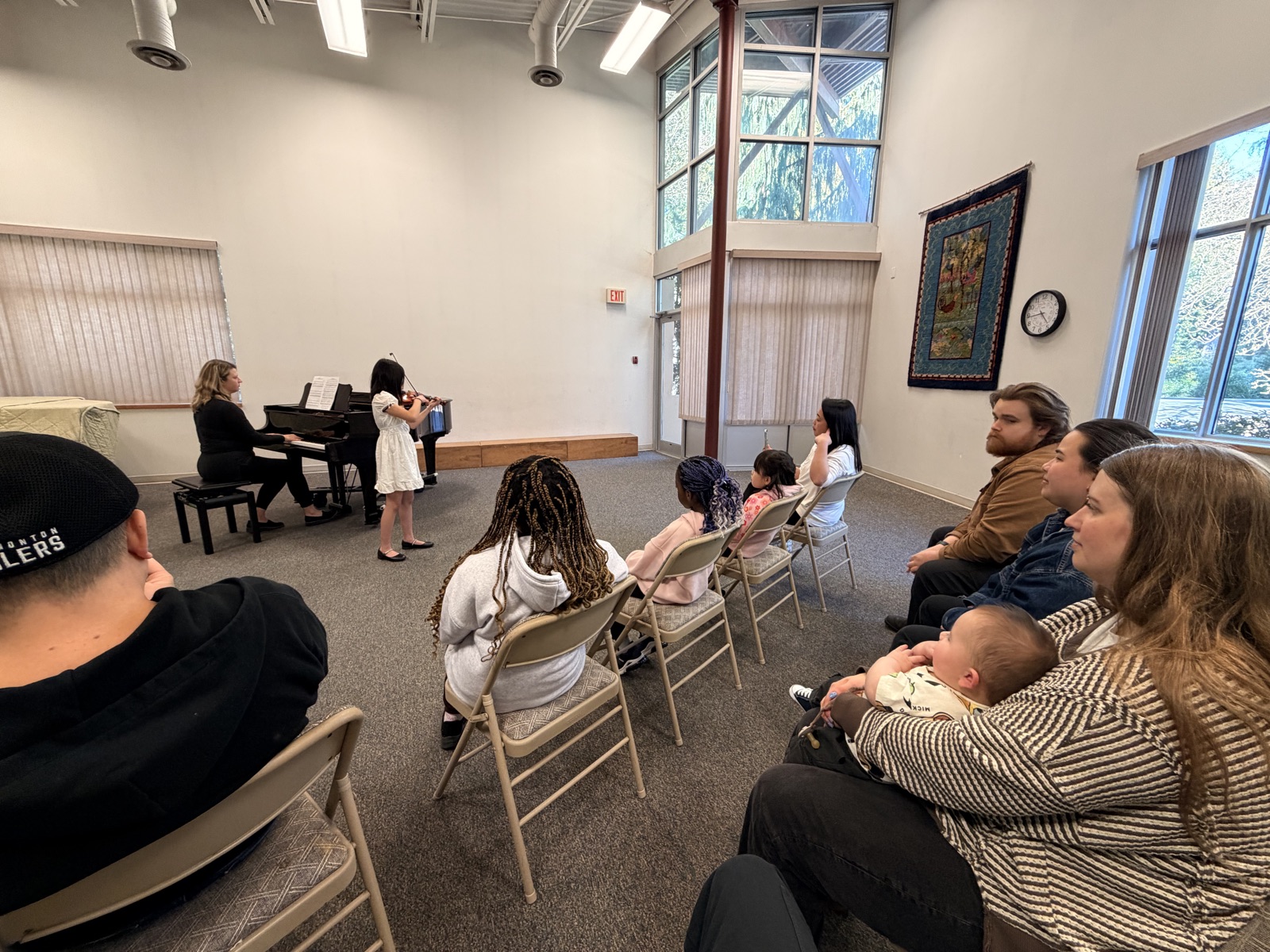
A community hall, a piano, a student playing violin in front of maybe twenty people including several who are too young to sit still. Nobody there was ready in the sense that professionals mean. That is exactly the point of the format: recitals are scheduled before readiness, on purpose, because the deadline is what produces the practice. Most senior teams I work with have quietly removed every version of this from their working life and cannot understand why progress has slowed.
Why does scheduling before readiness work?
Because the date generates the effort. Practice expands to fill the time before a performance and contracts to nothing without one. This is not a moral point about discipline, it is a scheduling observation, and it holds for adults with budgets exactly as it holds for twelve-year-olds with violins.
It also produces a specific kind of feedback that self-assessment cannot. You find out what falls apart in front of people, which is reliably different from what falls apart alone. The parts that break under observation are usually the parts you had stopped paying attention to.
Exposure frequency against what it produces.
| Pattern | Fear per event | Feedback loop | Rate of improvement |
|---|---|---|---|
| Never shown until finished | Very high | Months | Slow, with expensive corrections |
| Quarterly presentation | High | Weeks | Moderate |
| Weekly internal showing | Low | Days | Fast |
| Continuous public shipping | Low | Hours | Fast, higher risk |
| Rehearsal with no audience | None | None | Almost none |
What does a company lose when nothing is ever shown early?
Calibration. If work only becomes visible when it is finished, everyone involved is grading their own progress until the last moment, and the correction arrives when it is most expensive to act on. The larger the organisation, the longer this goes on, because there are more people available to reassure each other.
It also concentrates all the fear into rare events. A team that presents once a quarter finds each presentation terrifying and spends a disproportionate amount of energy on it. A team that shows something every week finds none of them frightening, and the work improves faster because the loop is shorter.
We run a weekly cadence on every account for this reason as much as for delivery. The rhythm forces something into the open regularly, and regularity is what makes it safe.
What makes the audience size right?
Small enough that failure is survivable, large enough that it is real. Twenty people in a community hall is a genuinely different experience from playing alone, and it is nothing like a concert. That gap is the useful zone, and most corporate equivalents are either too private to count or too public to risk.
In practice this means an internal showing to a handful of colleagues who will actually respond, not a rehearsal to an empty room and not a client presentation. The audience has to be able to react for the exercise to work.
How do you run this without it becoming a status meeting?
Show the work rather than describe it. The failure mode is a meeting where people report on progress, which is a status update and teaches nobody anything. The rule that keeps it useful is that something has to be visible on a screen: a draft, a design, a page, a running build.
Keep it short and keep it fixed. A slot that moves stops existing. A slot that runs long gets resented and then cancelled. Fifteen minutes on a fixed day, with the norm that unfinished work is welcome, is the version that survives.
And separate it from evaluation. The moment a showing feeds into a performance review, people bring finished work and the entire point is lost. This has to be structurally safe, not just described as safe.
Protecting people from exposure until they are excellent guarantees they will not become excellent, because the exposure is the mechanism.
What about the people who are genuinely not ready?
They still perform, and this is the part that feels unkind and is not. The student in this photograph was not ready by any professional standard, and playing anyway is how the standard eventually gets met. Protecting people from exposure until they are excellent guarantees they will not become excellent, because the exposure is the mechanism.
What you owe them is the right size of audience and a room where a bad performance has no consequence beyond a bad afternoon. That is the whole design. The recital format has survived for generations because it gets both halves right.
Related: rehearsal as the actual job, making things in-house and why work has to be visible.
Frequently asked questions
Why should teams show unfinished work?
Because self-assessment is the least reliable grading available, and because corrections found late cost the most. Showing work early moves the correction to the point where acting on it is still cheap.
How do you make a work-in-progress review feel safe?
Make it structurally safe rather than describing it as safe. Keep it separate from evaluation, keep it short, keep the day fixed, and require that something visible is shown rather than described. If it ever feeds a performance review, people will bring finished work only.
What is the right audience size for internal reviews?
Small enough that failure is survivable and large enough that it is real. A handful of colleagues who will actually respond. A rehearsal to an empty room teaches nothing, and a client presentation is too costly to fail in.
How often should teams show work?
Weekly works well. Frequency is what removes the fear, because rare events concentrate all the anxiety into a few days and consume energy that should have gone into the work itself.
What turns a work-in-progress session into a useless status meeting?
Describing instead of showing. Once people report progress verbally it becomes a status update, and nobody learns anything. Requiring something visible on a screen is the single rule that keeps it valuable.
Is it fair to make people present before they are ready?
Yes, provided the audience is the right size and a poor showing carries no consequence beyond a poor afternoon. That combination is exactly what a student recital is, and it has survived for generations because both halves are designed correctly.
Sources
- Chua Network delivery data across 8 client accounts (internal fact bank)
- Chua Network engagement records, anonymized (internal experience bank)