The short version
- Retention without a contract runs on identity, obligation and cohort, not on features.
- The strongest mechanism is a role. People stay where they have a job to do and someone expects them to do it.
- Rituals with dates outperform programmes without them, because a date creates the return visit.
- Most B2B retention work is spent on the product surface, which is the part least likely to be why someone leaves.
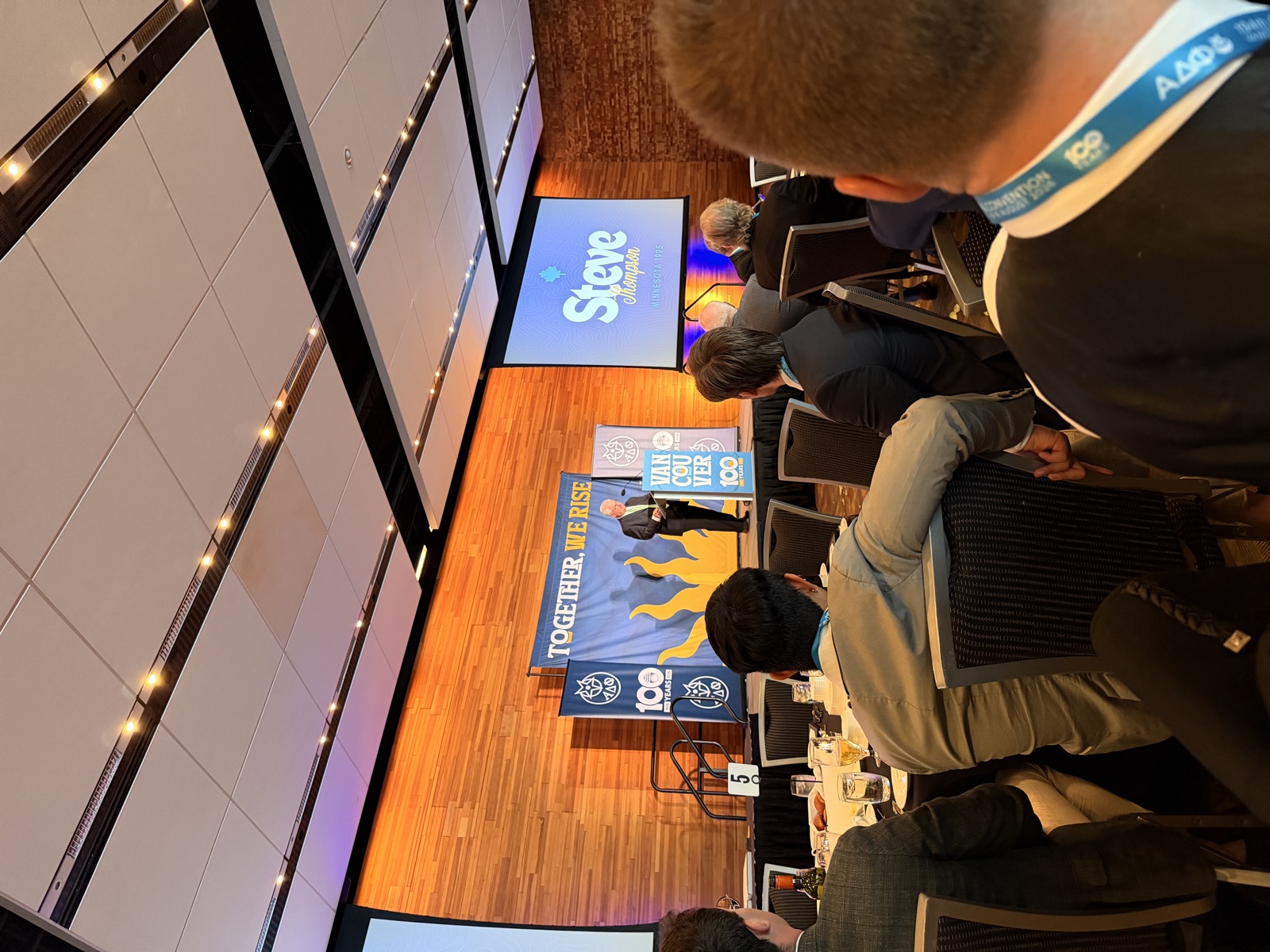
A banquet room in Vancouver, a banner reading together we rise, a hundred-year mark on the signage, and a room of people who have no contractual obligation to be there. Volunteer organisations solve a retention problem that most software companies would consider impossible: keeping people for decades with no product, no price and no switching cost. They do it with mechanisms that are entirely available to businesses and that businesses mostly ignore.
How does an organisation retain people for a century?
By giving them something to be rather than something to use. Membership is an identity, and identities are extremely durable. Once someone describes themselves using your organisation, leaving is not a cancellation, it is a change in who they are, and the cost of that is enormous compared with any subscription fee.
The second mechanism is obligation to people rather than to an institution. Members stay because a specific person is counting on them for a specific thing, which is a much stronger tie than loyalty to an organisation in the abstract.
Retention mechanisms, ranked by durability.
| Mechanism | How it works | Business equivalent |
|---|---|---|
| Identity | Membership becomes self-description | Certification, community, named status |
| Peer obligation | Specific people are relying on you | User groups, customer advisory boards |
| A role | You have a job and someone notices | Admins, workspace owners, internal champions |
| Dated ritual | A scheduled reason to return | Annual conference, quarterly review, yearly report |
| Product utility | The thing is useful | Feature adoption, health scores |
| Switching cost | Leaving is painful | Data lock-in, integrations |
What is the single strongest retention mechanism?
A role. Someone who holds a position, however small, has a reason to return and somebody who notices when they do not. Volunteer organisations are relentless about this. They create far more roles than the work requires, precisely because the role is the retention device rather than the labour.
The software equivalent exists and is rarely used deliberately. An administrator, a workspace owner, the person who built the reporting everyone else relies on. Those users are the hardest to dislodge in any account we have worked on, and most companies treat that as a happy accident rather than as something to engineer. Giving people a job inside your product is a retention strategy.
Why do rituals with dates work?
Because a date creates a return visit that requires no persuasion. A convention that happens every year, a monthly chapter meeting, an annual awards night. Each one is a scheduled reason to re-engage, and the schedule does the work that a re-engagement campaign tries and mostly fails to do.
The business version is a recurring event with a fixed calendar position rather than a campaign. A quarterly review, a user conference, an annual benchmark report. It matters that it is on a date rather than that it is periodic, because a date can be anticipated and a cadence cannot.
The centenary itself is the extreme version. An anniversary is a manufactured occasion that pulls back people who had drifted, and it works because it is genuinely unrepeatable.
What does this say about how B2B handles churn?
That most of the effort goes to the wrong surface. Retention programmes concentrate on product usage, feature adoption and health scores, all of which measure whether someone is using the thing. Very little goes to whether anyone has a role, a relationship or a scheduled reason to come back.
We saw a version of this in a CRM audit where roughly 98 percent of contacts sat at the first lifecycle stage with nothing behind them. Everyone had arrived and nobody had been given anything to do. That is not a nurture problem in the marketing sense. It is the same structural failure the volunteer organisation avoids by handing every new member a job in their first month.
Client portals are the version we build. Each client sees their own work, continuously, without asking. Transparency scales when it is structural rather than when it depends on somebody remembering to send an email, and structural transparency is a retention mechanism as much as a service one.
Volunteer organisations create far more roles than the work requires, because the role is the retention device rather than the labour.
What would you actually copy?
Three things. Give every account a named role on the customer side and make the product acknowledge it. Put one thing a year on a fixed date that customers can anticipate. And create a reason for customers to have obligations to each other rather than only to you, because peer obligation outlasts vendor relationships by a wide margin.
The last one is the hardest and the most valuable. A hundred years of retention in that room is not loyalty to an institution. It is a large number of people who would be letting down someone they know if they stopped showing up.
Related: the conversation after the agenda, the funnel with one stage and what presence is actually made of.
Frequently asked questions
How do organisations retain members without a contract?
Through identity, peer obligation and roles rather than through features or switching costs. Once membership becomes part of how someone describes themselves, leaving costs far more than any fee.
What is the strongest retention mechanism in software?
Giving users a role. Administrators, workspace owners and the people who built the reporting everyone depends on churn at a fraction of the rate of general users. Most companies treat that as luck rather than engineering it deliberately.
Why do annual events work better than campaigns?
Because a date can be anticipated and a cadence cannot. A fixed calendar position creates a return visit that requires no persuasion, which is what re-engagement campaigns attempt and mostly fail to achieve.
What do most B2B retention programmes get wrong?
They concentrate on product usage and health scores, which measure whether the thing is being used. Far less attention goes to whether anyone has a role, a relationship or a scheduled reason to come back, and those are more durable.
How does peer obligation apply to customers?
Through structures where customers have commitments to each other rather than only to you: user groups, advisory boards, community programmes with real responsibilities. Peer obligation outlasts vendor relationships by a wide margin.
Are client portals a retention tool?
Yes. Giving each client continuous visibility of their own work makes transparency structural rather than dependent on somebody remembering to send an update, and structural transparency retains accounts as effectively as it serves them.
Sources
- Chua Network delivery data across 8 client accounts (internal fact bank)
- Chua Network engagement records, anonymized (internal experience bank)