The short version
- Presence splits into three parts: information, attention and availability. Video transmits the first, degrades the second and destroys the third.
- Availability is the part that matters most and the part nobody buys, because it is the unbooked time around a meeting.
- For distributed teams the fix is not better video. It is deliberately manufacturing unstructured time, which feels wasteful and is not.
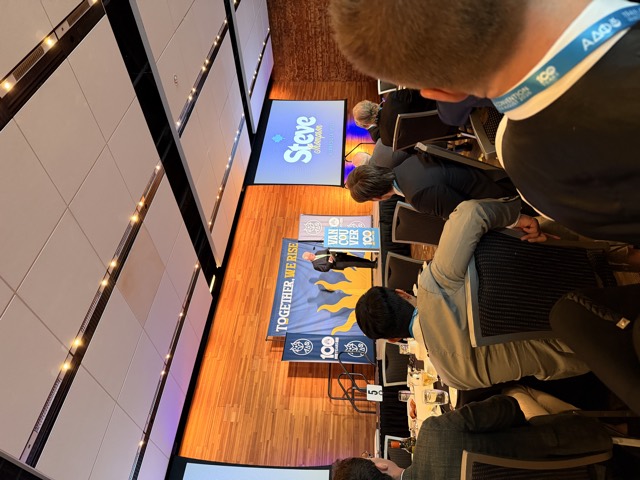
- We pay for meals and social time on purpose. A team that has eaten together escalates faster and argues more usefully.
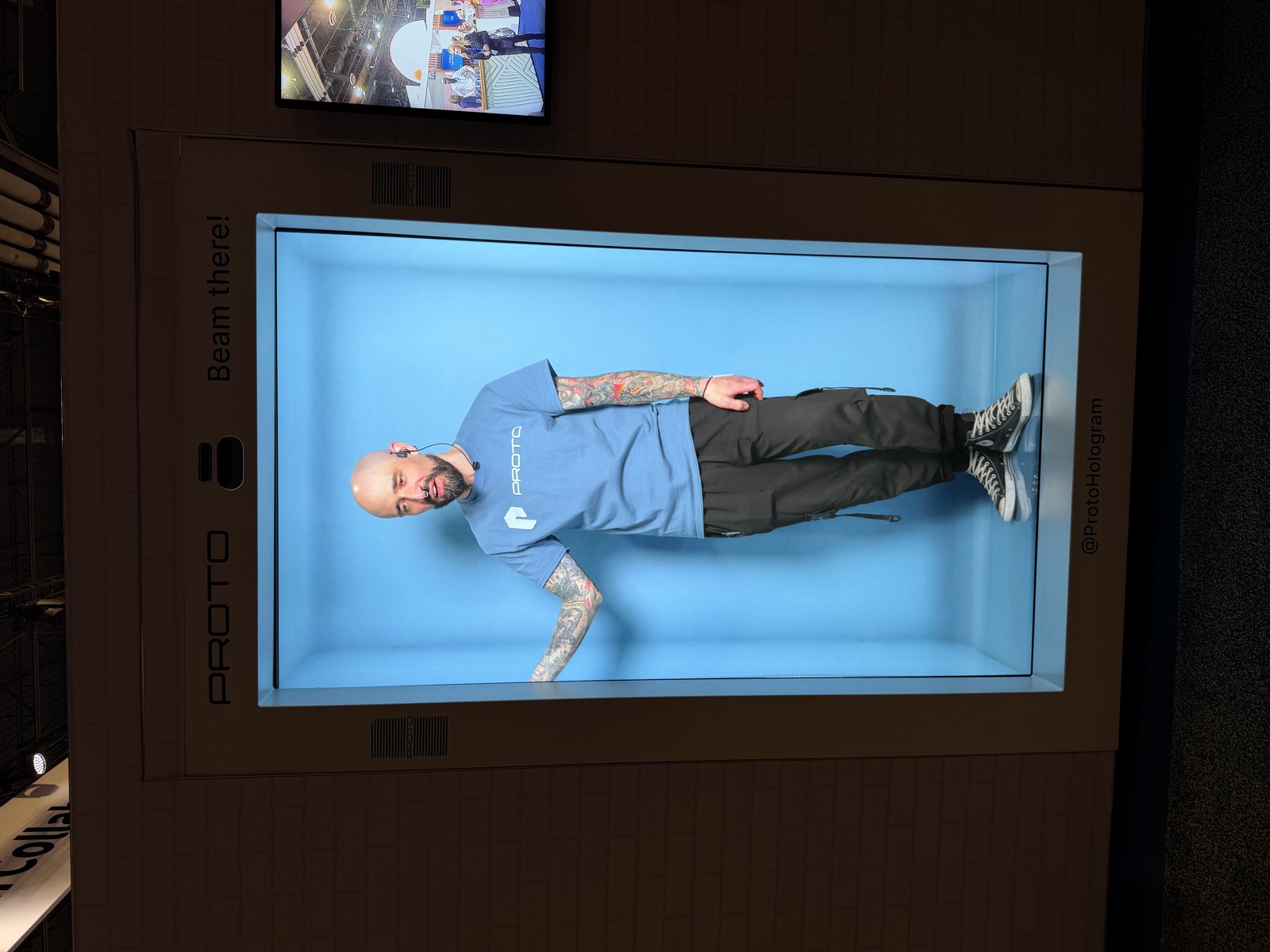
A box the size of a doorway, a life-size person inside it, leaning casually against the frame, talking. The sign said beam there. It is a strange product to stand in front of, because it forces a question that anyone running a distributed team has been avoiding: what exactly are we buying when we fly somewhere, and how much of it can be substituted. My answer, after a year of testing the cheap version of this on eight accounts, is that presence is not one thing and only part of it is transmissible.
What are you actually buying when you show up in person?
Three separable things. Information, which is what gets said. Attention, which is how much of the other person is present while it is said. And availability, which is the possibility of being interrupted, joined, overheard or walked with. Video handles the first well. It halves the second, because everyone is doing something else in another window. It removes the third entirely.
The hologram box is an attempt to buy back attention. Being life-size and in the room changes how much of you the other person allocates, and that is a real product. What it cannot buy is availability, because it is still a scheduled event with a start and an end.
Three components of presence, and what transmits.
| Component | What it is | Survives video? | How to get it remotely |
|---|---|---|---|
| Information | What is said | Yes | Any decent call, or a written doc |
| Attention | How much of the person is there | Partly | Fewer participants, cameras on, shorter calls |
| Availability | The chance of being interrupted or joined | No | Unstructured time, paid social time, overlap hours |
| Physical context | Seeing where the work happens | No | One trip, occasionally |
Which part matters most for a team?
Availability, by a wide margin. Almost every useful thing I have learned about how our own work is going arrived outside a meeting. Someone mentions a client is behaving oddly while we are waiting for a call to start. A designer says the brief did not make sense and would never have raised it in a review. None of that has a calendar invite and none of it survives a fully scheduled week.
This is the specific failure of remote work as most companies run it. Not that people work less, which is mostly a myth, but that the informal channel closes and problems stay hidden for longer. The cost shows up weeks later as a surprise, and the surprise gets blamed on the person rather than on the structure.
How do you manufacture availability deliberately?
By scheduling unstructured time and protecting it, which sounds contradictory and works. Standing calls that have no agenda and are allowed to end after four minutes. Overlap hours where people are expected to be reachable rather than in meetings. Channels where half-formed thoughts are welcome, with a norm that nothing said there is a commitment.
The other lever is money, and this is the one I am most opinionated about. We pay for meals and for social time for the team, deliberately and without treating it as a perk to be justified. A team that has eaten together tells you about problems earlier. That earlier warning is worth many multiples of the dinner, and I have never once regretted the expense.
The same applies to clients. The conversation after the agenda is where scope actually gets negotiated, and paying for the meal is the cheapest way to buy access to it.
Where does technology genuinely help?
In making the scheduled part better rather than in replacing the unscheduled part. Higher fidelity, shared screens, recorded transcripts, asynchronous video for things that do not need a meeting at all. Each of those improves information transfer and some improve attention. None of them create availability, and no product I have seen yet does.
It also helps with distance-driven decisions. When someone is genuinely deciding whether a relationship can be run remotely, better tools shift the threshold, so fewer trips are needed. The trips that remain are the ones about trust and scope, which is the correct filter.
A team that has eaten together tells you about problems earlier, and the earlier warning is worth many multiples of the dinner.
What does this mean for how you structure a distributed company?
Assume the informal channel is closed by default and budget to reopen it. That budget is partly money and partly calendar. If neither line exists, the company will run efficiently for about two quarters and then be surprised by something that three people already knew.
And accept that some presence is not purchasable. There is no version of a screen that lets someone walk you to the lift and say the thing they were not going to say in the room. That is why the flights still happen.
Related: when a trip beats a year of calls, why I pay for the meal and cutting the schedule in half.
Frequently asked questions
What does remote work actually lose compared with an office?
Availability rather than productivity. The informal channel closes, so problems that would have surfaced in passing stay hidden until they are expensive. Output usually holds up. Early warning does not.
How do you replace hallway conversations on a distributed team?
By scheduling unstructured time and protecting it. Agenda-free standing calls that are allowed to end early, defined overlap hours, and channels where unfinished thinking is explicitly welcome. It feels wasteful and it is the cheapest insurance available.
Is it worth paying for team meals and social time?
Yes, and I would treat it as an operating cost rather than a perk. Teams that spend unstructured time together raise problems earlier, which is worth many multiples of the expense. The return is real and it does not show up on the line item that pays for it.
Can better video technology replace travel?
It can raise the threshold so fewer trips are needed, which is worth something. It cannot create the unscheduled availability that makes in-person valuable, because it is still a meeting with a start and an end.
When should a remote relationship become an in-person one?
When what is stuck is trust or scope rather than a decision. Decisions transmit fine over video. Trust does not, and scope disputes are usually trust disputes in disguise.
What is the most common mistake distributed companies make?
Assuming the informal channel will regenerate on its own. It does not. If no budget of money or calendar time exists to reopen it, the company runs smoothly for a couple of quarters and is then blindsided by something several people already knew.
Sources
- Chua Network delivery data across 8 client accounts (internal fact bank)
- Chua Network engagement records, anonymized (internal experience bank)