The short version
- In many business cultures the formal meeting exists to confirm what was agreed informally, not to decide it.
- The meal removes the record. People say different things when nothing is being minuted, and what they say is usually more useful.
- Paying is not a courtesy, it is a signal about who is hosting and who carries the obligation, and it is read that way.
- The same logic applies internally. A team that eats together surfaces problems earlier, and the earlier warning is worth many times the cost.
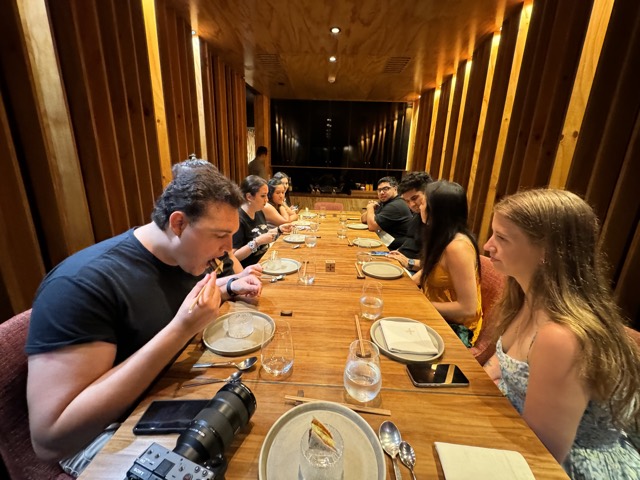
In a large part of the world the agenda is the preamble and the meal is the meeting. I have known this abstractly for years and I still occasionally catch myself treating dinner as the social part that follows the work part. It is not. It is where scope gets negotiated, where the thing that could not be said in the room gets said, and where you find out what someone actually thinks. I pay for it, every time, for clients and for my own team, and I consider it one of the better-returning lines in the business.
Why is the meeting not where decisions are made?
Because a formal meeting is a performance with a record. Everyone present is aware of who else is in the room and what will be written down, so positions are stated rather than explored. That is a useful function, but it is confirmation, not deliberation.
The exploring happens elsewhere. In some cultures that is explicit and structured, with the meal as a recognised part of the process. In others it happens in corridors, cars and the ten minutes before the call. In every case, a person who only attends the formal part is receiving conclusions and mistaking them for the discussion.
What the formal meeting and the meal each produce.
| Formal meeting | The meal | |
|---|---|---|
| Function | Confirming and recording | Exploring and disclosing |
| What people say | Positions | Reasoning and constraints |
| Order of subjects | Prepared agenda | Whatever is actually on their mind |
| Length effect | More of the same | Different content after the first hour |
| Best use | Decisions and commitments | Everything that leads to them |
What actually changes over a meal?
The absence of a record, mostly. When nothing is being minuted, people will tell you the thing they cannot put in writing: that a stakeholder is leaving, that the budget is not what the deck says, that the enthusiasm in the meeting was polite rather than real. None of that is deception. It is information that has no safe formal channel.
Sequence changes too. A meal has no agenda, so subjects arrive in order of what is actually on someone’s mind rather than in the order someone prepared. What comes up first is usually what matters, and you will not learn it from a structured call.
And length changes what gets said. Two hours produces different content from thirty minutes, not more of the same content. The prepared material runs out somewhere in the first hour, and after that both people are improvising, which is when you learn how they think rather than what they have decided to say.
Why does paying matter?
Because it settles the question of who is hosting, and hosting carries obligations that both sides understand. The gesture is legible almost everywhere, and quibbling over it is legible too. The cost of the meal is trivial next to the cost of appearing to be counting.
It also removes an awkwardness that otherwise runs through the whole evening. If the bill is unresolved, some part of everyone’s attention is allocated to it. Handling it in advance means nobody thinks about it at all, which is exactly the state you want.
Does this apply to your own team?
More than to clients, in my view. We pay for team meals and for social time deliberately, and I treat it as an operating cost rather than a perk that needs justifying. A team that has spent unstructured time together raises problems earlier, and an earlier warning is worth many multiples of the dinner that produced it.
The mechanism is the same one that works with clients. Formal channels carry conclusions. Someone will tell you a brief made no sense over a meal months before they will raise it in a review, because raising it in a review is a criticism and mentioning it at dinner is a comment.
I am also unromantic about why this is worth doing. A person who feels their employer is not counting the cost of a meal works differently from one who feels every expense is scrutinised. The return on that is larger than the expense by a margin that is not close, and I have never seen it go the other way.
Formal channels carry conclusions. Someone will tell you a brief made no sense over a meal months before they will raise it in a review.
How do you do this without it becoming performative?
Do not use it to sell. The moment a meal has an objective attached, everyone can feel it and the informality that made it valuable disappears. The dinner works because it is not the meeting, and treating it as the meeting destroys the thing you came for.
Then follow the local form. Who orders, who pours, where people sit and when business is raised varies enormously, and getting it roughly right matters more than getting it exactly right. The effort is the signal. Being visibly willing to do it their way says more than any amount of fluency.
Related: what presence is actually made of, how refusal works in different cultures and cutting the schedule in half.
Frequently asked questions
Why are business dinners important in international work?
Because in many business cultures the formal meeting confirms what was already agreed informally. Attending only the formal part means receiving conclusions and mistaking them for the discussion that produced them.
What makes a meal more productive than a meeting?
The absence of a record, the absence of an agenda, and length. People share constraints they cannot put in writing, subjects arrive in order of genuine importance, and after about an hour both people are improvising rather than presenting.
Should you always pay for the meal?
If you are hosting, yes, and settle it in advance where possible. The gesture is legible in almost every culture, and so is hesitating over it. An unresolved bill occupies attention that should be going into the conversation.
Is spending on team meals worth it?
Yes, and it is better treated as an operating cost than as a perk. Teams that spend unstructured time together raise problems earlier, and early warning is worth many multiples of the expense that produced it.
How do you avoid making a business dinner feel transactional?
Do not attach an objective to it. The value comes from it not being the meeting, so using it to sell removes the informality that made it useful in the first place.
How much does local etiquette matter?
Getting it roughly right matters more than getting it perfectly right. Visible willingness to do things the local way is the signal being read, and it carries further than fluency does.
Sources
- Chua Network delivery data across 8 client accounts (internal fact bank)
- Chua Network engagement records, anonymized (internal experience bank)