The short version
- A campaign expires. A permanent asset accrues. The budget process treats them identically, which is why so few permanent assets exist.
- Permanence turns marketing into infrastructure: people use it, refer to it and give directions with it.
- The digital equivalents are the reference page, the tool and the recurring publication, not the launch.
- The test is whether the asset would still be doing work if nobody funded it next year.
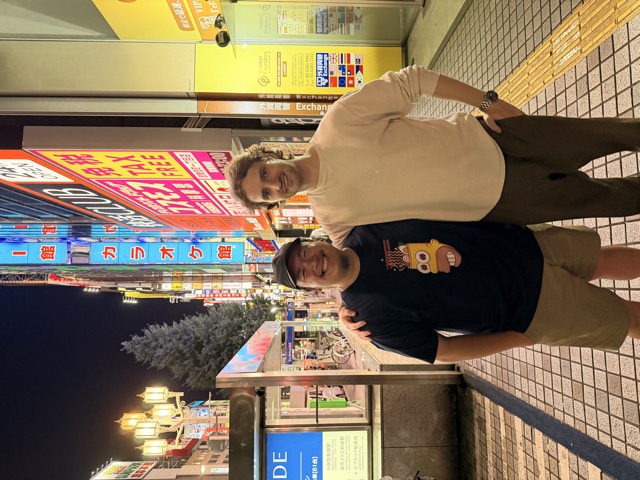
There is a monster’s head on top of a building in Shinjuku. It is lit at night, it is enormous, and it is a piece of marketing for the business underneath it. It is also, now, a landmark. People navigate by it, meet under it and photograph it without knowing or caring which company paid for it. The distance between a campaign and a landmark is the distance between renting attention and owning a place in someone’s mental map, and almost all marketing budget goes to the first.
What separates a campaign from a landmark?
Whether it survives its own funding. A campaign is a period of purchased attention that stops when the purchase stops. A landmark keeps working because it has been absorbed into how people navigate, and the work it does is no longer paid for per unit.
The head on that roof is a good example precisely because it is so unsubtle. Nobody would call it tasteful. It is effective because it is permanent and because it occupies a physical position that cannot be bid on by a competitor next quarter.
Campaign against permanent asset.
| Campaign | Permanent asset | |
|---|---|---|
| Works while funded | Yes | Yes |
| Works after funding stops | No | Yes |
| Attribution | Clean, per quarter | Diffuse, over years |
| Ongoing cost | None once ended | Maintenance |
| Examples | Paid media, launches, sponsorships | Reference pages, docs, tools, publications |
| Budget outcome | Usually approved | Usually deferred |
What are the digital equivalents?
Reference pages that a field keeps returning to, free tools that solve a real recurring task, and publications with a name and a schedule. Each of those is used rather than consumed, and being used is what makes something permanent. A launch is consumed. A calculator that people bookmark is used.
Documentation is an underrated one. In technical categories the docs are frequently the most visited property a company owns, and they are usually treated as a cost centre rather than as the largest piece of marketing infrastructure in the business.
The archive counts too, at scale. This site has around 200 essays on it. None of them is a landmark. Collectively they are a place people arrive at repeatedly, which is a slower and more durable version of the same effect.
Why does so little budget go here?
Because permanent assets are hard to attribute and campaigns are easy to. A campaign produces a number in a quarter. A reference page produces compounding traffic for six years and cannot be cleanly credited to the quarter in which it was built, so it loses every budget argument against a campaign with a clear cost per lead.
There is also a maintenance objection, which is real. A landmark has to be kept. A tool needs updating, docs need to track the product, and a publication has to keep publishing. That is an ongoing commitment, and organisations are much better at approving one-off spend than at approving permanence.
How do you tell if you have built one?
Ask whether it would still be working next year with no funding. If traffic, usage or reference would continue, it is infrastructure. If it would stop within a month, it was a campaign, which is fine as long as it was budgeted as one.
The second test is whether other people use it to explain something. Landmarks get borrowed. When someone links to your page to make their own argument, or gives directions using your tool, the asset has entered the shared map and is doing work you are not paying for.
A campaign is consumed. A landmark is used. Being used is what makes something permanent.
What is the smallest version of this worth building?
One reference page on the question your market keeps asking, maintained rather than published. Not a blog post about it, the definitive version, updated when the answer changes, with the depth that makes it the last place someone needs to look.
The economics favour this more now than they used to, because machines read whole pages to answer questions and reward structure and evidence. Research into generative engine visibility found that adding statistics lifted citation by around 40 percent, quotations by around 40 percent and source citations by 30 to 40 percent. A page built to be referenced is now being read by two audiences, and both of them prefer the same things.
Related: the conversation after the agenda, why duration compounds and how we brief content built to be referenced.
Frequently asked questions
What is the difference between a campaign and a permanent marketing asset?
Whether it survives its own funding. A campaign stops working when the spend stops. A permanent asset continues because people use it, refer to it and navigate by it without anyone paying per unit of attention.
What are examples of permanent marketing assets?
Reference pages a field keeps returning to, free tools that solve a recurring task, documentation, and publications with a name and a schedule. What they share is that they are used repeatedly rather than consumed once.
Why do companies underinvest in durable assets?
Because attribution favours campaigns. A campaign produces a number this quarter. A reference page produces compounding value over years that cannot be credited to the quarter it was built in, so it loses budget arguments it should win.
How do you know if an asset is really permanent?
Ask whether it would still be working next year with no funding, and whether other people use it to explain their own points. Assets that get borrowed and linked have entered the shared map and are doing unpaid work.
Is documentation part of marketing?
In technical categories it is frequently the most visited property the company owns, which makes it the largest piece of marketing infrastructure in the business even when it is budgeted as a cost centre.
Why do reference pages matter more now?
Because machines read them alongside people, and both reward the same things. Research into generative engine visibility found citation lifts of around 40 percent from adding statistics, around 40 percent from quotations, and 30 to 40 percent from citing sources.
Sources
- Chua Network delivery data across 8 client accounts (internal fact bank)
- GEO study, Princeton, Georgia Tech, Allen Institute for AI and IIT Delhi, KDD 2024
- Chua Network engagement records, anonymized (internal experience bank)