The short version
- Scarcity that the seller controls is not scarcity. Buyers learn the pattern and wait, which trains the exact behaviour you were trying to prevent.
- Real deadlines come from outside: a date, a cohort, a capacity limit you would actually enforce.
- Live events also produce shared context, which is why they generate more pipeline conversation than their attendance numbers suggest.
- If you cannot create a real deadline, stop faking one and compete on clarity instead. Fake urgency costs credibility at exactly the wrong moment.
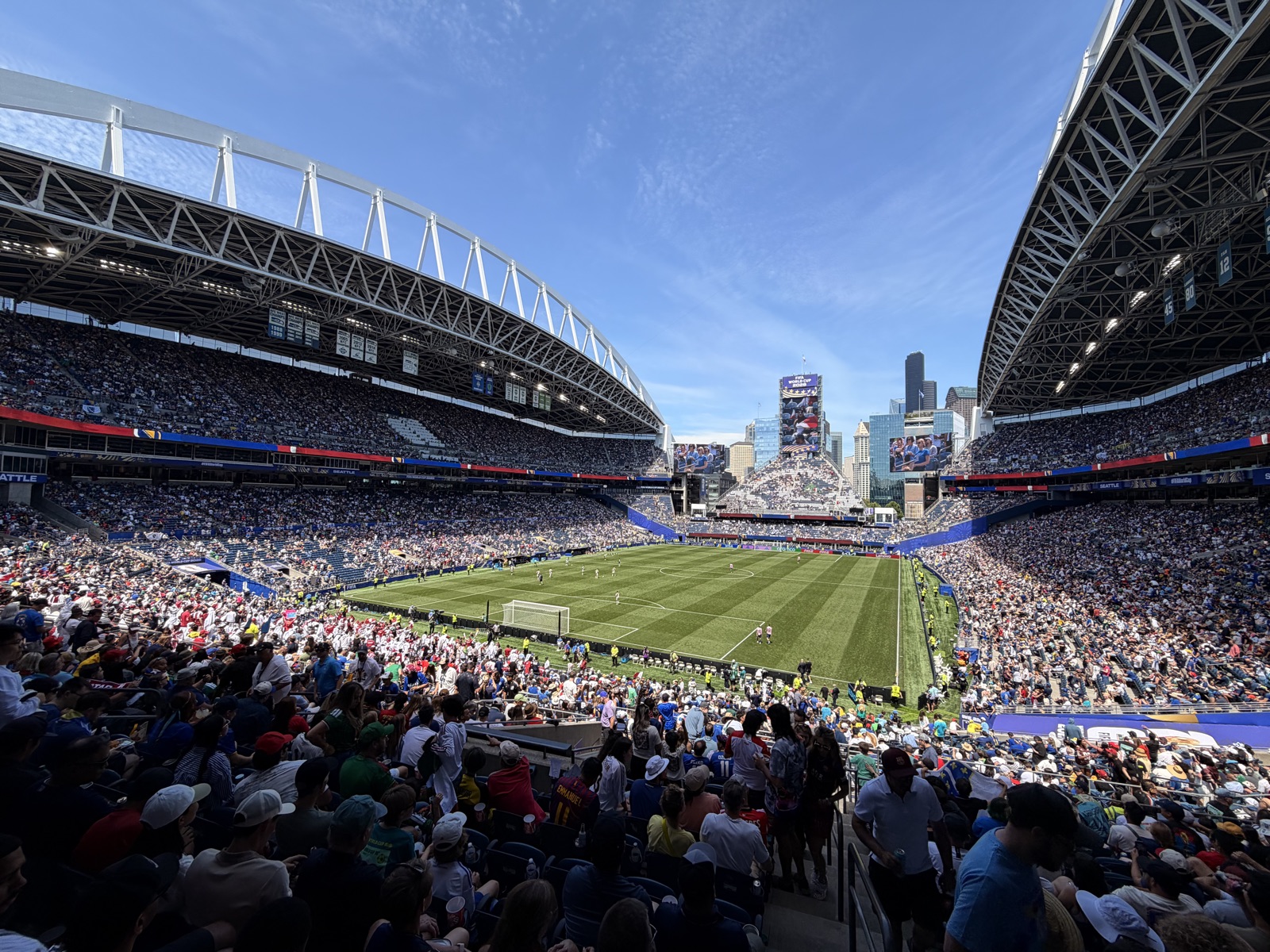
A stadium fills because the thing happens once, at a fixed time, and if you are not there you are not there. That is the entire mechanism, and it is the one thing business-to-business marketing keeps trying to fake with countdown timers and expiring discounts that everyone knows will come back. Watching a bowl fill on a Wednesday afternoon, I kept thinking about how much of our own funnel work is an attempt to manufacture something that a fixture list gets for free.
Why does manufactured urgency stop working?
Because buyers run the experiment. A discount that appears at every quarter end teaches a repeat buyer to wait for the quarter end, and once that is learned the discount is no longer a persuasion tool, it is a price cut with extra steps. The seller has trained the delay they were trying to remove.
The same is true of countdown timers that reset, limited cohorts that are never actually limited, and beta access that is available to anyone who asks. Each works once. Each is remembered.
Real deadlines against manufactured ones.
| Mechanism | Who controls it | Survives a second exposure? |
|---|---|---|
| Event or fixture date | Nobody, it is fixed | Yes |
| Cohort or intake start | Seller, but visibly committed | Yes, if genuinely enforced |
| Delivery slot or capacity | Seller, verifiable in practice | Yes, if you ever say no |
| Buyer’s own fiscal or renewal date | Buyer | Yes |
| Quarter-end discount | Seller | No |
| Resetting countdown timer | Seller | No |
What makes a deadline real?
That the seller cannot move it without cost. A fixture date is real because a stadium, two teams and a broadcast schedule are behind it. In business the equivalents are a delivery slot that is genuinely allocated, a programme with an intake date and a curriculum that starts, and capacity that would actually be full.
The difference a buyer can detect is whether the constraint survives being questioned. A delivery slot that exists because the work genuinely has to be sequenced is a statement of fact. A slot invented for the proposal collapses the first time someone pushes on it, and buyers push on everything.
The test is simple: if a buyer pushed back hard, would the deadline hold. If the honest answer is no, you do not have a deadline, you have a line in an email.
What else does a live event produce?
Shared context, which is undervalued. Everyone in that bowl now has the same reference point, and for weeks afterwards a conversation can start from it. That is the part of a conference that attendance numbers never capture. The value is not the meetings held at the event, it is the following year of conversations that have somewhere to start.
It also compresses decision cycles by putting the people who normally cannot get in a room together in one. Procurement, the champion and the sceptic all in the same conversation for twenty minutes achieves what six scheduled calls cannot, because the objections get resolved in front of each other rather than in sequence.
Can B2B software create anything like this?
Partly, and the honest answer is less than the industry pretends. Product launches are the closest analogue and they only work when something genuinely changes on the day. A launch that announces something already available to anyone who asked is a press release wearing a costume.
Cohort-based onboarding is the more reliable version. A programme that starts on a date, with other customers starting at the same time, produces a real reason to decide by then and a real cost to missing it, which is the shared context and the deadline at once.
The pattern that does not work is the artificial event calendar: a webinar series with no consequence for missing an episode, sold as though attendance is scarce. Everyone knows the recording is coming.
If a buyer pushed back hard and the deadline would move, you do not have a deadline. You have a line in an email.
What should you do if you have no real deadline to offer?
Compete on clarity instead, which is unglamorous and effective. When there is no forcing function, the vendor who is easiest to understand and easiest to compare wins more of the deals that were going to close anyway, and loses fewer to indecision. Indecision, not the competitor, is the most common reason a deal dies.
Then look for the deadline the buyer already has. Every organisation has a fiscal date, a contract renewal, a compliance deadline or a launch of their own. Their deadline is real, it is external to you, and attaching to it is more honest and more effective than inventing one.
Related: preparation as the actual job, one brand system across sixteen cities and where funnel work actually pays.
Frequently asked questions
Does urgency still work in B2B sales?
Real urgency does. Manufactured urgency stops working the second time a buyer sees it, because they learn the pattern and wait for it. A discount that reappears every quarter end trains the delay it was meant to prevent.
What counts as a real deadline?
One the seller cannot move without a cost they would actually pay. A delivery slot that is genuinely allocated, a programme with a real intake date, or capacity you would refuse to exceed. If pushback would move it, it was never a deadline.
Why do conferences produce more pipeline than attendance suggests?
Because they create shared context. Everyone present has the same reference point for months afterwards, so conversations have somewhere to start. They also put the champion, the sceptic and procurement in one room, which resolves objections in parallel rather than in sequence.
Are product launches a good forcing function?
Only when something genuinely changes on the day. A launch announcing capability that was already available to anyone who asked is a press release in costume, and buyers have seen enough of them to discount it.
What should you do when you have no real deadline to offer?
Compete on clarity, and attach to the deadline the buyer already has. Fiscal year ends, contract renewals, compliance dates and their own launches are external, real, and more persuasive than anything you can invent.
What actually kills most B2B deals?
Indecision rather than a competitor. That is why clarity outperforms pressure when no forcing function exists. The easiest vendor to understand and compare loses fewer deals to nothing happening at all.
Sources
- Chua Network delivery data across 8 client accounts (internal fact bank)
- Chua Network engagement records, anonymized (internal experience bank)